Safeguarding The Sovereign: The History
Behind the 2026 Gold Bullion Sovereign

By
 Checked by ,
Updated
A legacy spanning centuries, tight quality control, and consistency across decades helped The Sovereign become ‘the chief coin of the world’. For more than 500 years The Sovereign has represented British excellence, trusted around the world as the coin of international commerce. Today The Royal Mint continues this legacy by honouring the coin’s deep history while ensuring it remains secure and desirable for modern investors. The 2026 gold bullion Sovereign reflects this commitment. It is rooted in heritage and equipped for the future.
Because of its worldwide reputation and enduring value, The Sovereign has historically attracted the attention of counterfeiters. Some sought to imitate its design using base metals, while others exploited its iconic imagery to deceive buyers even when gold is present. For centuries, The Royal Mint has sought to tackle and pre-empt the threat from counterfeiters.
In order to provide reassurance and to protect against any future threat of counterfeiting, we introduced market-leading visual security features to Britannia bullion coins in 2021. We’re delighted with the feedback we’ve received from collectors and investors across the world and believe this has helped propel The Royal Mint to become the largest supplier of new gold and silver bullion coins in the world (as of Q3 2025).
Rising gold prices mean increasing numbers of collectors and investors may look to coins smaller than the standard 1oz for reasons of price points and liquidity. The Sovereign, containing 0.2354oz of gold, is well positioned to benefit from a boom in demand for ‘fractional’ gold bullion products.
However, rising gold prices further incentivise fraudsters to produce counterfeit coins. The Royal Mint feels a responsibility to secure the long-term future of the gold coin market, protect investors and collectors from the risk of counterfeit products, and champion British craftsmanship in a competitive global market. For these reasons it was important to ensure The Sovereign is future-proofed to meet evolving demands and requirements – before those needs became urgent or an issue.
Listening to Investors and Collectors
The Sovereign doesn’t belong to The Royal Mint, it belongs to the nation. It’s enshrined in law, with its weight and purity specified and protected by an Act of Parliament (Coinage Act 1971). The Royal Mint is simply the custodian and the guardian of this iconic jewel of British tradition and heritage.
In 2023, The Royal Mint sent a survey to thousands of Sovereign buyers to gauge your thoughts, and to help ensure the coin remains relevant to collectors and investors for decades to come.
In line with anecdotal feedback we’ve received over the years from customers in the UK and across the globe, we found overwhelming support for the coin to return to its original yellow-gold colour. Many respondents told us that while red-gold was ‘distinctive’, yellow-gold felt ‘authentic’, ‘traditional’ and ‘historic’. Every segment of customers we analysed preferred yellow-gold.
We also found support for adding security features, with 3 respondents saying they’d find the addition of microtext appealing for every 1 respondent who said it would be unappealing. Similar was true of adding a latent image, with almost twice as many customers saying this would appeal as those saying it would not.
The suggestion of aligning the shape of The Sovereign (the ‘original £1 coin’) with the 12-sided circulating £1 coin was thoroughly rejected (as expected!) by a ratio of 4 to 1. The survey aimed to ensure we fully understood exactly what Sovereign buyers valued, and what they didn’t.
Unsurprisingly, respondents were keen to ensure The Royal Mint kept the coin’s most iconic features; the purity, the weights, the design heritage and tradition. Therefore, The Royal Mint was careful to balance the demand for anti-counterfeiting features with respect for the coin’s history and heritage.
History in Every Detail
Latent Image
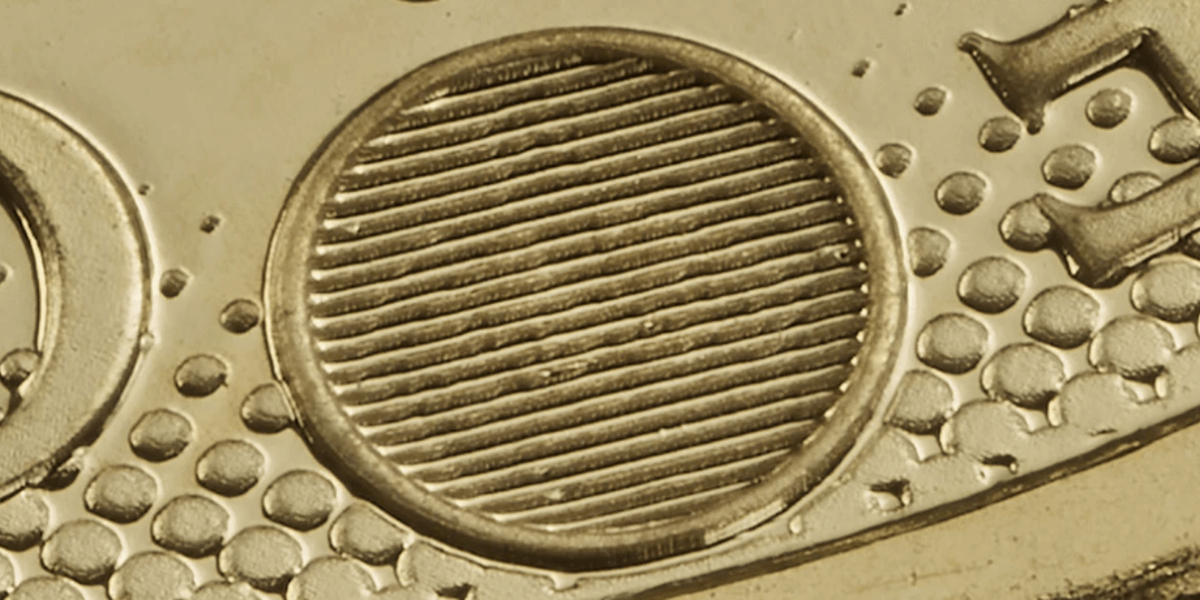
The latent image on the coin’s obverse (‘heads’ side) depicts both the Tudor rose and the Tudor Crown.
The Tudor rose reflects the Sovereign’s origins in 1489. After ending the civil war between the House of York (white rose) and the House of Lancaster (red rose), Henry VII adopted the Tudor rose as a personal symbol and a symbol of unity under the new ruling Tudor dynasty. The Tudor rose also featured prominently on the reverse of the first Sovereigns in 1489. Today, the Tudor rose is still used as a royal symbol and can be seen in a wide variety of settings, from carvings in the Houses of Parliament to the badge of the Supreme Court. The Tudor Rose also featured on the circulating 20p coin from 1982 to 2008.
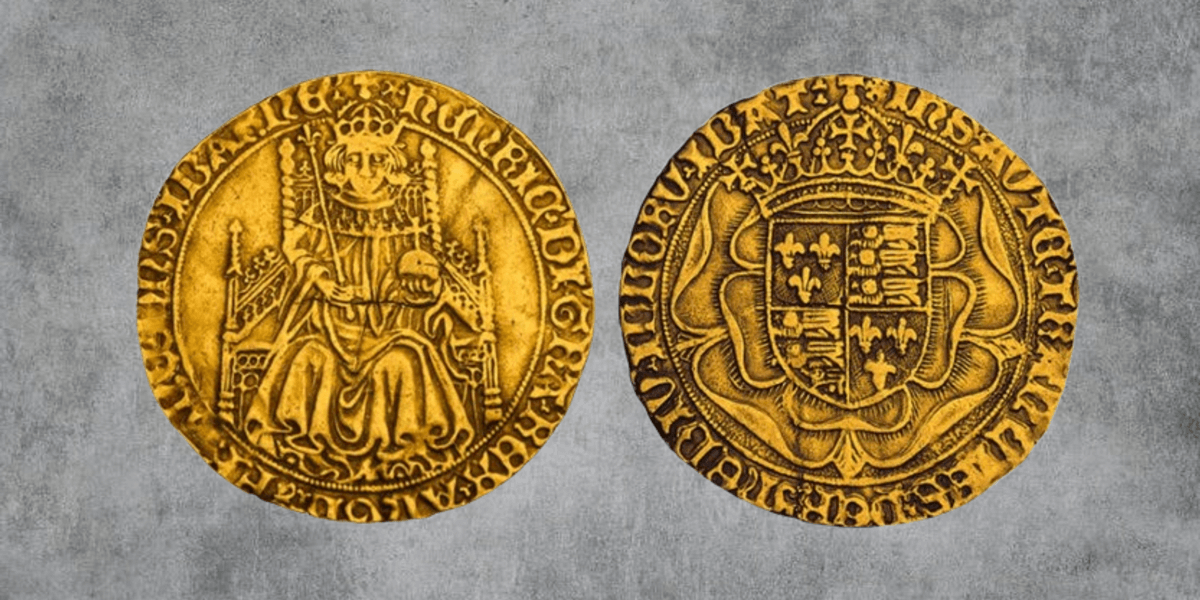
The Tudor Crown also reflects The Sovereign’s Tudor history but has an additional contemporary relevance. Following the accession of King Charles III in 2022, the Tudor Crown was adopted as a prominent symbol of the British monarchy and state. Whereas the St Edward’s Crown was used during the reign of Queen Elizabeth II, the Tudor Crown now appears in the logos of UK government departments, the badges of the armed forces, on post-boxes and in many other settings. The Tudor Crown was also the chosen crown to appear in His Majesty The King’s official crowned coinage portrait used to celebrate the coronation in 2023.
The position of the latent image matches the Full Sovereign’s circulating counterpart, the £1 coin, while the circular shape and direction resembles the latent image used as a security feature on Britannia coins and bars.
Micro-Text
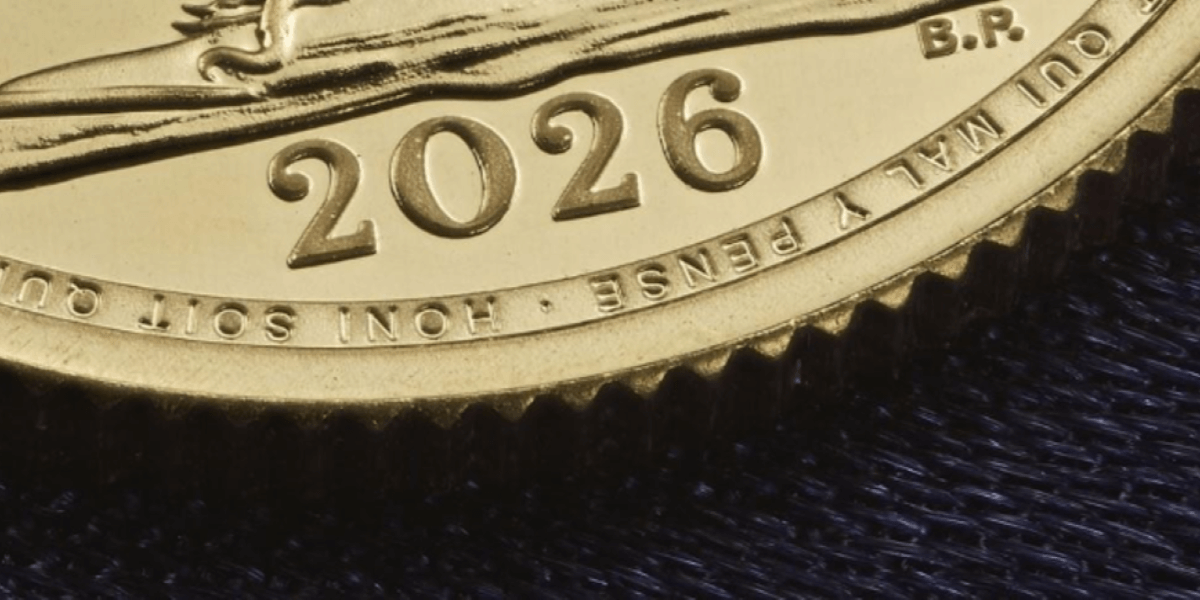
From 2026, bullion Sovereigns also feature microtext reading ‘HONI SOIT QUI MAL Y PENSE’.
This phrase was selected due to its association with the image of St George, and its appearance on the first ‘modern’ Sovereigns of 1817. Meaning ‘shame on him who thinks this evil’ in Anglo-Norman, the phrase is the motto of the Most Noble Order of the Garter, a chivalric order founded in 1348 and still in existence today.
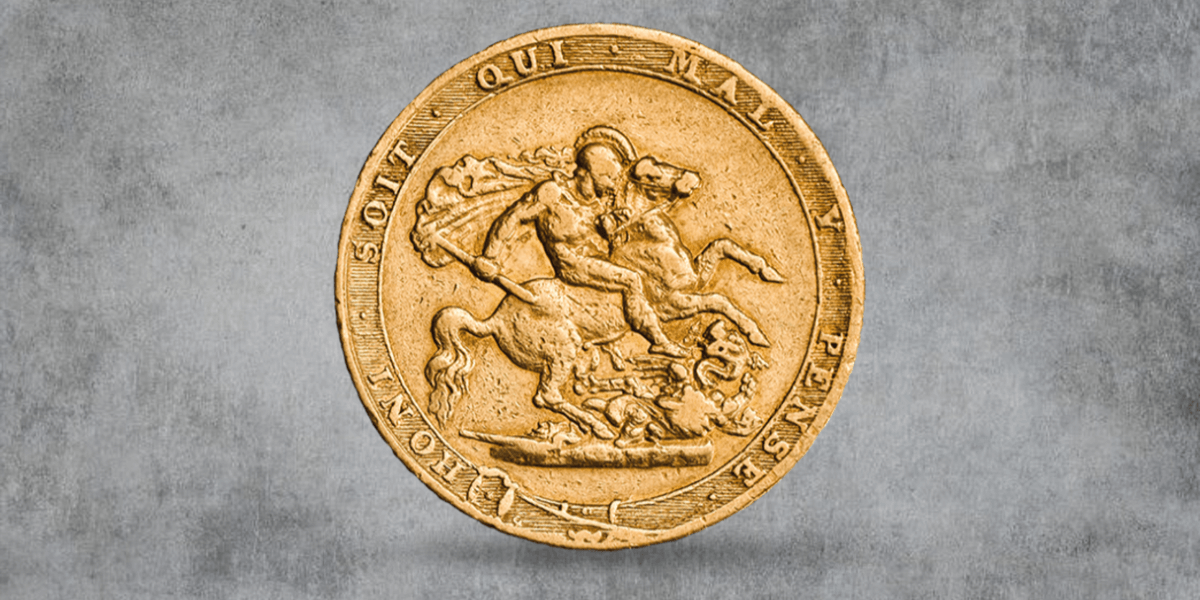
Positioned around the outside of the coin, the microtext is a nod to Benedetto Pistrucci’s original ‘modern’ Sovereign design which saw the image of St George surrounded by a garter bearing the phrase.
Half-Tone Pattern
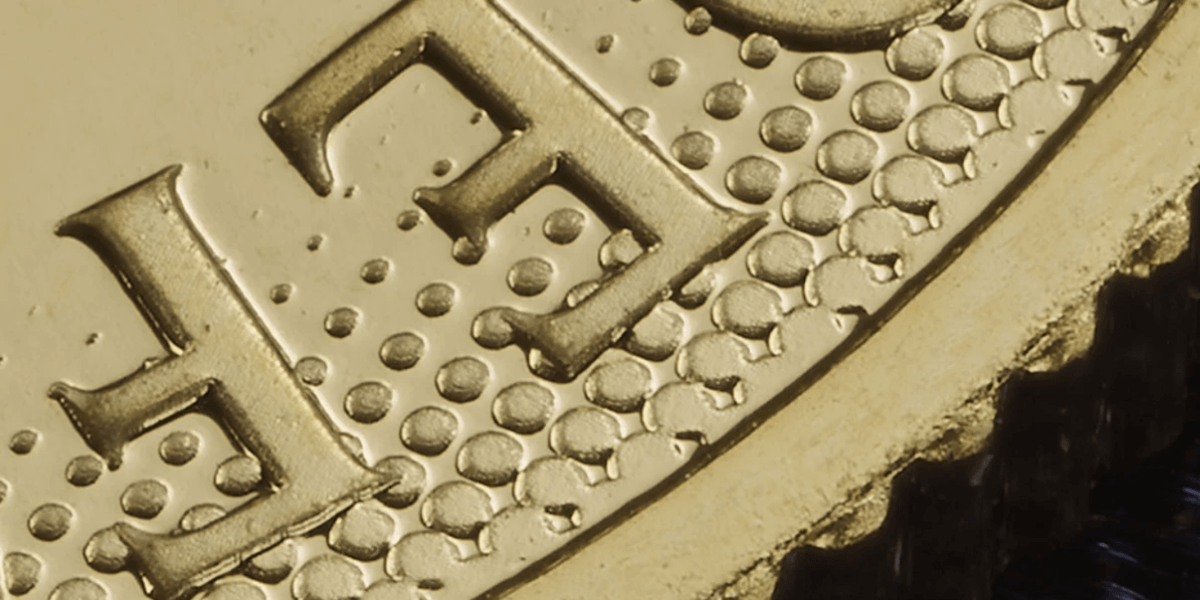
Intricate patterns also serve to frustrate counterfeiters. The Royal Mint has used a series of anti-counterfeiting patterns in recent years, including:
- The guilloche design on most bullion coin obverses, the intricacy of which is its strength, and
- Surface animation which features on Britannia reverses which plays with light to create patterns as the coin is moved
The 2026 gold bullion Sovereign introduces another technique, the half-tone pattern, which uses varying scale and relief in a way that is complex and difficult to counterfeit. The tradition of adding new security features to safeguard coins has a long history in British coinage, arguably beginning with edge-lettering in the 1660s.
Heritage Secured
The 2026 gold bullion Sovereign preserves everything that makes this coin iconic. Its gold content is unchanged. Its design heritage endures. St George once again defends Britain’s most historic bullion coin. Yet the coin has been sensitively and respectfully refined for a new era, to ensure The Sovereign remains trusted and relevant for generations to come.