The Story of The Silver Crown
The crown coin has a long and distinguished history. It derived from a gold coin introduced by Henry VIII, which replaced the sovereign in 1526. As the gold used for sovereigns proved too soft for circulation, a more durable alloy known as “crown gold” was introduced. Twenty-five years later, silver coins of the same size and weight were issued and adopted the crown name of their gold counterpart. Gold and silver crowns continued to be struck concurrently until the early reign of Charles II, when production of the gold crown ceased.
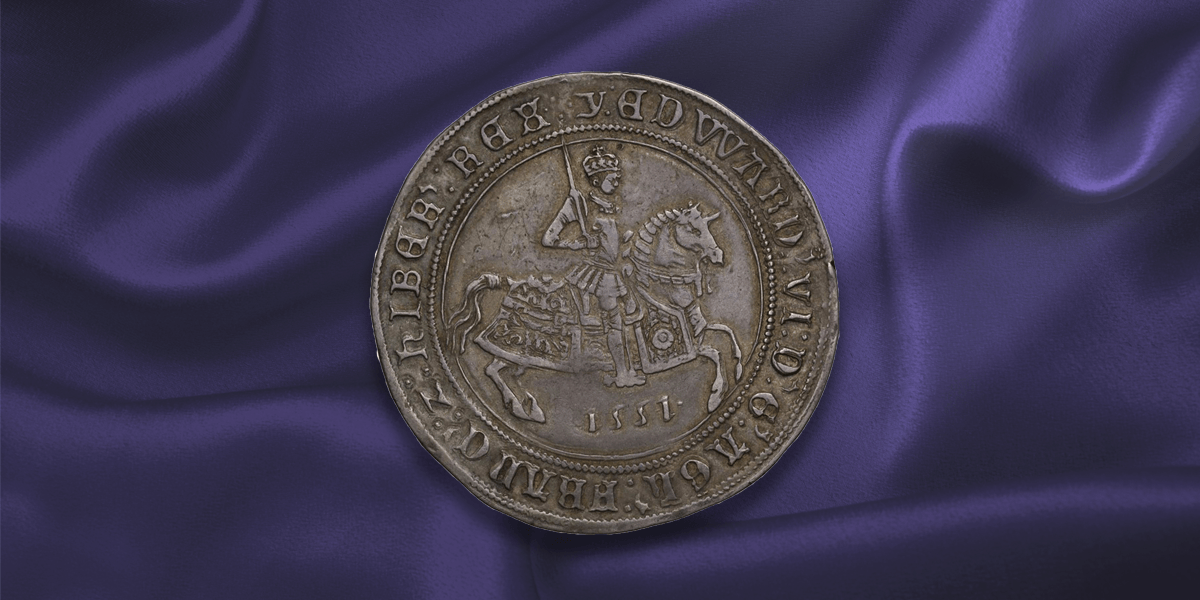
The first silver crowns were introduced in 1551. Weighing approximately 31 grams and measuring approximately 39 mm in diameter, they were valued at five shillings. The obverse depicts King Edward VI on horseback, while the reverse features a quartered shield set over a long cross fourchée.
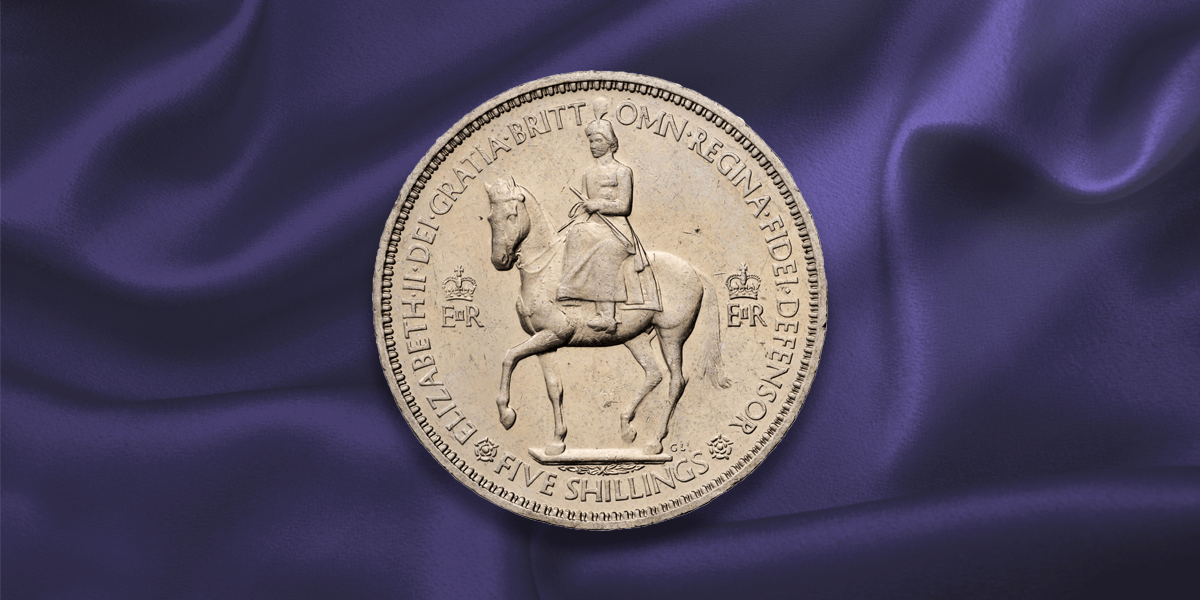
By 1751, the crown as an English coin was superseded by the crown as a British coin with the creation of Great Britain in 1707.
From 1935 it found its use as a commemorative coin. It continues to serve this purpose today and now carries a face value of £5, having first been redenominated to 25p following decimalisation and later to £5 in 1990.
Notable Designs
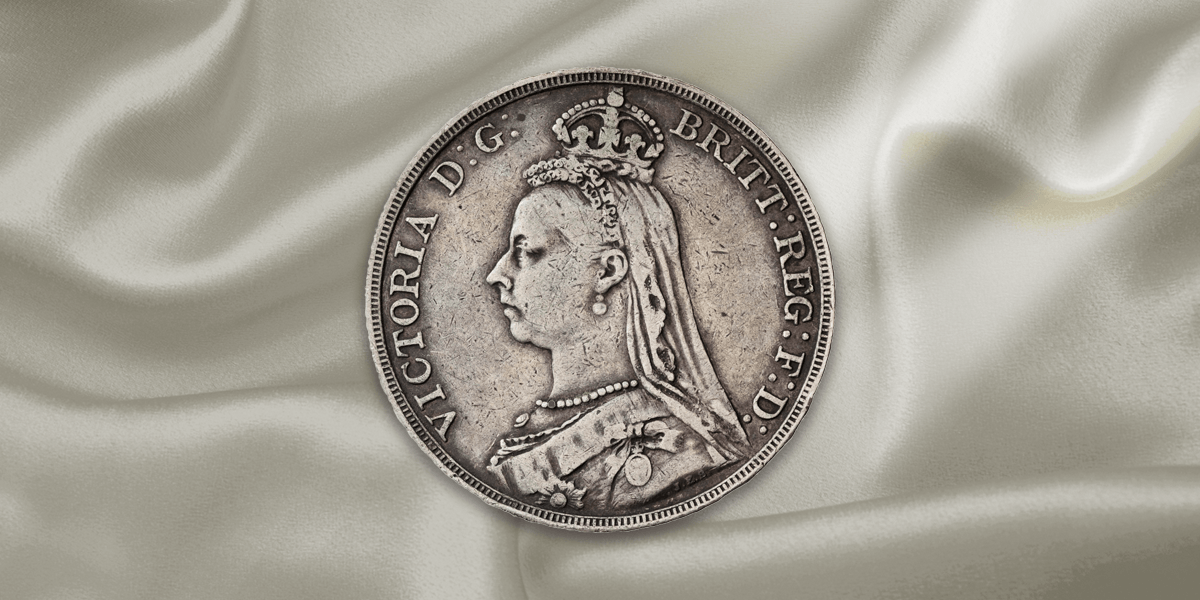
1887 Queen Victoria “Jubilee Head” Crown
The Jubilee Head portrait of Queen Victoria appeared on crown coins between 1887 and 1893. Designed by Joseph Edgar Boehm, it depicts the Queen wearing a long lace veil and the Small Diamond Crown. The coin became particularly memorable due to public criticism of the design, with many considering the crown depicted on her head to be too small
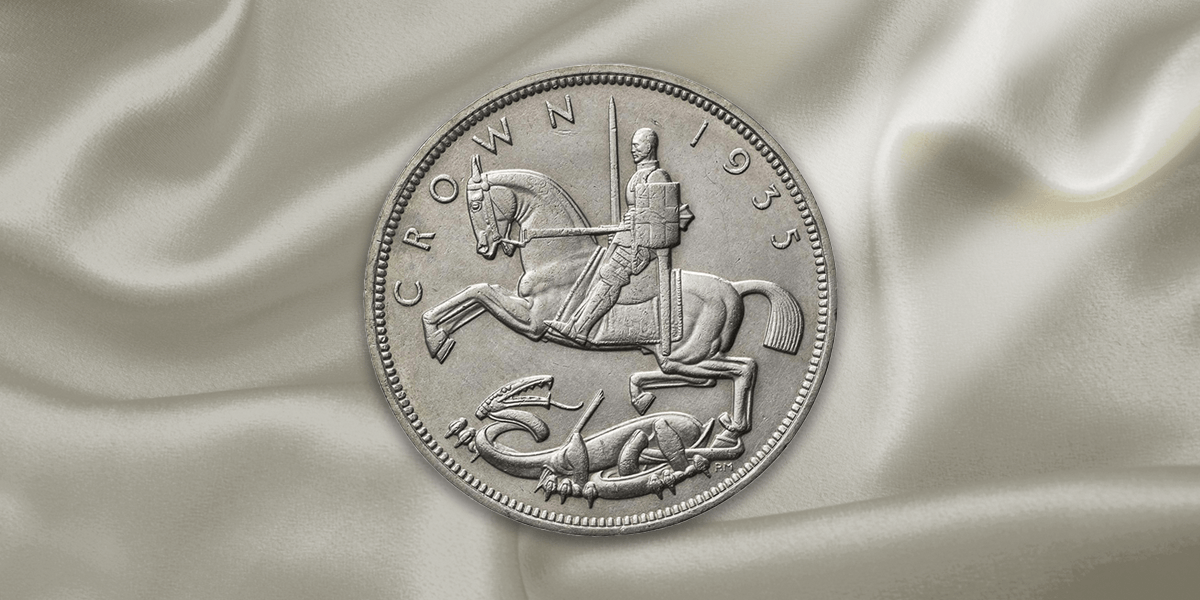
1935 George V “Rocking Horse” Crown
Crowns were issued regularly during the reign of George V, with a special design released in 1935 to commemorate his Silver Jubilee, considered to be our first commemorative coin. Percy Metcalfe’s highly stylised interpretation of the traditional St George and the Dragon motif depicts St George in full armour. The King was not overly impressed with the design, calling St George “a damned bad rider” due to his stiff pose on the horse. Although primarily struck in silver, a very small number were also produced in gold.
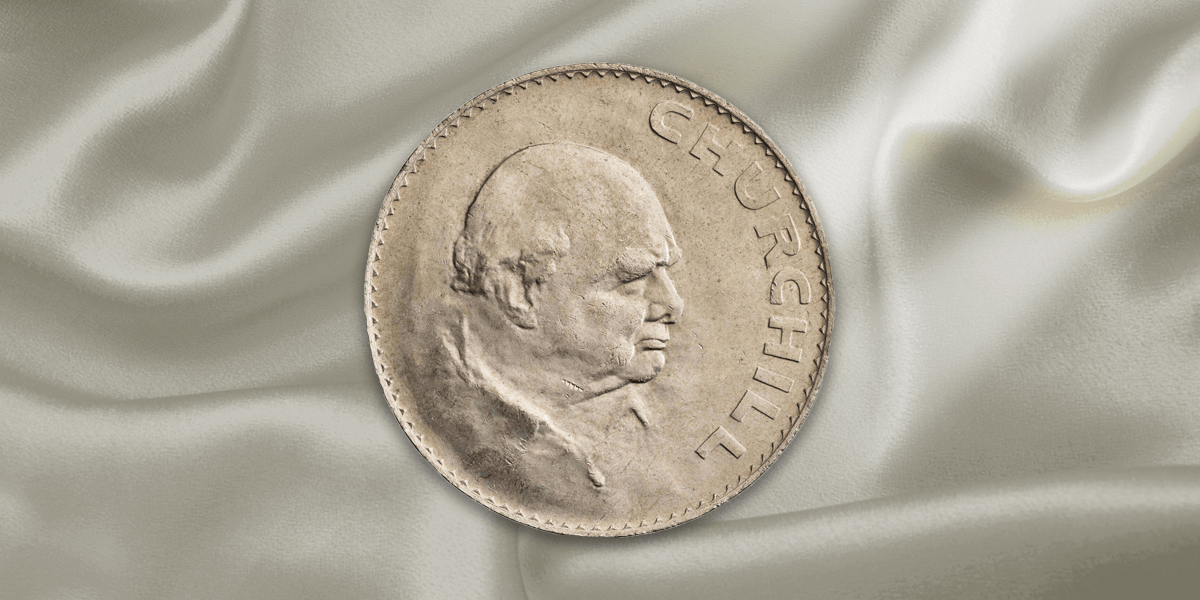
1965 Queen Elizabeth II Churchill Crown
This coin is one of the most recognisable modern commemorative crowns. Issued in 1965, it was released to mark the passing of Sir Winston Churchill and is often cited as the first modern UK coin to carry the portrait of a named individual other than the reigning monarch.
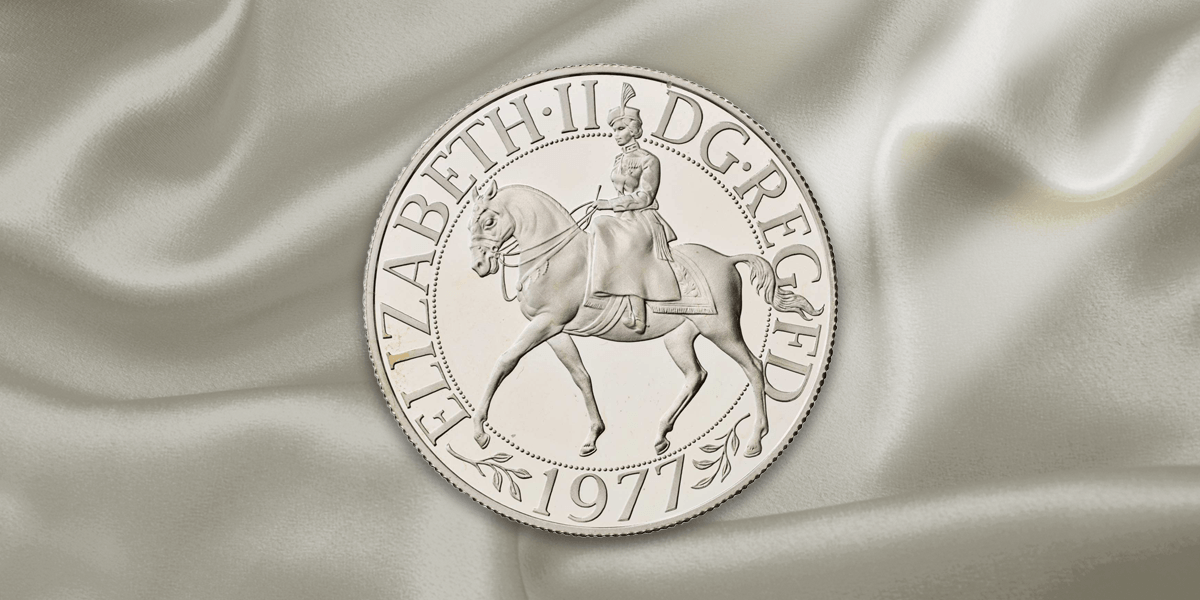
1977 Queen Elizabeth II Silver Jubilee Crown
This crown was released in 1977 to commemorate the 25th anniversary of Queen Elizabeth II’s accession to the throne. Arnold Machin’s equestrian portrait depicts the Queen in uniform as Colonel-in-Chief of the Grenadier Guards. The reverse design features a crown, along with the ampulla and anointing spoon used in the coronation ceremony, all surrounded by a floral garland.
