Due to the sheer scale of the Second World War, a recruitment drive of unprecedented proportions took place where everyday people were obligated to enlist in the war effort alongside career military, whilst others enlisted on their own accord.
As Britain rallied together for a common purpose, a sense of duty enveloped the country, as evidenced from these stories from who contributed on the ground.
‘… we shall fight in the fields and in the streets …’
Winston Churchill
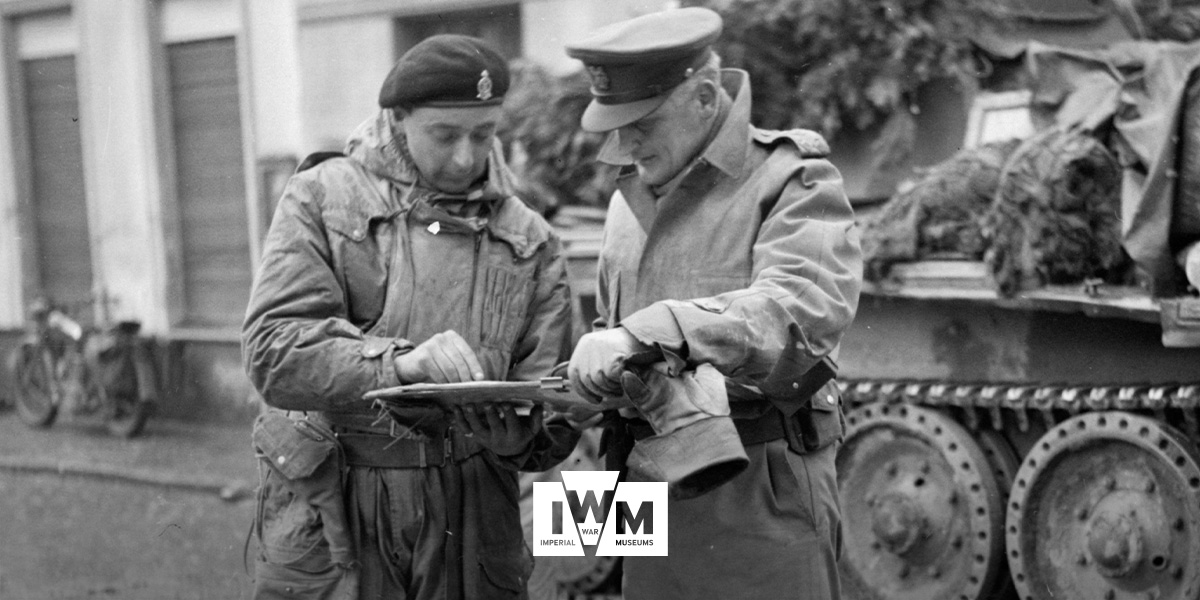
George Prior-Palmer
Born on 20 February 1903, George Erroll Prior-Palmer was educated in England at Wellington College and later at the Royal Military College at Sandhurst. In August 1923, Prior-Palmer became a Second Lieutenant of the 9th Lancers where he was accompanied by his older brother Otho.
Throughout the 1930s, the younger sibling continued his ascent up the ranks. As a seasoned military service member at the outbreak of war, he was assigned to serve in north-west Europe that earned him a mention in despatches for his service. In 1941, he was promoted to Lieutenant Colonel.
Three years later, he was one of the many brave soldiers who took part in the Normandy landings in June 1944, serving as commander of the 27th Armoured Brigade that played a crucial role in the Normandy Campaign. In 2019, brigade member Alan King recalled how Prior-Palmer’s pep talk prior to their deployment as the first wave of soldiers to storm ashore included the stoic warning, ‘You’re the assault wave, and you’ve about an hour to live on the beaches’.
Prior-Palmer remained stationed on the continent until 1945 and was awarded the Distinguished Service Order, French Legion of Honour and Belgian Croix de Guerre for his service. Having already served as Brigadier during the war (a temporary position he would fill again in 1949), he was assigned to the rank of Colonel in 1946. That same year, he was sent to Washington in the United States to serve as a military attaché at the British Embassy for a two-year spell.
When he returned to Britain, Prior-Palmer was promoted twice more and attained the rank of Major-General in 1951. He was given command of the newly reformed 6th Armoured Division before crossing the Atlantic in 1953 to serve three more years in Washington. He became President of the Regular Commissions Board before settling into military retirement in 1958.
Proving there was far more to this decorated war veteran than military command, Prior-Palmer showed a keen aptitude for business and explored several ventures within the shipping industry until his retirement in 1969. Not one to stand idle, he came out of retirement in 1973 to serve as director of J.A. Peden Ltd. until his passing in 1977.
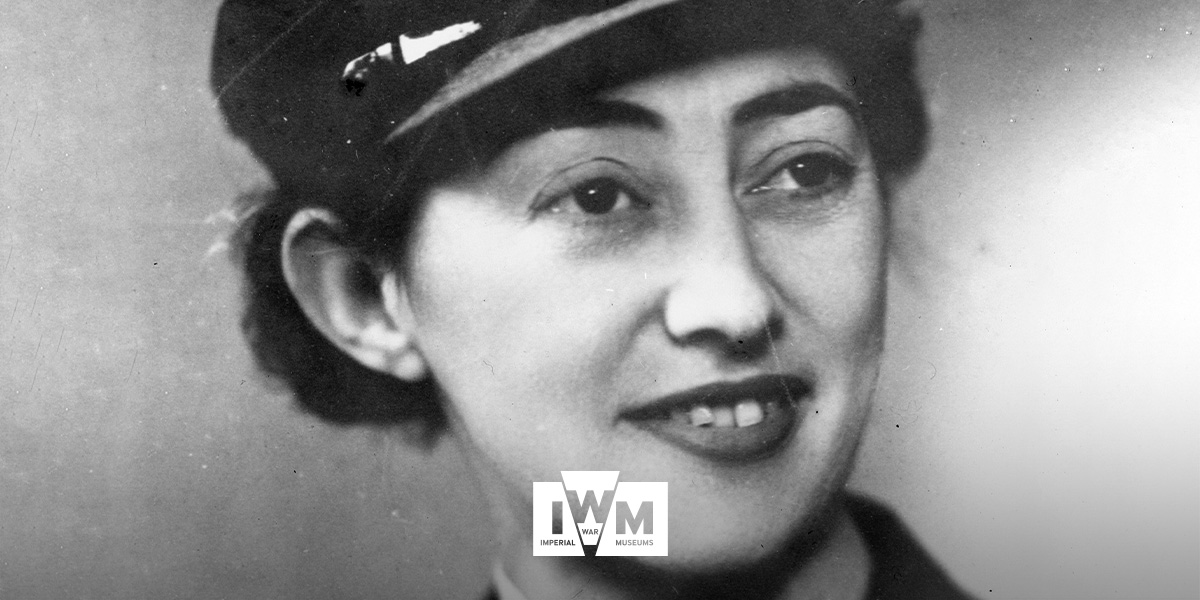
Yvonne Cormeau
Born Beatrice Yvonne Biesterfeld in 1909, the future Yvonne Cormeau was the child of a Scottish mother and a Belgian father. Educated in both her parents’ homelands, she moved to London and married chartered accountant Charles Emile Cormeau in 1937 before the outbreak of war.
Tragically, the couple’s union was cut short just three years later, when Charles was killed in an air raid in London whilst on medical leave from the military. Despite being in the house at the same time, Yvonne survived the blast as a bathtub fell on top of her during the blast.
Her husband’s death weighed heavily on her and she made the decision to continue his legacy by joining the Women’s Auxiliary Air Force (WAAF) in 1941. Less than two years later, Yvonne Cormeau was recruited by the Special Operations Executive (SOE) where she began training as a wireless operator representing France.
The SOE was a special unit concerned with gathering enemy intelligence and assisting the resistance in sabotage via covert operations in countries occupied by Nazi Germany. Nicknamed the ‘Baker Street Irregulars’, on account of their headquarters at 64 Baker Street in London, these agents were highly skilled in the art of communication and sabotage; they also had to be fluent in the language of the country in which they were deployed and for Cormeau, this was France.
Using her exemplary skills in Morse code, Cormeau sent a record 400 transmissions in 13 months – the highest of any SOE wireless operator – and helped equip the local French resistance with arms and supplies. She also assisted in cutting power and telephone lines, resulting in the isolation of the Wehrmacht Group G garrison near Toulouse, which aided the liberation of the area.
In June 1944, Cormeau was shot in the leg whilst escaping from a German attack on Castelnau but managed to escape. Today, the very dress she wore and the bloodstained briefcase she carried that day are held in storage by the Imperial War Museum along with her WAAF officer’s uniform.
In addition to being appointed an MBE, Cormeau was awarded the Légion d’honneur, Croix de Guerre and Médaille de la Résistance for her efforts during the war. In 1989, she was honoured on the television programme This Is Your Life.
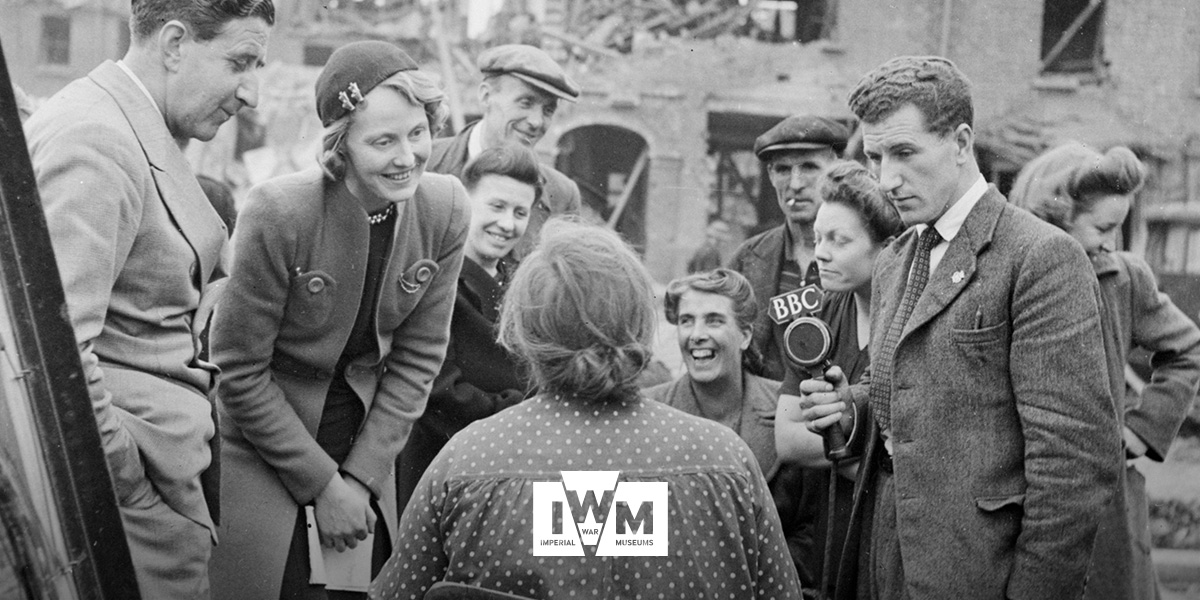
Audrey Russell
Born in Dublin, Muriel Audrey Russell was a radio journalist who was credited as both the BBC’s first female news reporter and later the BBC’s first female war correspondent during the Second World War. Operating on the Home Front, she joined the BBC in 1942 and was tasked with reporting on the German V-weapon attacks that took place across Britain.
V1 flying bombs were launched from sites in northern France and the Netherlands. According to IWM statistics, approximately 10,492 were launched at Britain between the months of June 1944 and March 1945, killing 6,184 people and injuring 17,981.
Meanwhile, V2s were liquid, fuel-propelled rockets with explosive warheads that were less accurate than the V1s but travelled at the speed of sound, with 517 striking London. Russell subsequently conducted interviews with many of the survivors in the aftermath.
Notably, she also travelled to mainland Europe following D-Day and reported from various locations across Europe during this period before returning to Britain on health grounds in March 1945. Despite being non-combative service personnel, war correspondents held military rank and Russell’s Battledress blouse, slacks and beret remain on display at IWM North in Manchester.
As we celebrate these extraordinary acts, we remember and pay tribute to the service given by those during the war through their personal stories and experiences through the Stories of the Second World War 2025 UK Coin.
MARKING HISTORIC MOMENTS
Imperial War Museums records and tells the stories of those who have lived,
fought and died in conflict since 1914. © IWM
With thanks to Imperial War Museums for their assistance in this project.
