The Angel: A Denomination
Steeped in History
Join us as we pay tribute to the Angel with our new range of coins, featuring a modern interpretation of the historic design. First introduced during the reign of Edward IV, the Angel became the dominant gold coin in circulation for more than a century.
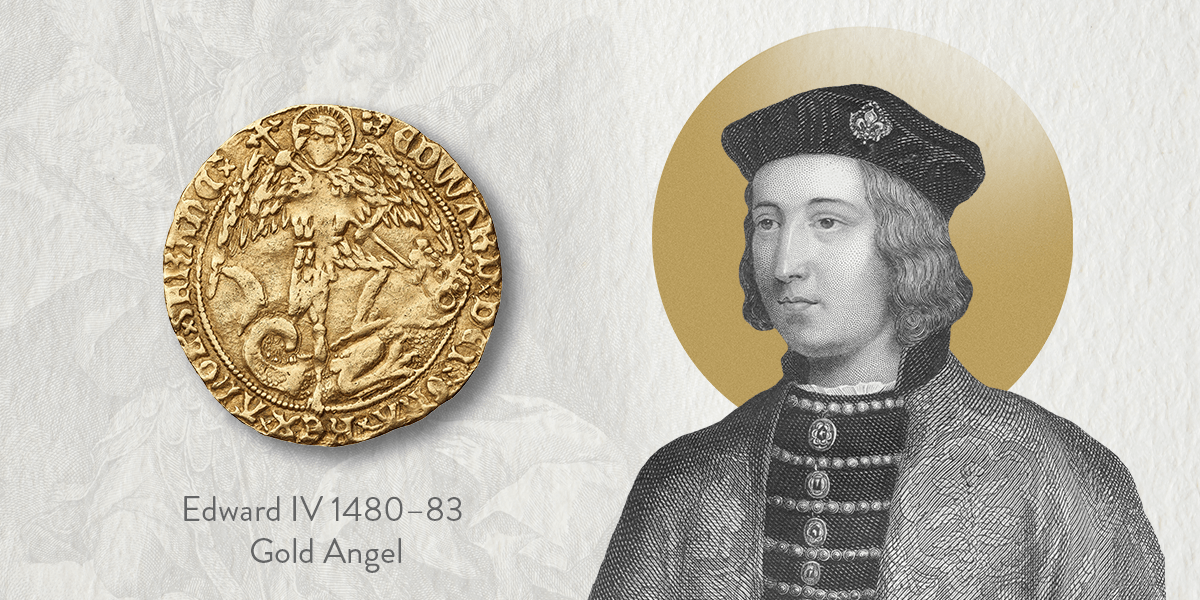
A Touch of the Divine
Historic Angels were synonymous with superstition as they were associated with good fortune and healing after they were first introduced in the reign of Edward IV (pictured above).
Throughout its time in circulation, the coin was used in touching ceremonies, as many believed that monarchs had a divine right to rule, and that this connection with God could be used to heal others. Once a monarch touched the coin, it would be pierced so a ribbon could be threaded through it, allowing someone to wear the coin around their neck as a token.
It was thought that these touching ceremonies could protect the bearer from the disease scrofula, also known as the ‘king’s evil’.
A Heavenly Design
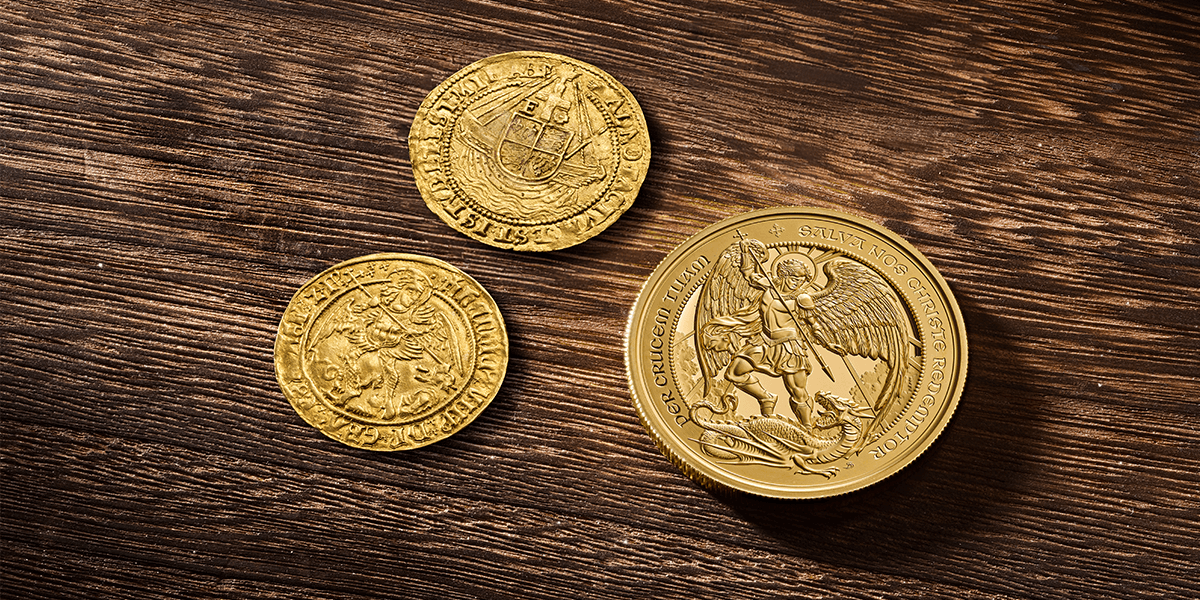
This coin earned its name from the design that appeared on the obverse. The Archangel Michael can be seen trampling a dragon, which represented Satan, with a spear angled towards the dragon’s mouth.
The coin also featured the inscription ‘PER CRUCEM TUAM SALVA NOS CHRISTE REDEMPTOR’, which translates as ‘By thy Cross, save us, O Christ, our Redeemer’. It is perhaps because of this religious iconography that the Angel was used in royal touching ceremonies.
A Replacement for the Noble
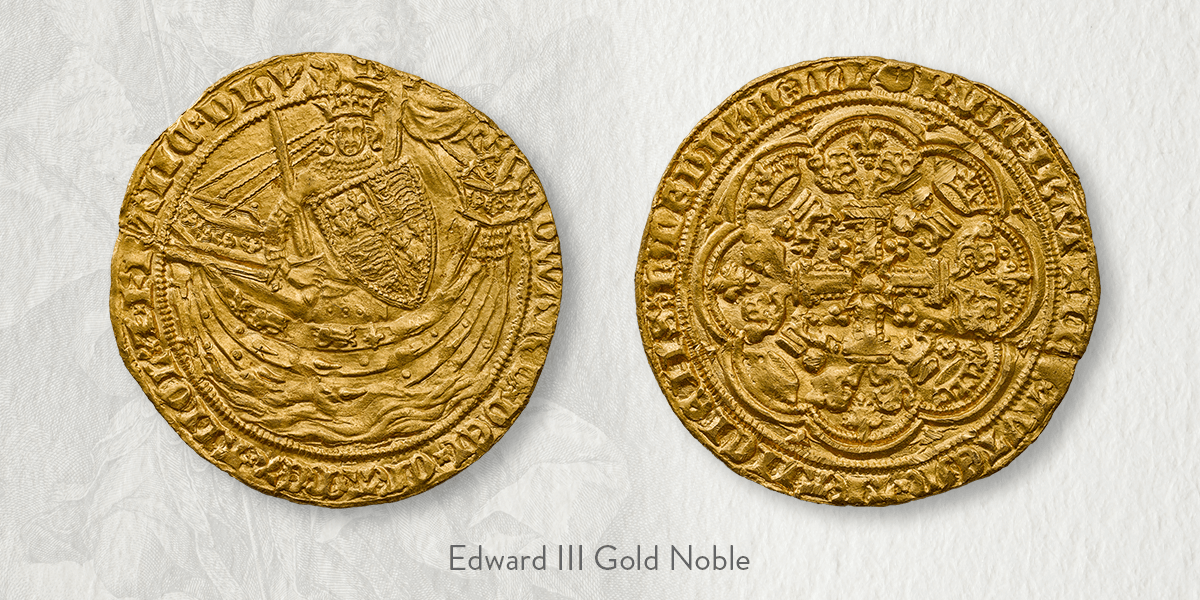
Before the introduction of the gold standard, the value of gold coins would fluctuate with the price of gold. This would often mean that a coin’s value would change from when it was first introduced, creating a need for a smaller denomination to replace it.
The noble was a gold coin in circulation before the introduction of the Angel. When the noble was re-evaluated in 1464 to a value of 8 shillings and 4 pence, this left a need for a coin worth its previous value of 6 shillings and 8 pence.
The Angel was introduced in 1465 alongside ‘angelets’, known as half-angels, with a value of 3 shillings and 4 pence, and featured the same designs on the obverse and reverse. However, production of the Angel ceased during the reign of Charles I, and half-angels disappeared even earlier during the reign of James I.
A Modern Interpretation
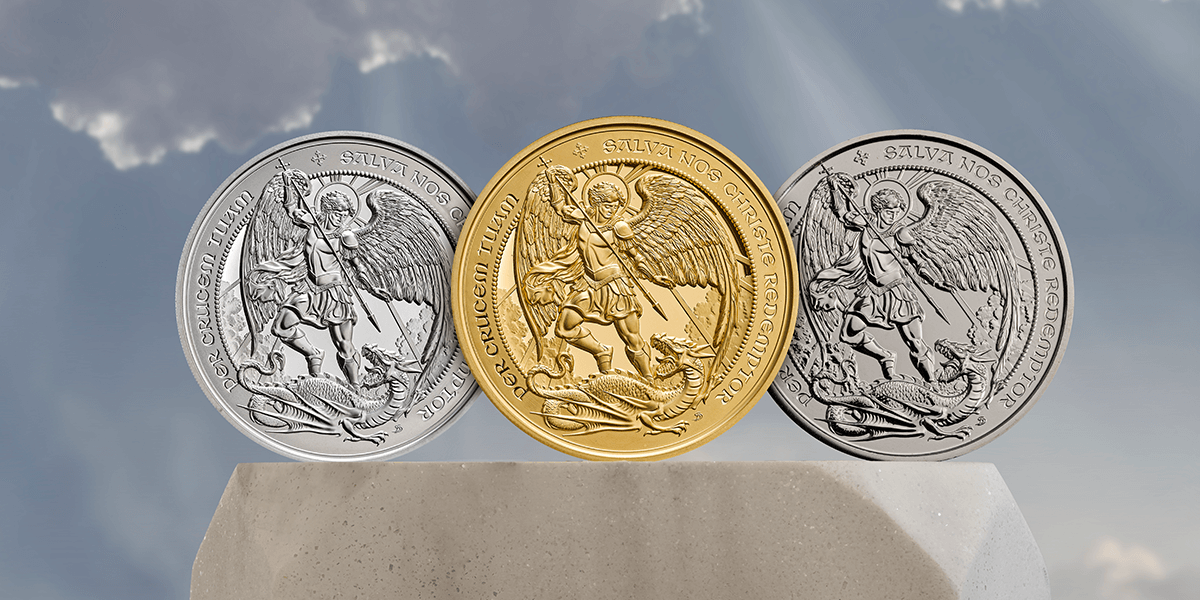
We are proud to present a modern interpretation of the historic Angel, featuring a reverse design by sculptor Sandra Deiana, along with an edge inscription which translates to ‘By thy Cross, save us, O Christ, our Redeemer’.
Parts of the design have a higher relief, giving the coin a more pronounced, three-dimensional look, which makes it especially appealing to collectors.
