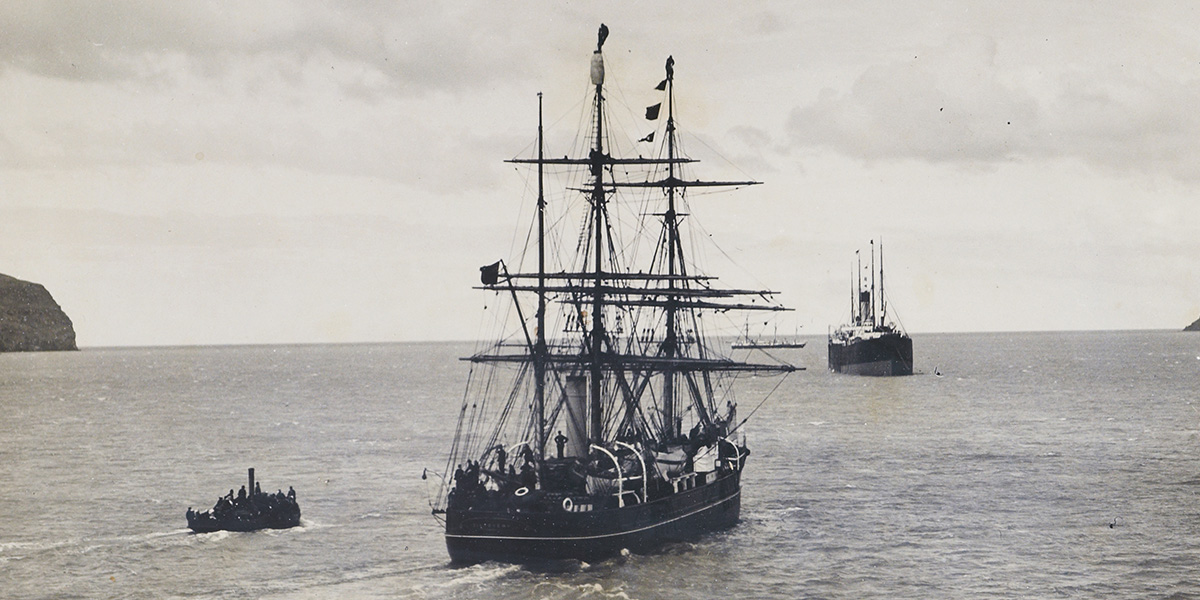
An embodiment of its name, RRS Discovery was a pioneering research vessel purpose-built for polar exploration. Tasked with surveying the Antarctic region and conducting in-depth scientific research, the iconic ship was the product of increased interest in polar exploration in the late nineteenth century.
With such an incredible legacy of exploration, it may come as a surprise to some that RRS Discovery has never had a commemorative coin struck in its honour. This article explores RRS Discovery's fascinating history and the design chosen to celebrate the vessel’s 125th anniversary on a UK £2 coin.
Ambitions of Antarctic Exploration
Interest in Antarctica peaked at the sixth International Geographical Congress in 1895. The Congress spurred international efforts to explore the science and geography of the continent and led to a new age of exploration that included multiple international expeditions in the years that followed.
The United Kingdom commissioned the ship Discovery followed by an expedition plan devised by the Royal Geographical Society and the Royal Society. The ship was built with design help from the Admiralty and partial funding from the UK Government. Next, scientists, naval officers and crew were employed to chart Antarctica from the sea, land and sky and travel further south than any human had before.
Assembling a Capable Crew
Born in England, Robert Falcon Scott was chosen for the position of Commander of the officially titled British National Antarctic Expedition and assigned as the Captain of Discovery for its first voyage, which took place in 1901. For such a bold journey, Scott also required bold men to rely upon and his crew embodied exactly that.
Scott’s original Second Lieutenant was Irish-born navy veteran Ernest Shackleton, but he was later replaced by Englishman George Mulock in February 1903 after Shackleton was forced to return home on the relief ship Morning due to a severe bout of scurvy. Despite this disappointing end to his tour of duty, Shackleton went on to become an icon of exploration in his own right in the decade that followed and later served in the First World War.
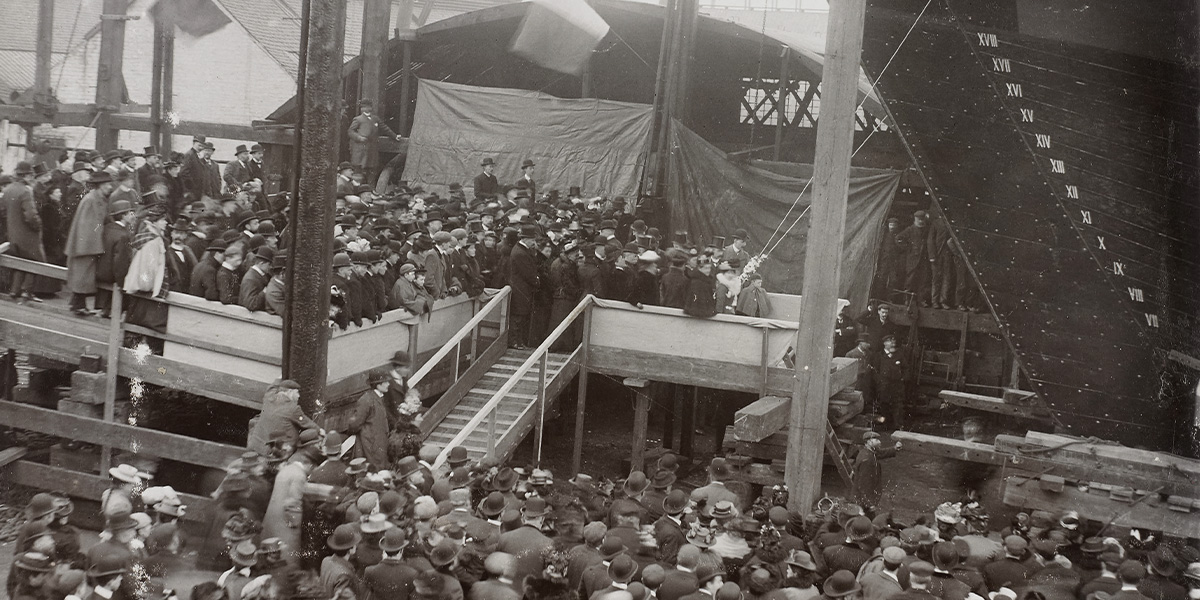
With its crew assembled, Discovery launched on 21 March 1901. Crowds gathered on the dockside to bid the vessel a fond farewell, as Discovery embarked on a journey into the unknown and its solitary and desolate destination – Antarctica.
Construction and Climate Challenges
Constructed by the Dundee Shipbuilding Company, who were well known for their whaling ships that could withstand the pressure of the Arctic ice, Discovery was designed to survive the harsh conditions of Antarctica.
The ship featured a triple-skinned hull of pitch pine, greenheart and native oak, which created a strong hull with added protection against the ice. The reinforced bow was designed to withstand ferocious waves and the overhanging stern increased stability, allowing the ship to survive the icy and unpredictable seas of Antarctica.
Discovery became the first British expedition to overwinter on Antarctic mainland and this allowed for sledging expeditions into the interior of the continent and the beginning of the charting of the unknown terrain.
Dedicated to Discovery
Housed on top deck, the ship’s laboratories were kitted out with cutting-edge science equipment such as sounding equipment and a magnetic observatory.
Discovery's expedition involved a magnetic survey of the southern regions and metrological, oceanographic, geological, biological and physical investigations of the Ross Sea region. These investigations comprised the gathering of thousands of geological and biological specimens and the collection of masses of observation data, all of which have helped shape our understanding of the continent.
In geographic terms, the expedition crew carried out extensive coastal survey work, achieved the ascent of the western mountains, charted the Transantarctic Mountains, and identified many features and landmarks. The expedition also saw the first ascent above Antarctica in a hydrogen balloon, which enabled the first aerial photograph of Antarctica to be taken.

Designing the RSS Discovery Coin
The advent of the 125th anniversary coupled with the centenary of the famed Discovery Oceanographic Expedition provided the perfect opportunity for us to honour one of Britain’s greatest research vessels.
Having previously provided designs for several coins from The Royal Mint, including coin designs commemorating the legendary explorer Captain Cook and iconic navy vessel HMS Belfast, designer Gary Breeze had all the credentials to make him the perfect candidate for this design.
Bringing a degree of insider knowledge to the project that few other coin designers could boast, Gary also happens to be a keen sailor and boat builder in his spare time.
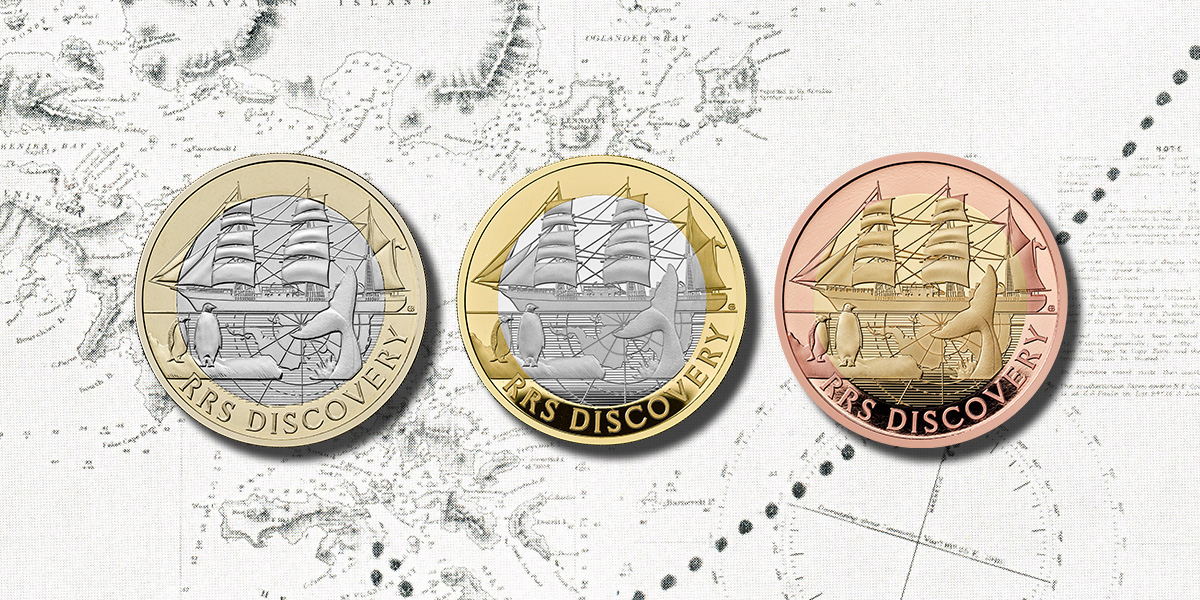
The reverse design is wholly dedicated to all things Discovery and features several items that are synonymous with Antarctica, in addition to the ship itself. This includes icy landmasses, iconography of polar wildlife such as penguins and whales, and a partial map of the area.
The coin also features a unique edge inscription that reads, ‘DESIGNED FOR ADVENTURE’, further illustrating the ship’s purpose-built status and strong association with the world of exploration.
Maritime Designs
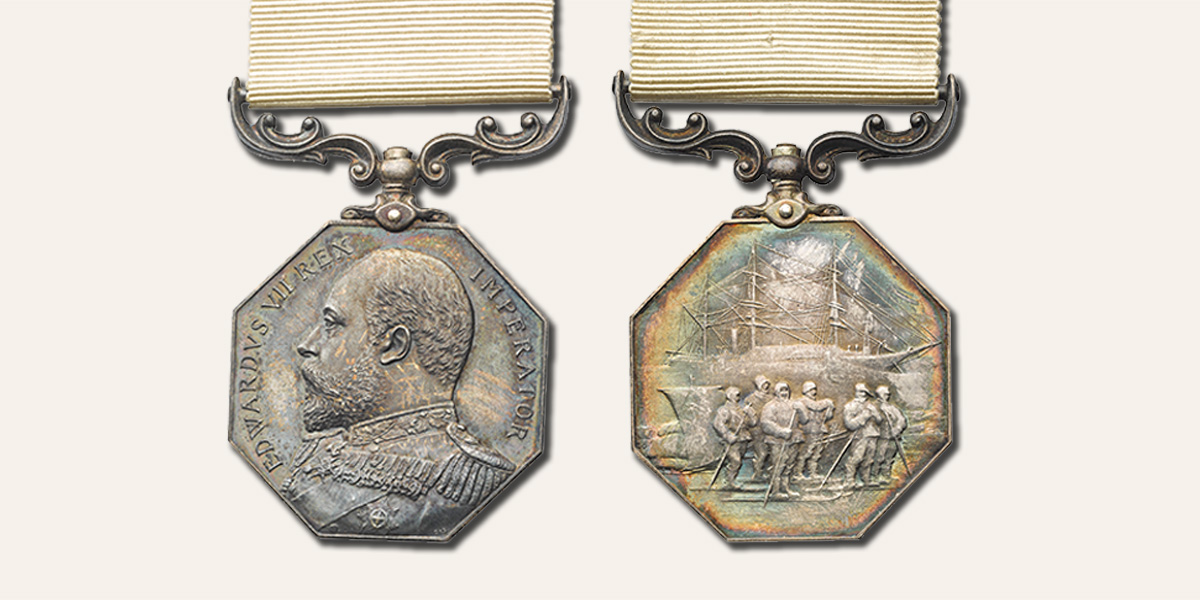
Although this is the first UK coin dedicated to RRS Discovery, it is not the first time The Royal Mint has created something associated with the exploration vessel. In fact, we created the original Polar Medal in 1904. Instituted by Edward VII, the medal was given to individuals for outstanding service in the field of polar research, with Captain Scott and his crew being the very first recipients.
Distinguishable by its octagonal shape, the Polar Medal featured George William de Saulles’ portrait of Edward VII, whilst the reverse features RRS Discovery in a design by Ernest George Gillick. His surname may sound familiar to numismatists and collectors, as it is also shared by the designer of the original Elizabeth II coinage portrait, Mary Gillick; the two were married and shared a mutual love of sculpting and medal design.
Celebrating an Icon of Exploration
With such a longstanding relationship between The Royal Mint and RRS Discovery dating back to its inaugural expedition, the RRS Discovery 2025 UK £2 Coin serves as a fitting way to commemorate this iconic vessel and the ship’s 125th anniversary.
Available in a variety of editions, including a gold Proof, silver Proof, silver Proof Piedfort and Brilliant Uncirculated edition, the RRS Discovery 2025 UK Coin is the perfect addition for any coin collector with an interest in British maritime history, exploration, or the world of scientific research.

The Royal Mint has made a contribution of £2,500 to Dundee Industrial Heritage Limited (company SC093109 charity SC002268), now a SCIO (Dundee Industrial Heritage SCIO SC002268), part of the Dundee Heritage Trust group.
