Jean Baptiste Merlen (1769–1850) began his career at the Paris Mint but joined The Royal Mint in 1820, when William Wellesley Pole recruited him to assist in preparing the coinage for the new king, George IV.
Best known for his reverse designs, which include those he created for the 1820 half-crown and the Maundy Money introduced in 1822, Merlen was given the title of Extra Assistant Engraver as the rules of the time didn’t allow foreigners to be permanently employed at the mint. In addition to his reverse designs, he also produced the punches and lettering used across several denominations, demonstrating the breadth of his contribution. Merlen retired in 1844, but his shield motifs remained on some Sovereigns until 1887.
A Special Set
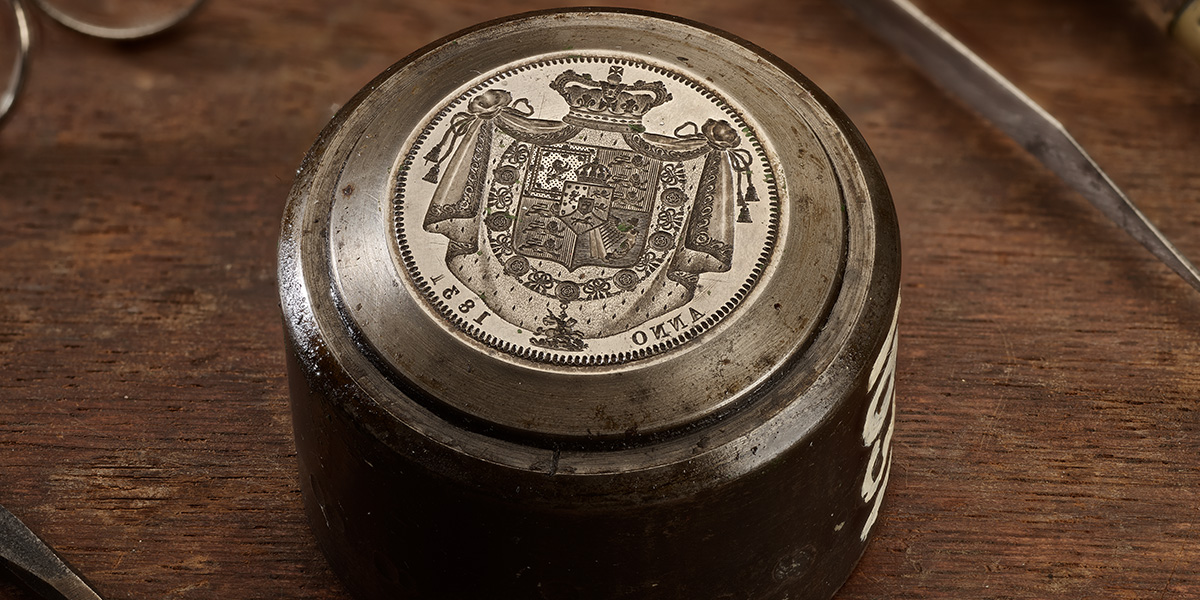
The 1831 crown formed part of a special coin set produced at the start of William IV’s reign. Originally, only 100 of these sets were made and each features a gold two-pound coin, Sovereign, Half-Sovereign, silver crown, half-crown, shilling, sixpence, Maundy set, copper penny, halfpenny and farthing.
The obverse of each coin features William Wyon’s bare-headed portrait of the king, whilst Britannia is shown on the reverse of the copper coins and Merlen’s shield motif not only appears on the gold coins but also on some of the silver issues. In the years that followed, more sets were produced and a statement dated 1836 suggests that more than 220 sets were made in total.
The coins reflect a period of transition in British engraving, sitting between the final Georgian issues and the emerging Victorian style. Surviving records show that Merlen and William Wyon often contributed punches, lettering and ornamental details to each other’s work, giving the coronation set a consistent visual character despite their differing artistic backgrounds.
Nations United
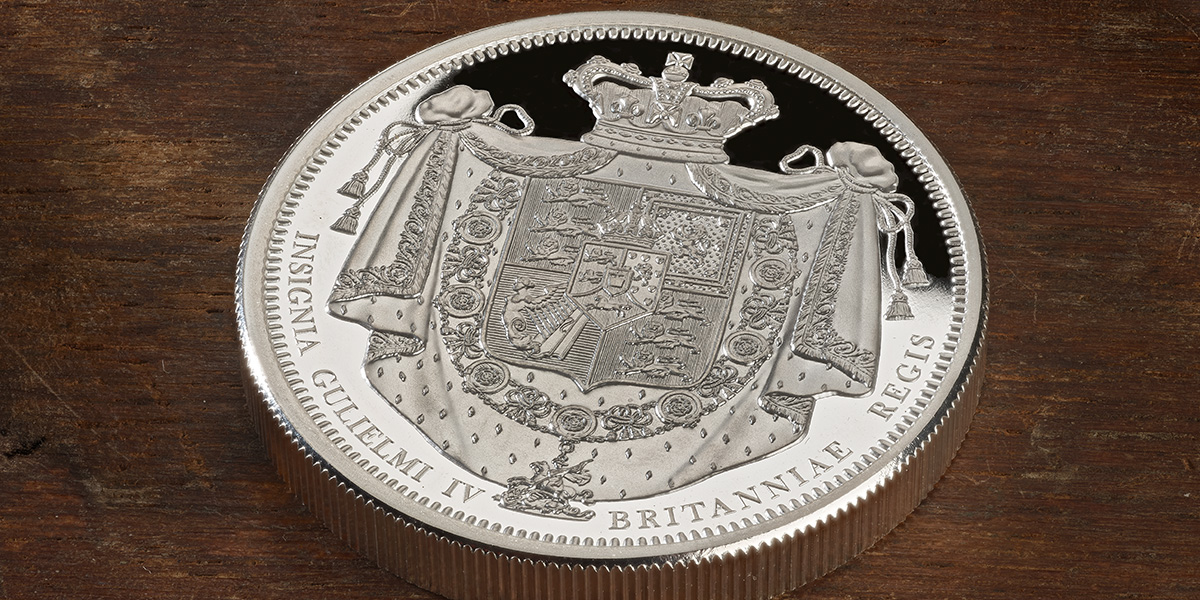
Merlen’s reverse design for the 1831 crown heraldically represents the nations brought together by the 1801 Act of Union. The shields bear three lions passant for England, a single lion rampant for Scotland and a harp for Ireland, whilst the Hanoverian Arms appear in the centre of the design as they had been part of the Royal Arms since 1714. Traditionally, an elector’s cap appeared above the Arms, but this was replaced with a crown when Hanover became a kingdom in 1814.
A white horse also appears within the Arms, as this enduring symbol rooted in German history had become firmly embedded in Hanoverian identity. The shields are encircled by the collar of the Order of the Garter, emphasising the ceremonial nature of the coinage and its connection to the monarchy’s oldest order of chivalry.
A Numismatic Tradition
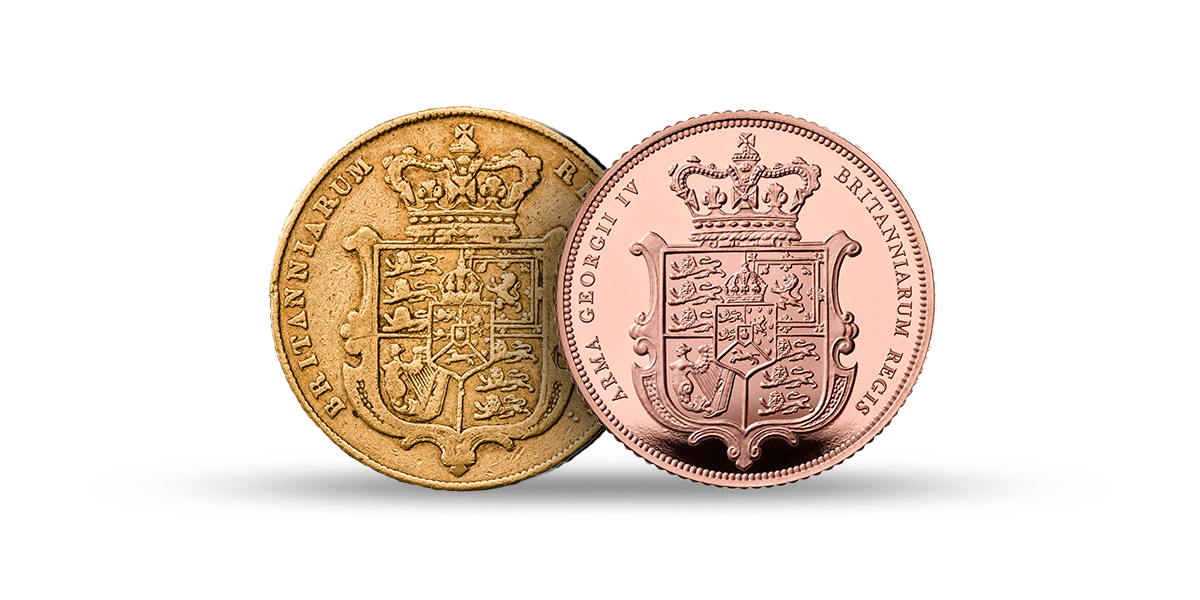
The crowned shield of the Royal Arms has a long tradition in numismatics and Merlen had engraved the ‘shield back’ Sovereign introduced in 1825. Featuring a different styling of the Arms, his reverse for the 1831 crown surrounds the shield with the collar of the Order of the Garter and the royal mantle, motifs long associated with coronation imagery and the continuity of the monarchy.
Merlen’s enduring artistry has already inspired contemporary reinterpretations of his heraldic style, reaffirming the lasting relevance of his craftsmanship. To mark the 200th anniversary of Merlen’s original ‘shield back’ design, we revived the motif on selected 2025 Sovereigns, offering a modern interpretation that underscores the lasting influence of Merlen’s craftsmanship.
A Sought-After Design
Today, the 1831 crown is regarded as one of the most accomplished British coin designs of the nineteenth century, combining elegant heraldry with the balance and clarity that defined Merlen’s work. Its scarcity, together with the artistic quality of the engraving, has made it highly sought by collectors.
The responsibility for remastering this historic design was entrusted to a team led by Lee R. Jones, Head of Art Direction.
‘We scanned an original 1831 crown, ensuring we could faithfully reproduce the design. Some minor enhancements were made in our digital sculpting package to sharpen aspects before introducing the inscription. This process is a virtual approach that mirrors what we would have done with hand tools (such as gravers and punches) in the past. Our modern, digital tools allow for greater detail.’

Own a Medallic Masterpiece
