Celebrating one of the most important vessels in scientific history, our new UK £2 coin pays homage to the 200th anniversary of HMS Beagle’s first voyage.
Humble Beginnings
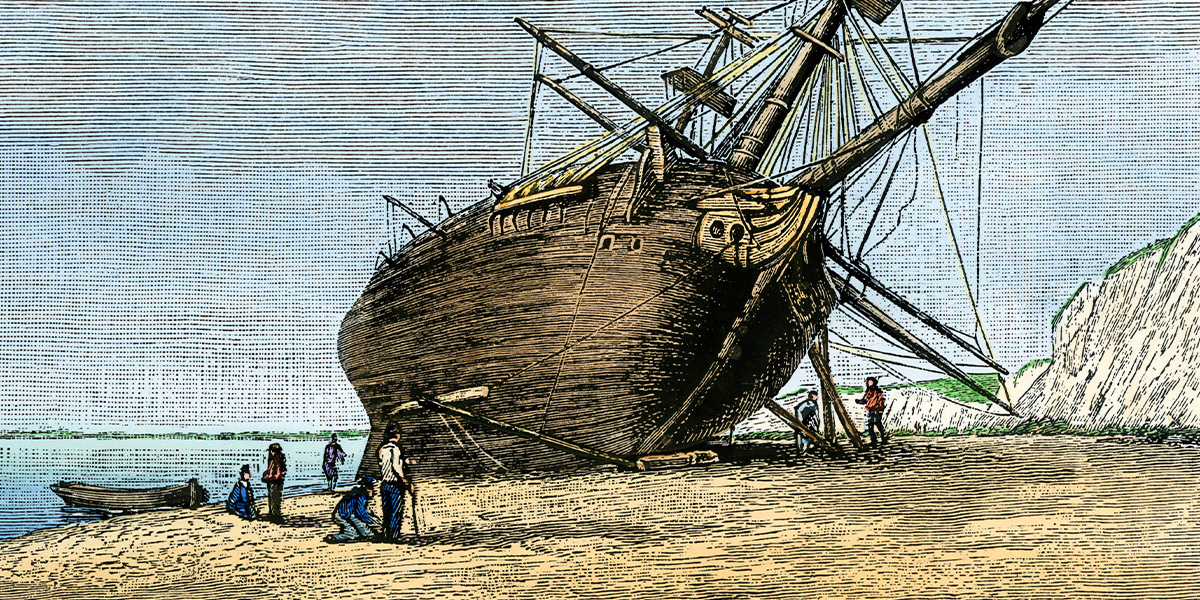
HMS Beagle began its life as one of more than 115 similar 10-gun brig sloops commissioned by the Royal Navy. On 11 May 1820, the ship launched at Woolwich in London and later that year it took part in a naval review to celebrate the accession of George IV; it is also thought to have been the first fully rigged ship to pass under the old London Bridge. There was no immediate active requirement for HMS Beagle and the ship was therefore repurposed as a surveying vessel.
Beagle’s First Voyage of Exploration
After it had been converted to a bark, with the addition of a small mizzenmast, Beagle undertook its first commission. Between 1826 and 1830, the ship’s first voyage involved surveying the coasts of Patagonia and Tierra del Fuego under the command of Lieutenant Pringle Stokes. The Beagle Channel was identified and named during the survey, and Lieutenant Robert FitzRoy was appointed captain of the ship in 1828.
A Groundbreaking Second Expedition
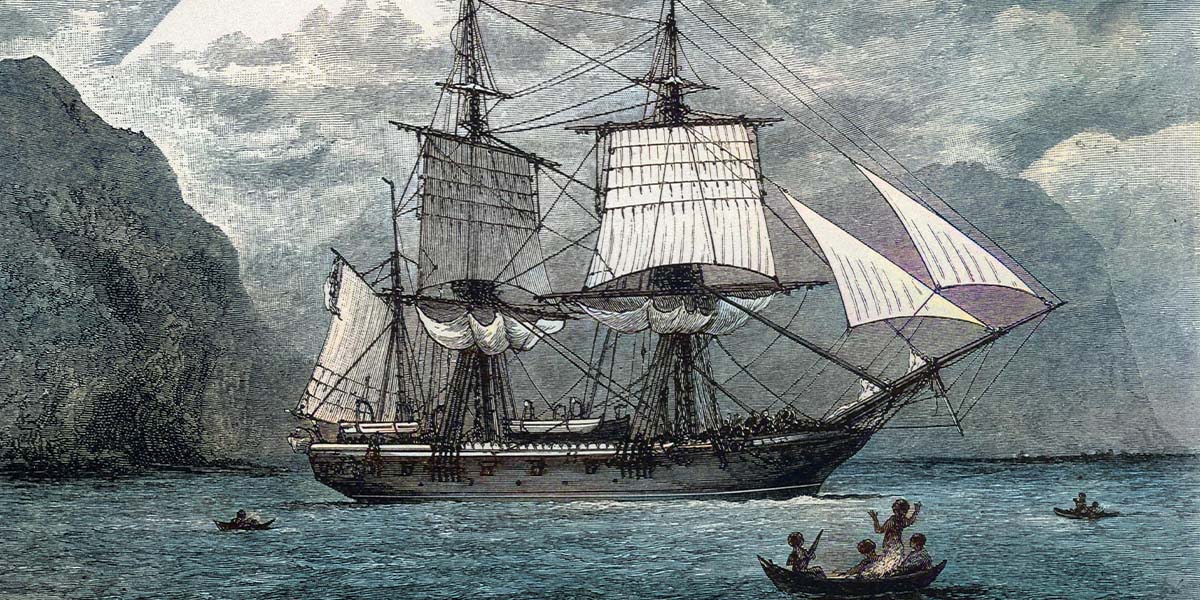
Beagle’s second survey took place between 1831 and 1836. Captain FitzRoy was once again in command and naturalist Charles Darwin was also on board for the expedition. The voyage not only saw the completion of the work that had begun on the ship’s first expedition, which had taken it to South America, but it also involved surveying the South American coast and travelling to the Galapagos Islands.
Darwin’s Path to Discovery
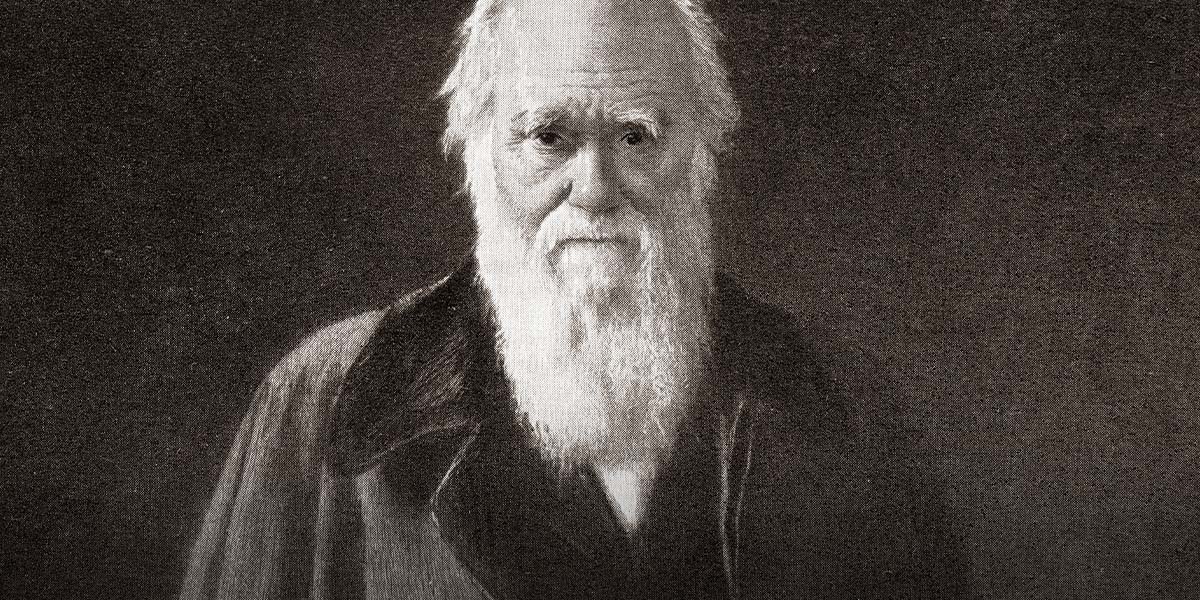
The observations Darwin made throughout this five-year period led to the publication of his theory of natural selection and improved our understanding of evolution. He also gathered a meticulous collection of specimens that allowed him to observe the development of animals’ physical features. These observations were later published in The Voyage of the Beagle (1839) and On the Origin of Species (1859).
A Third and Final Journey
Between 1837 and 1843, the ship undertook its third and final expedition. Surveying large parts of the Australian coast, the expedition sailed into Garamilla and Martuwarra, which were named Port Darwin and Fitzroy River respectively by the Beagle’s crew. In 1859, Beagle was converted to a static watch vessel, known as Watch Vessel 7, and moved to the River Roach in Essex to deter smugglers.
The Legacy of HMS Beagle
Although it began its life as a humble Navy vessel, HMS Beagle had an immeasurable influence on science during its active service. Over the years, the ship underwent improvements that included the addition of a mizzenmast that made it more manoeuvrable in shallow waters. From identifying longitude on hydrographic surveys to transporting renowned naturalist Charles Darwin around the world, HMS Beagle enabled the expansion of our scientific understanding of the world.
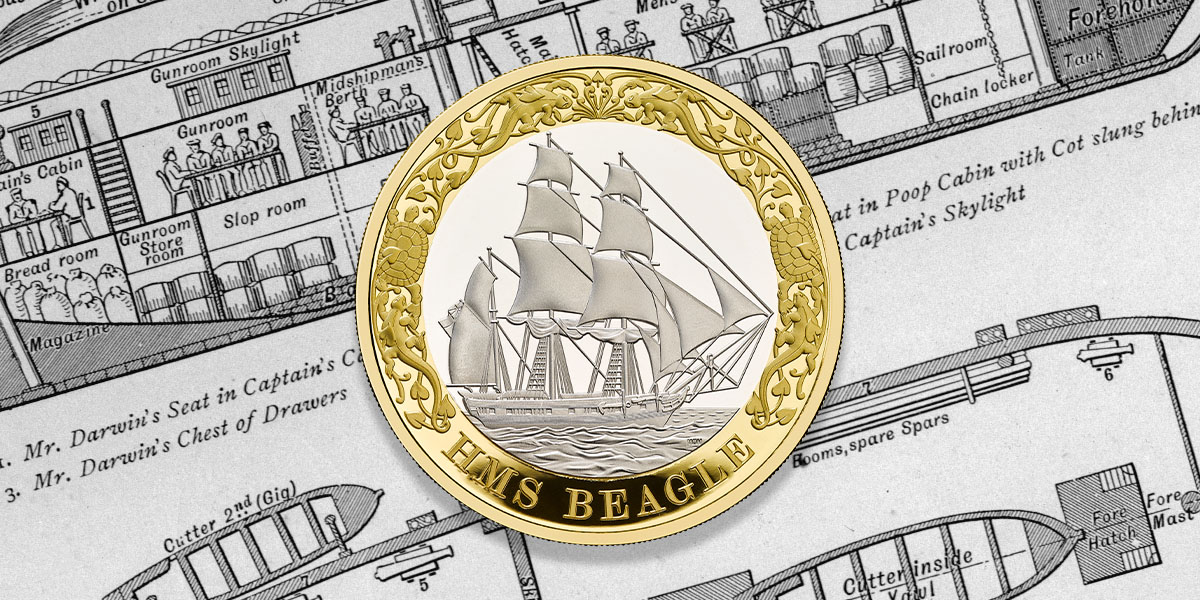
A Naturally Beautiful Design
Designed by William Webb, the reverse of the coin features a depiction of the famous vessel at its centre. Framing HMS Beagle is a decorative border comprising a selection of the animals studied by Charles Darwin during the ship’s second expedition. Created in collaboration with Royal Museums Greenwich, this coin is the perfect gift or keepsake for science, discovery and exploration enthusiasts.
Be Inspired