One of the famed symbols of Henry VIII’s dynastic legacy, the Royal Dragon joins our Royal Tudor Beasts Collection as the subject of our latest heraldic UK coin.
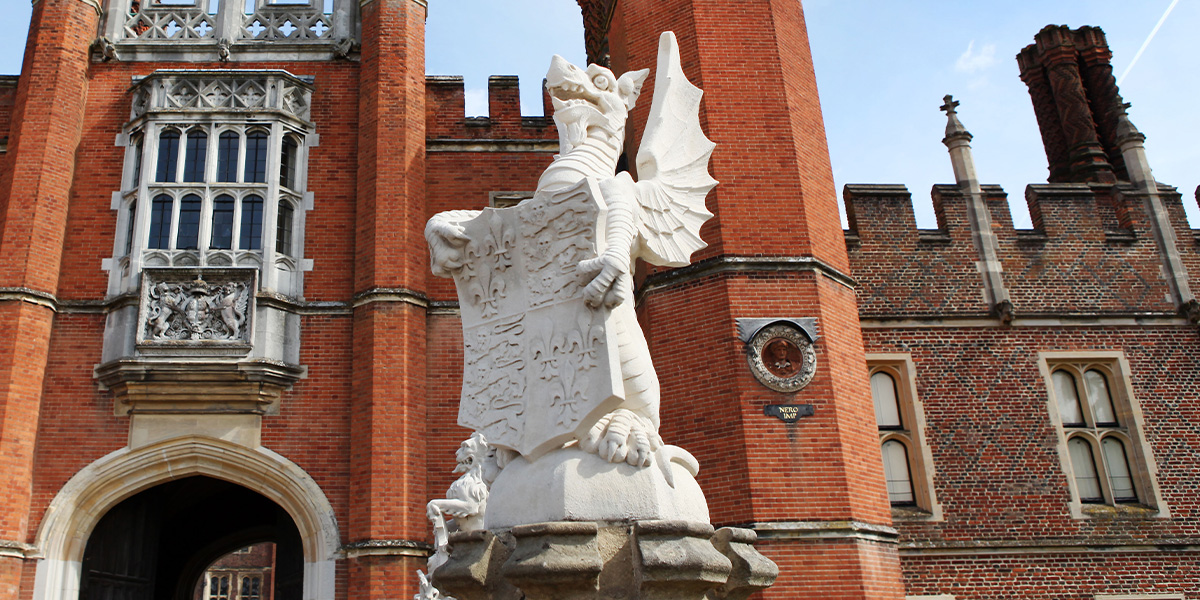
A proud Tudor monarch, Henry VIII was said to have a particular interest in heraldry, utilising the medium to further legitimise his family name and highlight the heritage of his house. It also served as an efficient way to communicate to the masses, as many of the public were illiterate at the time and heraldic symbols were easily recognisable through their distinctive shapes and colours.
In keeping with this theme, Henry VIII commissioned a collection of statues to be incorporated into Hampton Court Palace’s decorative features. Introduced around 1536 following his marriage to Jane Seymour, the Royal Tudor Beasts are the notorious king’s homage to the Tudor dynasty, serving as a reminder of one of history’s most iconic royal houses, whilst also ensuring his family’s reputation remains well represented for generations to come.
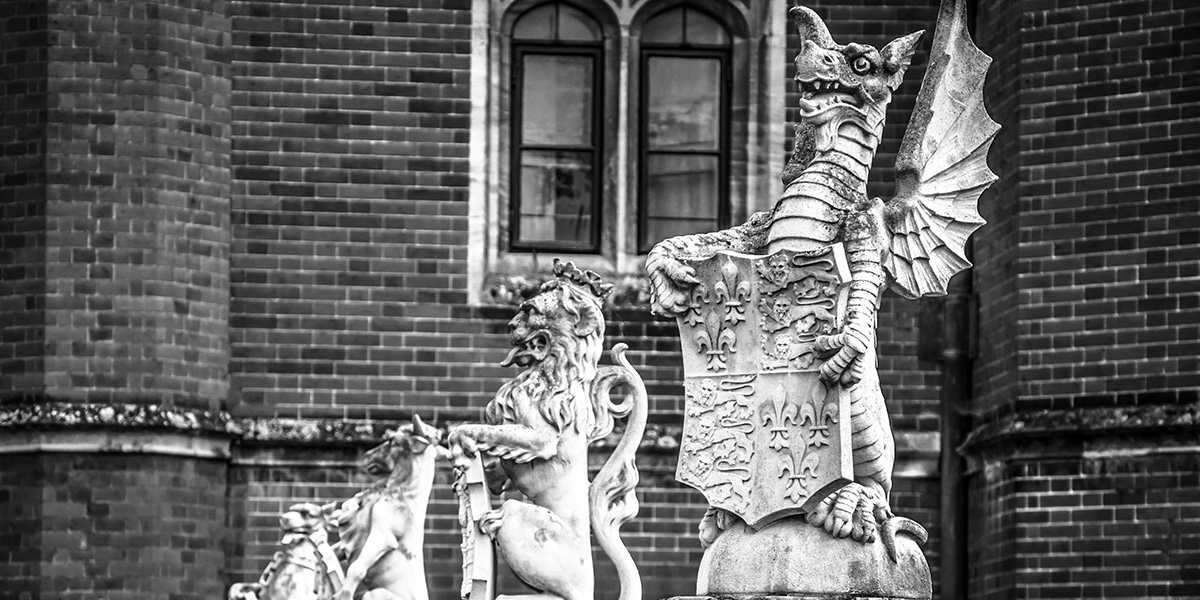
The Tudor Beasts still survey the grounds at various points throughout Chapel Court, as well as residing in the Great Hall. However, many of Henry VIII’s animalistic emblems are found on the Moat Bridge at Hampton Court Palace. Situated on the right-hand side of the bridge, the Royal Dragon is one of these ten beasts, and it proudly stands guard over the regal grounds to this day.
On the surface, the Royal Dragon design bears a striking resemblance to the Tudor Dragon, its serpentine brethren. Boasting the same colour scheme, whilst also being extremely similar in both shape and design, the royal variant has a fiery tongue, bat-like wings and a four-legged body typical of a draconic figure.
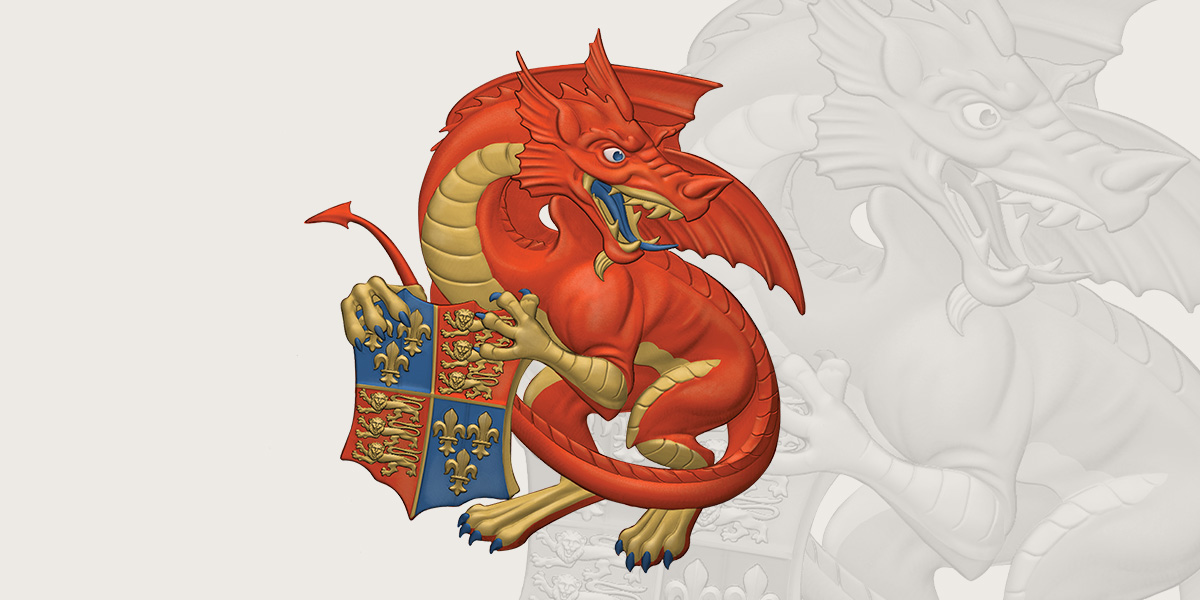
Another key feature that distinguishes the Royal Dragon is the shield it clutches tightly in its reptilian claws. Featuring quarterly sections dedicated equally to France and England, the shield includes two sections showing the ‘Azure three fleurs-de-lis Or’ and two featuring the ‘Gules three lions passant guardant in pale Or’, which represents the relationship between England and France. Despite the Royal Tudor Beasts being partly commissioned by Henry VIII for wife Jane Seymour, the Royal Dragon’s French influence remains a curiosity in terms of its connection to Seymour, who had very little connection to France.
Unlike her predecessor Anne Boleyn, who had significant ties across the Channel, Seymour was firmly rooted in Britain and rarely travelled outside of England.
That being said, the Royal Tudor Beasts represent both Henry VIII and Jane Seymour’s heritage, and the king’s connection to France is far more historically significant. Upon his accession to the English throne, the Tudor king had long claimed the title of ‘King of France’, but this never became official.
Henry VIII’s relationship with France was dominated by war, conflict and unrest. Nevertheless, in 1546, the king signed the Treaty of Camp and officially claimed dominion over Boulogne, which had been held under English occupancy since 1544, in the process, furthering his historical links to France. The strategic port location remained under British rule for several years before being returned to France after Henry VIII’s death for 2 million crowns.
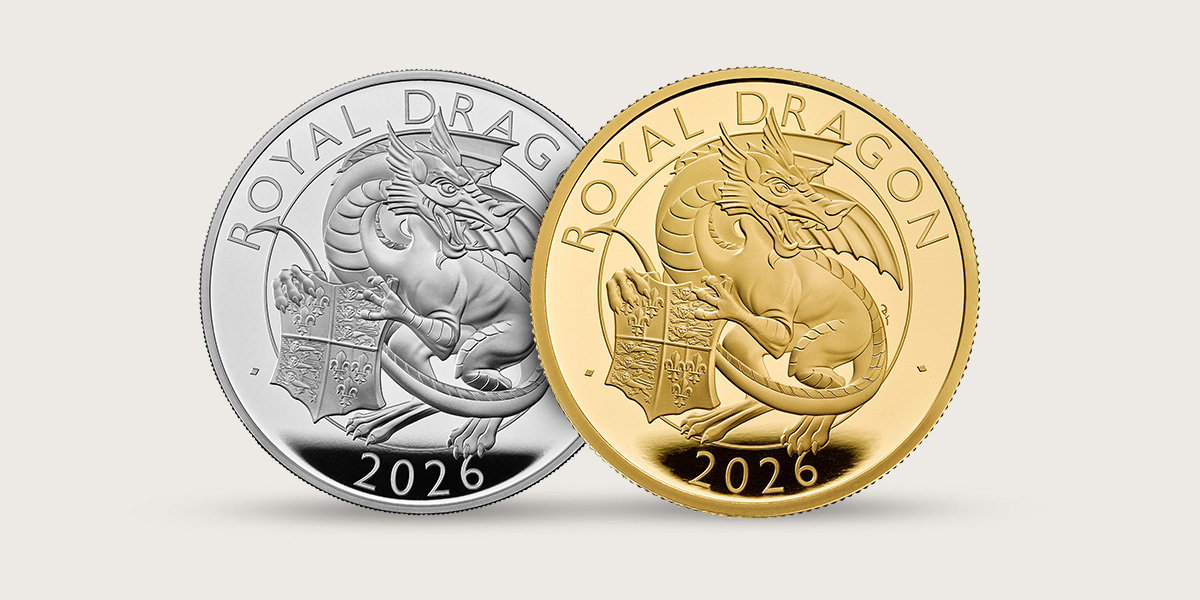
A symbol steeped in history, the Royal Dragon is a key piece of Tudor iconography, and it is a notable presence on the Moat Bridge at Hampton Court Palace. We proudly celebrate this formidable fire-breather with a UK coin featuring artwork created by collection designer David Lawrence.
An accomplished sculptor and illustrator with more than 30 years of experience, David Lawrence has provided numerous designs for UK coins and is a favourite of many coin collectors. For the Royal Dragon UK coin, his dynasty-praising design features a contemporary reimagining of the statue.
Enter the realm of the Royal Dragon by adding this majestic coin, which is available in a variety of commemorative editions.
Be Inspired

© Historic Royal Palaces 2026 Produced under licence from Historic Royal Palaces Enterprises Limited
