The guinea was first struck in 1663 during the reign of Charles II. The nickname “guinea” came from the Guinea Coast which was the source of much of the gold used to produce the coins and was eventually adopted officially. The elephant mark which you can see on the image below was the symbol of the Royal Africa Company. Some guineas produced by the same company feature an elephant and castle.
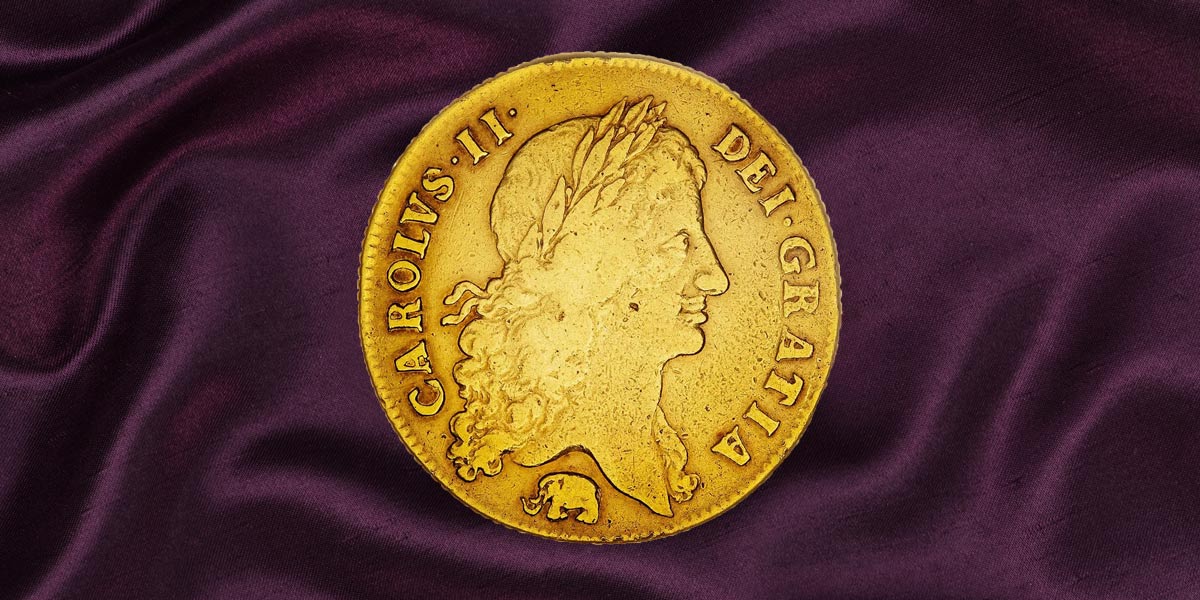
The East India Company was another trading organisation that imported gold to Britain, some of which was minted into coins of the realm. Guineas struck from this gold could be identified by the mark “EIC”.
The guinea remained in circulation until 1814, during the reign of George III, before ultimately being replaced by the gold sovereign (worth one pound) following the Coinage Act of 1816.
Five Facts about the Guinea
- The guinea’s initial value was approximately 20 shillings. However, due to rising gold prices and resulting fluctuations in value, it was assigned a fixed value of 21 shillings in 1717 by Sir Isaac Newton, then Master of the Mint (approximately £1.05 in today’s money).
- The guinea contained approximately one quarter of a troy ounce of 22-carat fine gold.
- The guinea was the first coin to be produced using mechanised minting techniques, marking a significant departure from the traditional hand-struck hammered coins that had preceded it. In February 1733, a royal proclamation formally prohibited hammered coins from circulation and The Royal Mint re-coined £700,000 into guineas and half-guineas (equivalent to approximately £132 million today).
- The Newmarket Guineas are regarded as two of the United Kingdom’s most prestigious horse races. The 2,000 Guineas was first run in 1809, followed by the 1,000 Guineas in 1814. Both races were named after their original prize funds, a tradition that continues to this day.
- During the eighteenth and nineteenth centuries, luxury goods became increasingly accessible in England as international trade expanded. High-value items such as furniture, livestock, and horses were commonly priced in guineas, reflecting the coin’s strong association with prestige and quality.
Famous Guineas
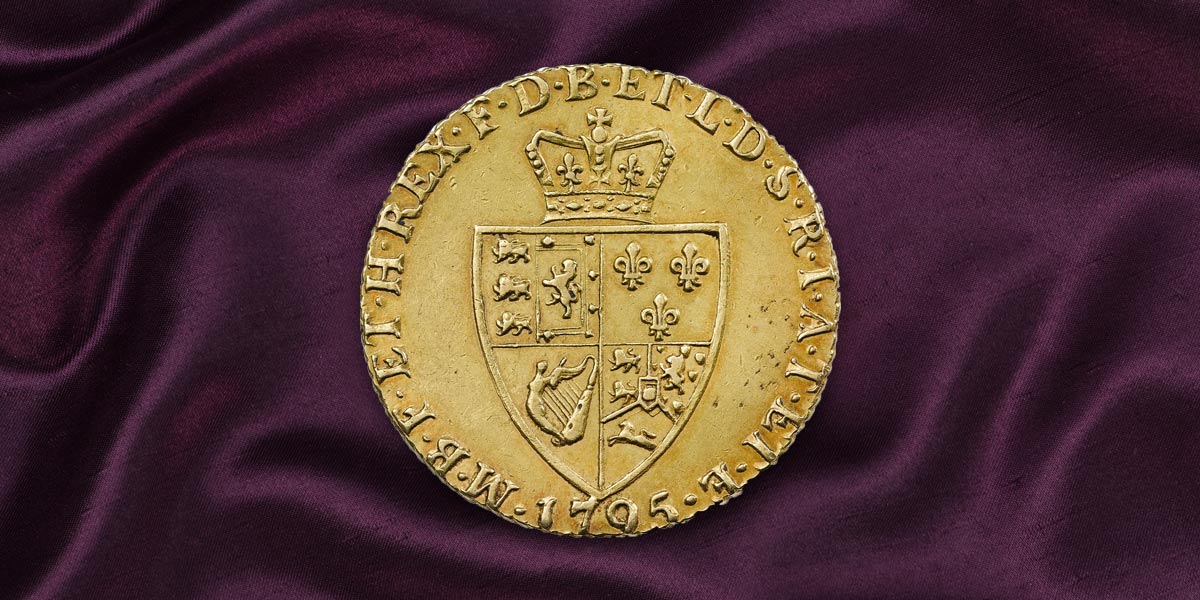
The Spade Guinea
Perhaps the most famous of all guineas, the “Spade Guinea” was struck during the reign of George III. Produced for just 12 years between 1787 and 1799, it took its nickname from the distinctive reverse design, which featured a spade-shaped crowned quartered shield of arms resembling the ace of spades in a deck of cards.
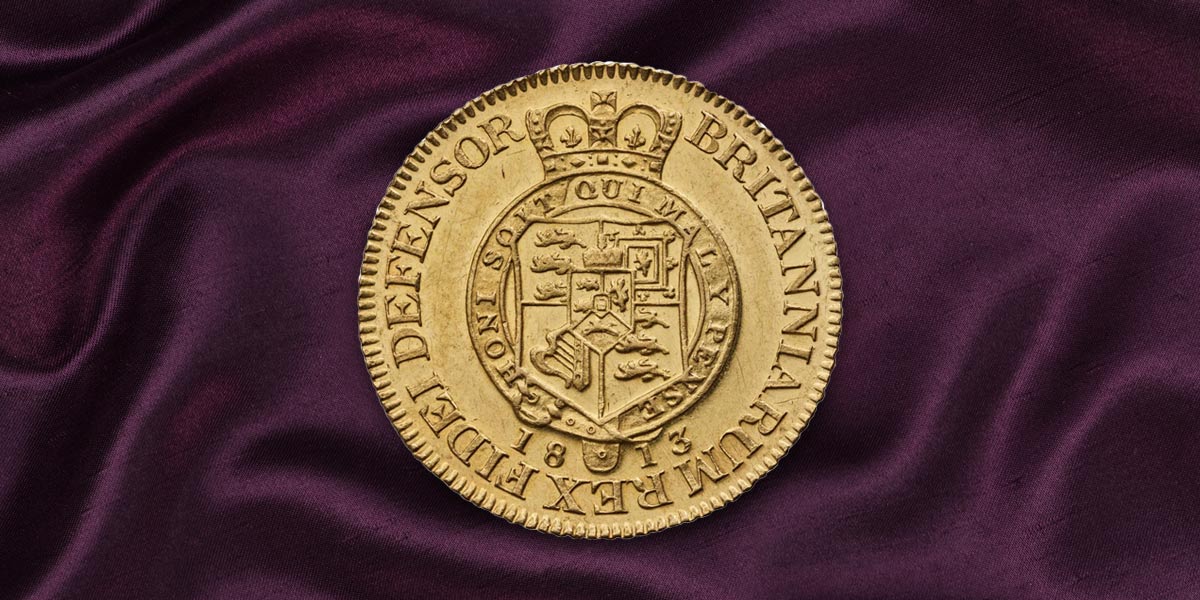
The 1813 Military Issue
The Military Guinea was the final guinea coin ever struck. It is best known for having been specially minted to pay the Duke of Wellington’s army during the Napoleonic Wars.
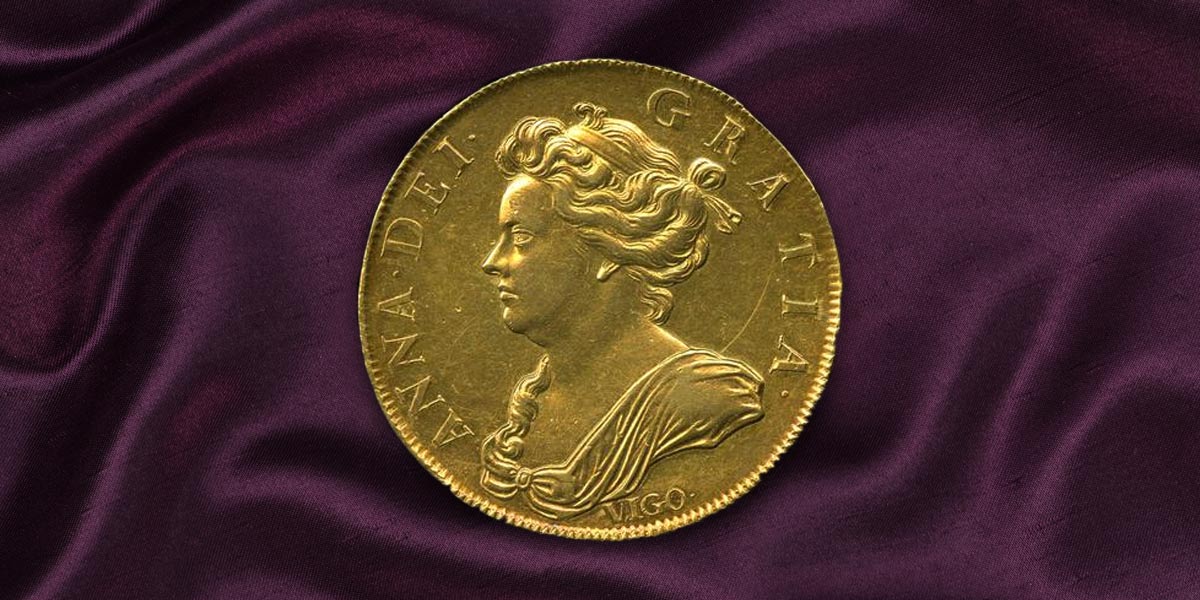
The 1702 Vigo Guinea
Struck during the reign of Queen Anne, the Vigo Guinea was minted from gold captured from Spanish ships at Vigo Bay in northern Spain. Relatively few were produced, making it a rare and highly sought-after coin, easily identified by the distinctive “VIGO” mark beneath the bust.
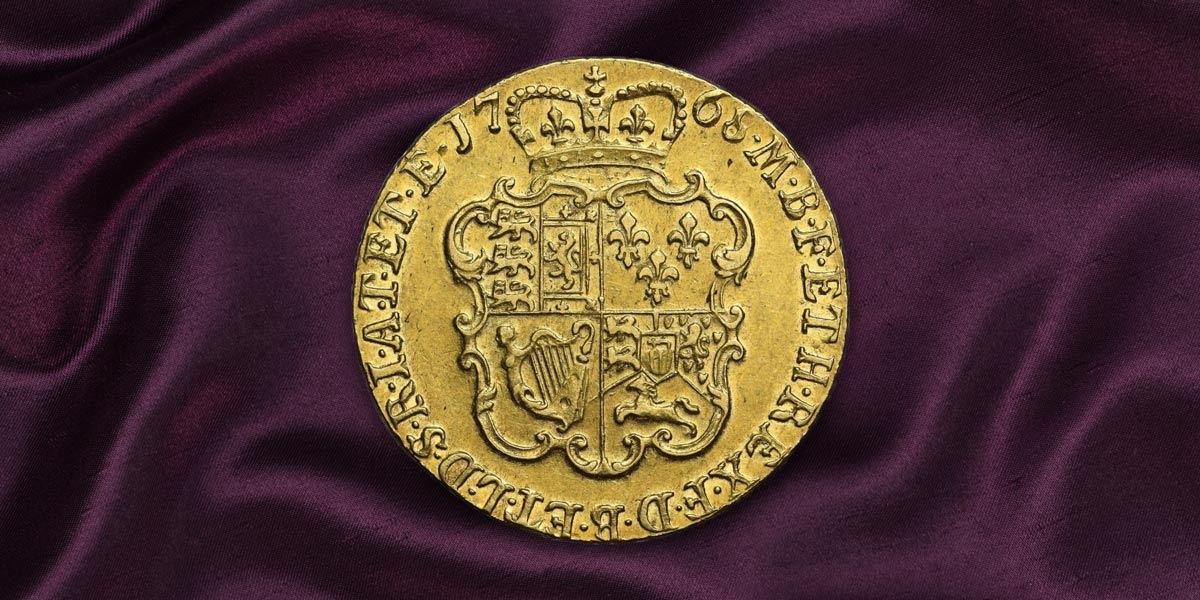
The Rose Guinea
The Rose Guinea, struck between 1663 and 1684 during the reign of Charles II, was the first gold coin to be produced using mechanised minting techniques. It takes its name from the distinctive reverse design, which featured a crowned shield adorned with a rose.
We Recommend
1714-1727 George I Gold Guinea
Minimum of Fine Condition
Price: £2,650.00
1663-1684 Charles II Guinea
First Monarch of the Gold Guinea
Price: £3,950.00
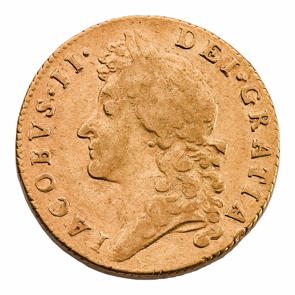
James II Gold Guinea Coin
Fine Condition
Price: £3,950.00
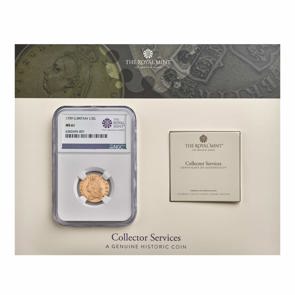
1759 George II Gold Half Guinea
Graded by NGC as MS61
Price: £4,100.00
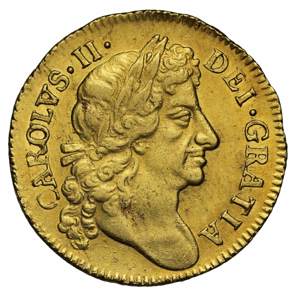
1678 Charles II Guinea, Fourth Bust
Very Fine Condition
Price: £7,000.00
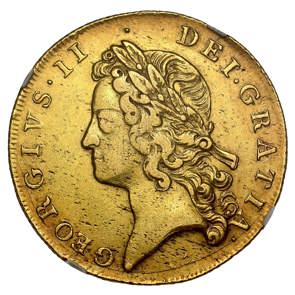
1739 George II Gold Two Guineas
Graded by NGC as XF45
Price: £6,995.00
