
5 Facts About the 5p
From decimalisation to changes in monarch and design, the five pence coin has been part of many historic moments. This year, 23.2 million of the first 5p coins featuring King Charles III are entering circulation across the UK. Discover more about this release—plus five fascinating facts every collector should know about Britain’s smallest circulating coin.
New Coins in Circulation
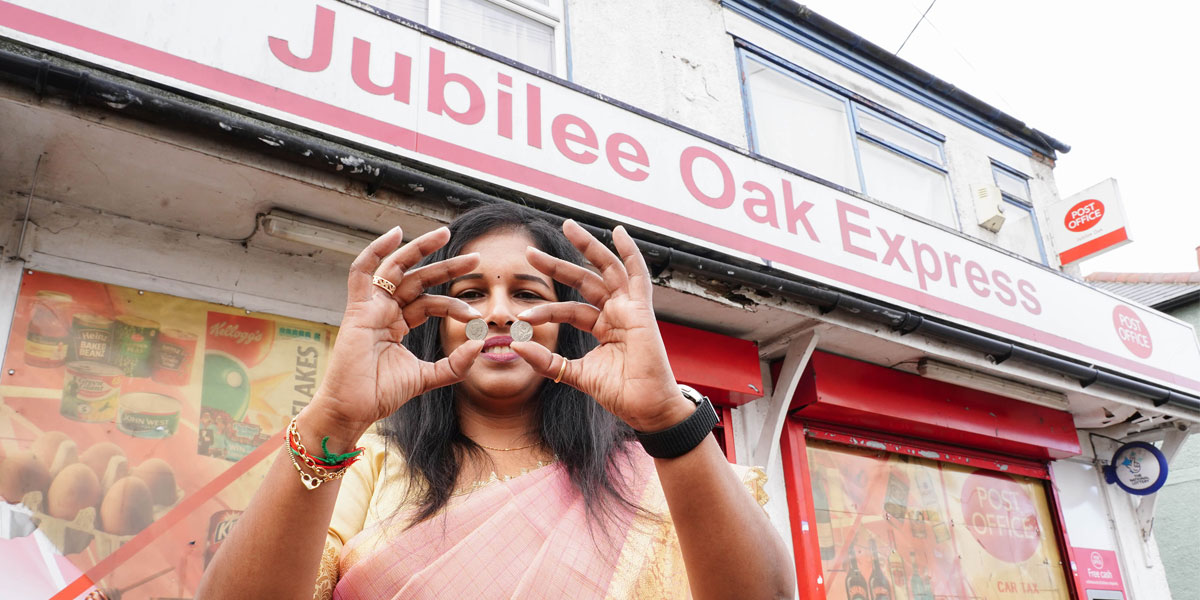
In 2025, 23.2M 5p coins are entering circulation. Dated and minted in October 2023 when a total of 32.4M were produced, they are being released due to demand for this denomination. They will be available through banks and Post Office branches nationwide, with a special quantity provided to Post Offices with "Oak" in their name, creating a unique connection between the coin's design and its distribution.
Design changes to the 5p coin are rare, with the previous design—featuring part of the Royal Shield—first introduced in 2008. That makes this release particularly significant: not only is it the first time the 5p bears the effigy of His Majesty King Charles III, but it also marks the first redesign of one of the UK’s smallest circulating coins in 17 years.
5 Facts About the 5p Coin
Decimalisation
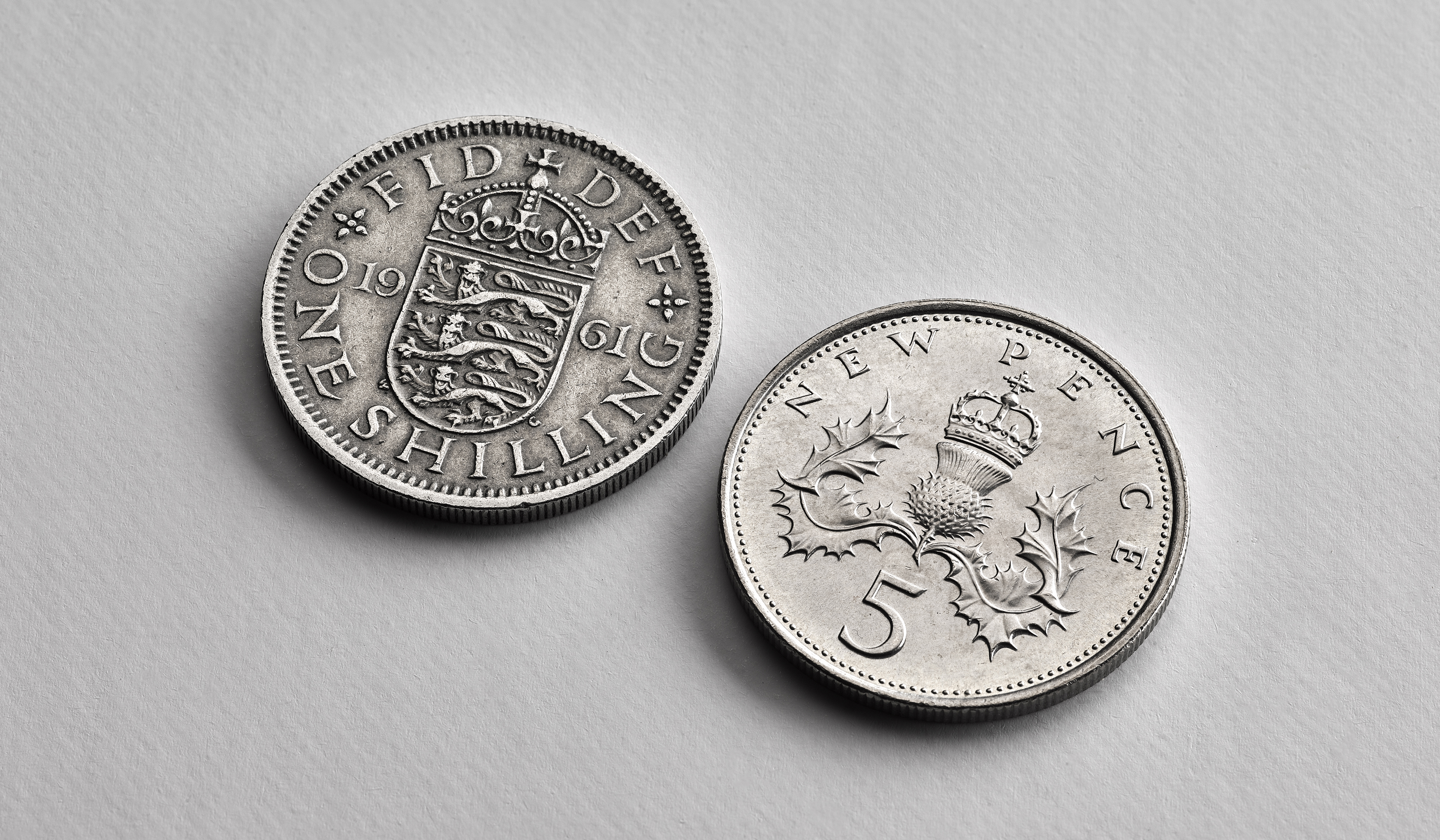
With the introduction of decimal coinage, the shilling was redenominated as the new 5p, making its debut alongside the 10p in February 1968. Matching the shilling in both size and value, it helped ease the transition to decimal currency. The two coins circulated side by side until the shilling was demonetised in 1990. The obverse of the earliest five pence coins featured Queen Elizabeth II’s second portrait, created by Arnold Machin. From 1985, it was replaced by Her Majesty’s third portrait designed by Raphael Maklouf in line with other denominations.
A Change in Appearance
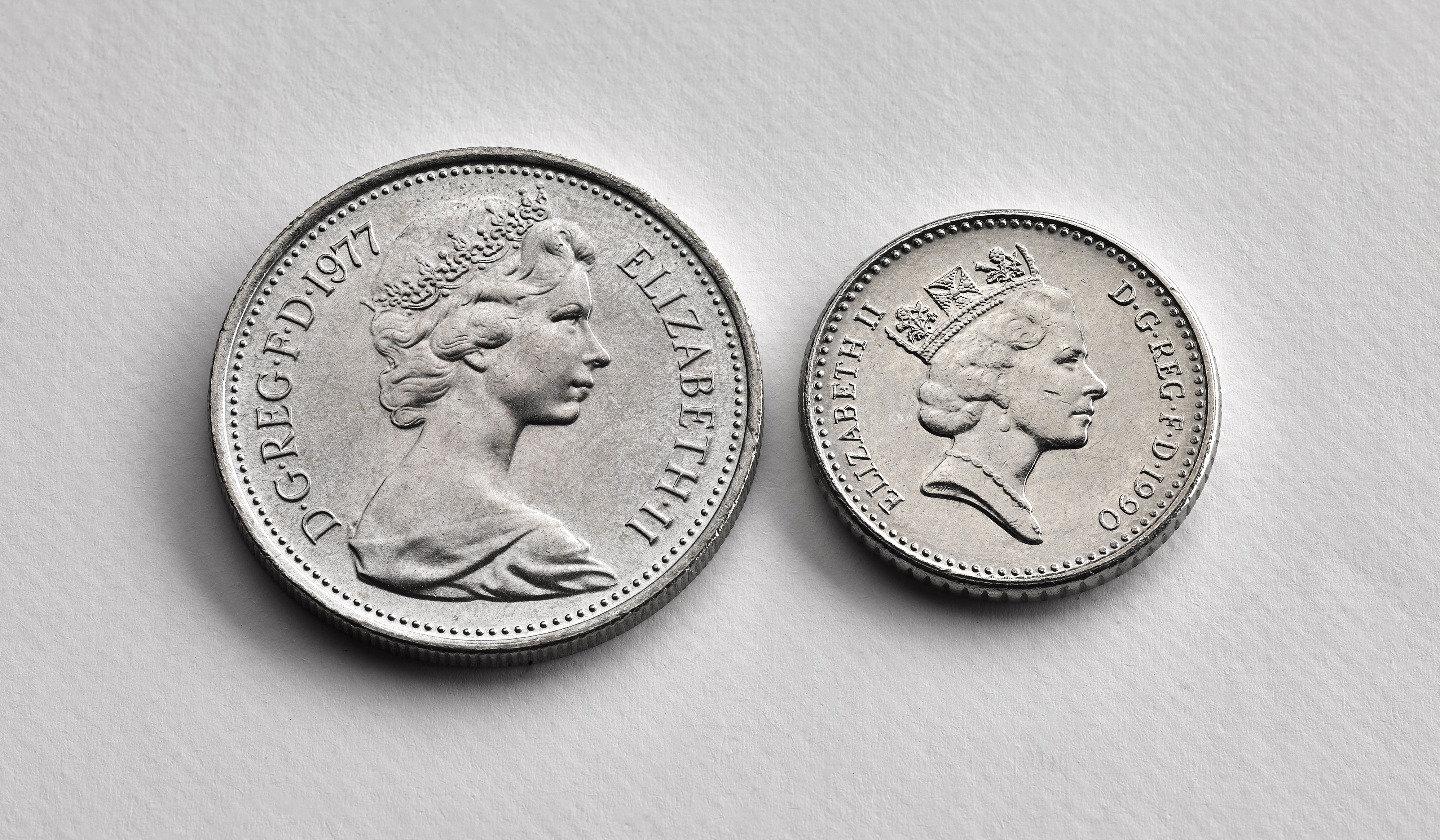
After a review of UK coinage in 1987, the Government confirmed plans for a smaller five pence coin. Surveys found it was felt generally that the coins in people’s pockets were too heavy and bulky. Reduced from 23.59mm to 18mm, it retained the same familiar design. It entered circulation in 1990, replacing the larger version, which was withdrawn at the same time.
Magnetic
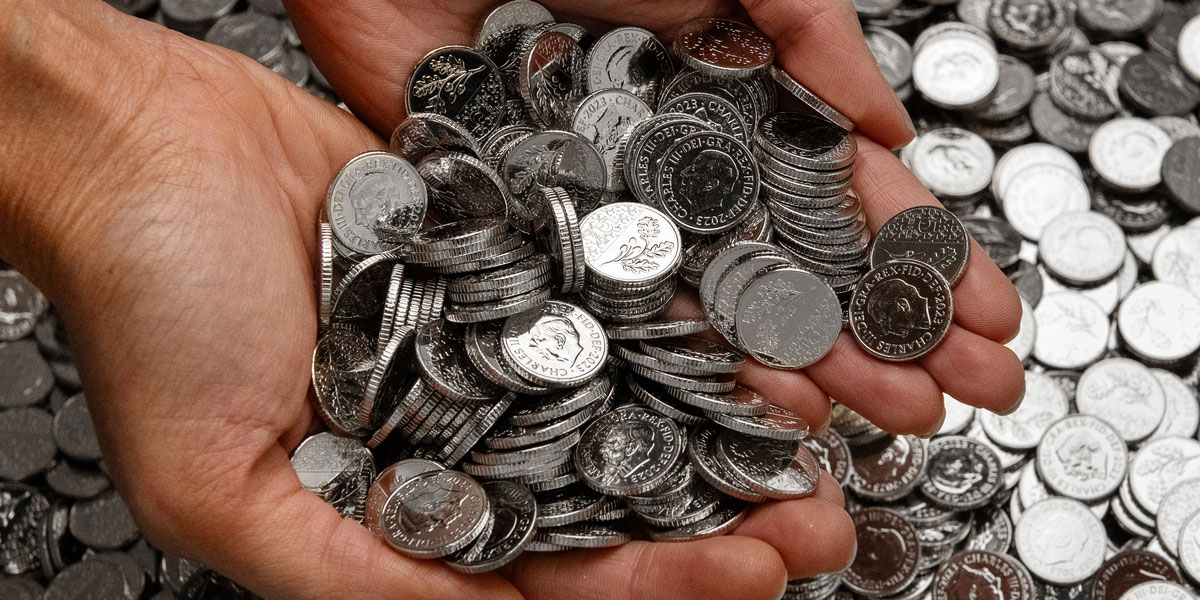
In 2011 the composition of 5p coins changed from cupro-nickel to nickel-plated steel to reduce the cost of production. Their metal content changed once again in 2012 when they started to be made from plated-steel, making them slightly magnetic. How likely are you to find a magnetic 5p in your change? In 2013, The Royal Mint began a programme to recover old 5p and 10p coins from circulation. Since then, over 330 million of the plated-steel coins have entered circulation, and with more set to join them in 2025 you have a high chance of coming across one!
The Lowest Mintage
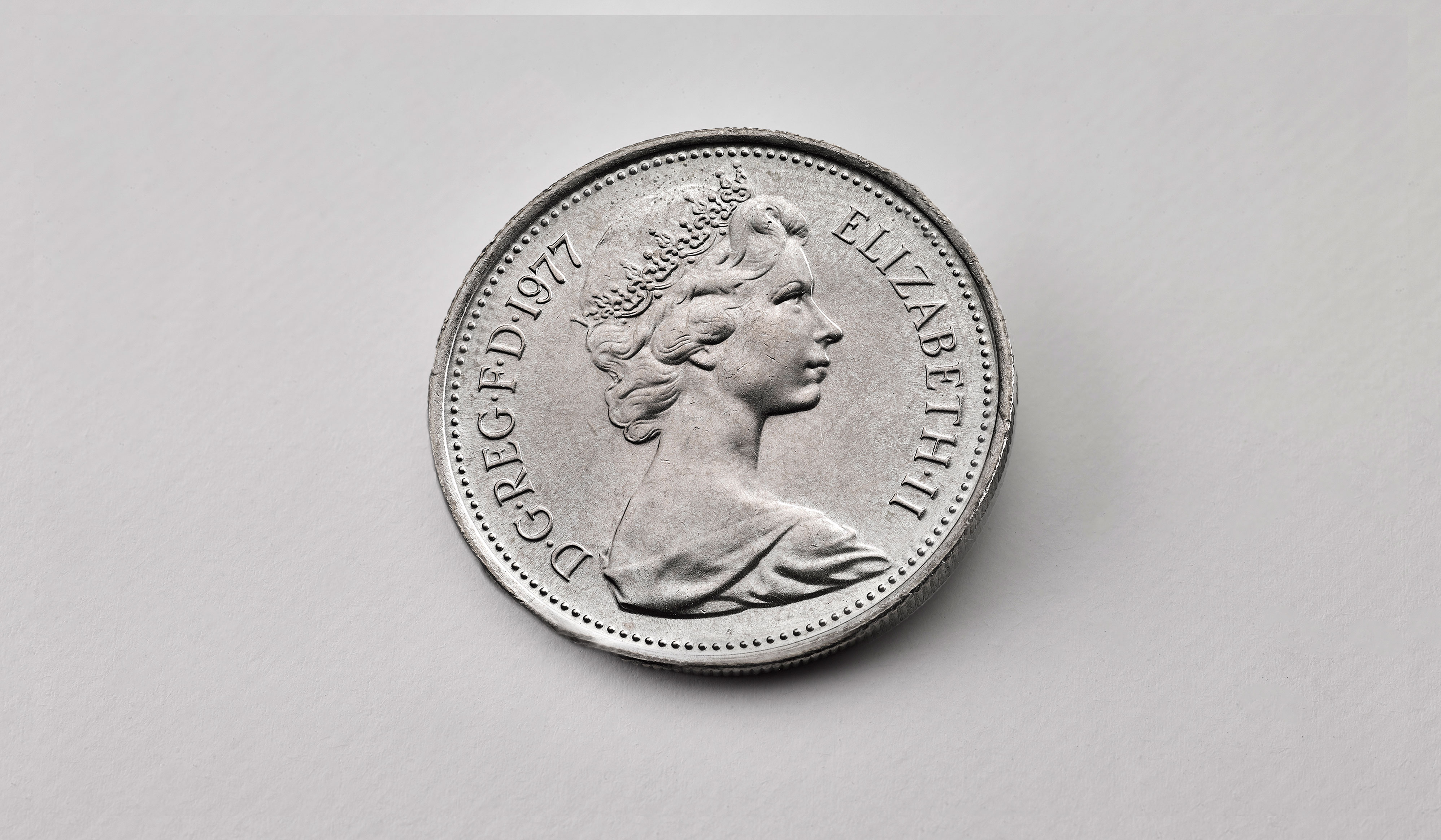
With just 24,308,000 issued, the 1977 5p holds the record for the lowest mintage to date. Featuring Queen Elizabeth II’s second portrait by Arnold Machin on the obverse, Christopher Ironside’s crowned thistle appeared on its reverse side. The thistle design was the coin’s standard design during the “New Pence” era.
A New Monarch and a New Design
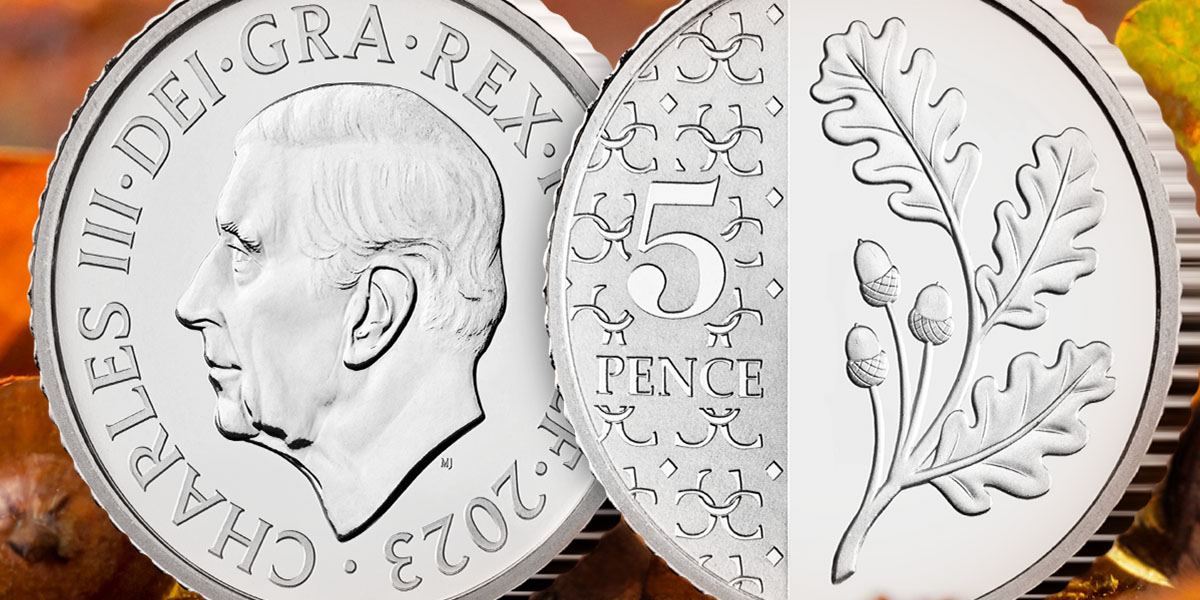
Following the passing of Queen Elizabeth II, eight new definitive coin designs were unveiled in 2023 to mark the reign of King Charles III. Personally approved by His Majesty, the designs celebrate his deep passion for nature and environmental protection. Each coin features British flora and fauna—some endangered, others symbolizing conservation success. The UK 5p coin displays a leaf taken from an oak tree, signifying its role as a rich habitat for biodiversity in British woodland areas. Supporting more life than any other native tree species in the UK, the oak tree has a long association with monarchies, as ancient kings of Britain and Roman Emperors wore crowns of oak leaves.
You May Also Like

Price: £75.00
The 2025 United Kingdom Proof Coin Set
Limited Edition 7,500
Price: £190.00
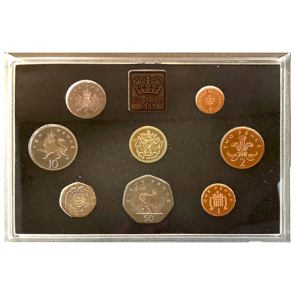
1983 Queen Elizabeth II Annual Proof Set
First Year of the £1 coin
Price: £65.00

Price: £39.50
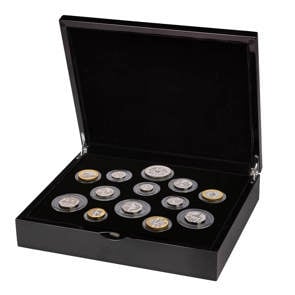
The 2025 United Kingdom Silver Proof Coin Set
Limited Edition 550
Price: £825.00
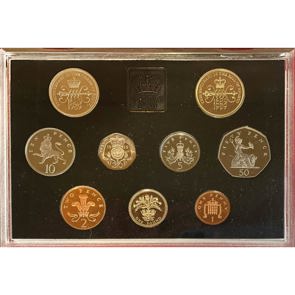
1989 Queen Elizabeth II Annual Proof Set
Includes two commemorative £2 coins
Price: £110.00
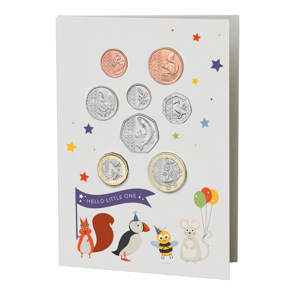
Price: £39.50
