The Great Debasement and The Tudor Monetary Revolution
During the Tudor era, coinage underwent significant changes, particularly during the reign of King Henry VIII. Silver content was reduced during the great debasement, new coins were introduced, and there was a shift to more realistic portraiture.
The Great Debasement
Between 1544 and 1551, The Great Debasement saw the silver content of coins such as groats and pennies significantly reduced. By replacing precious metals with cheaper copper, Henry VIII was able to generate additional revenue to fund military operations and other royal expenditures. In doing so, the king broke the established covenant of a coin being worth its value in precious metal. With a value below its stated denominational value, public trust in the coinage reduced.
The reduction in cost also caused a reduction in quality. The thin layer of pure silver rubbed away through use, mainly at the area of highest relief. Copper became exposed on the King’s nose, giving rise to his famous nickname, “Old Coppernose”.
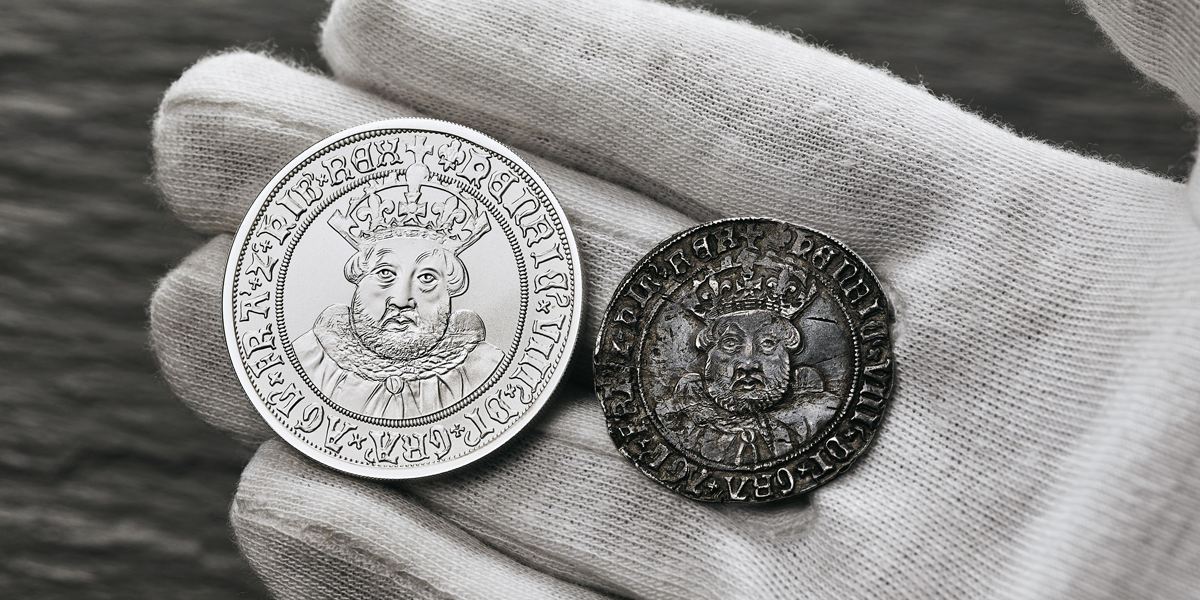
In 2023, The Royal Mint remastered the King’s portrait on a commemorative coin. Due to the silver wearing away on the original coins, it was difficult to reproduce as the fineness and clarity of the design had lost definition over the years.
New Coins
During his reign, Henry VIII introduced or reformed several coins, most notably the George Noble, the Crown of the Rose and the silver Crown.
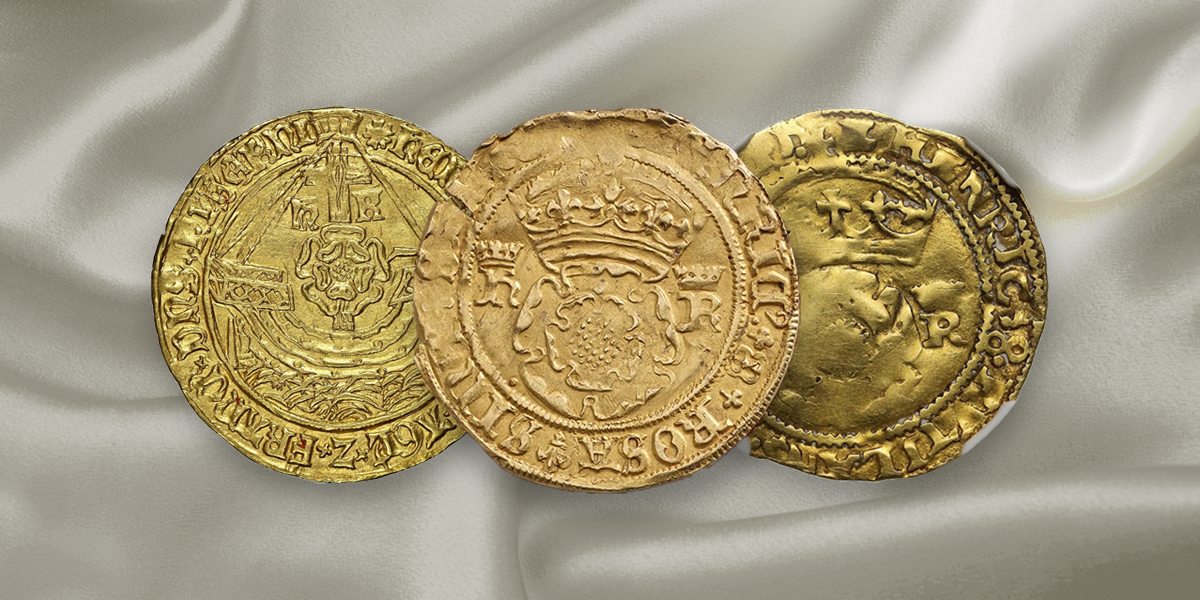
- The George Noble – introduced in 1526 to replace the earlier noble, this gold coin was valued at 6 shillings and 8 pence.
- The Crown of the Rose – a new gold coin introduced in 1526, valued at 4 shillings and 6 pence.
- The gold Crown and Half Crown – introduced in 1544, they were valued at 5 shillings and 2 shillings and 6 pence respectively.
Natural Portraiture
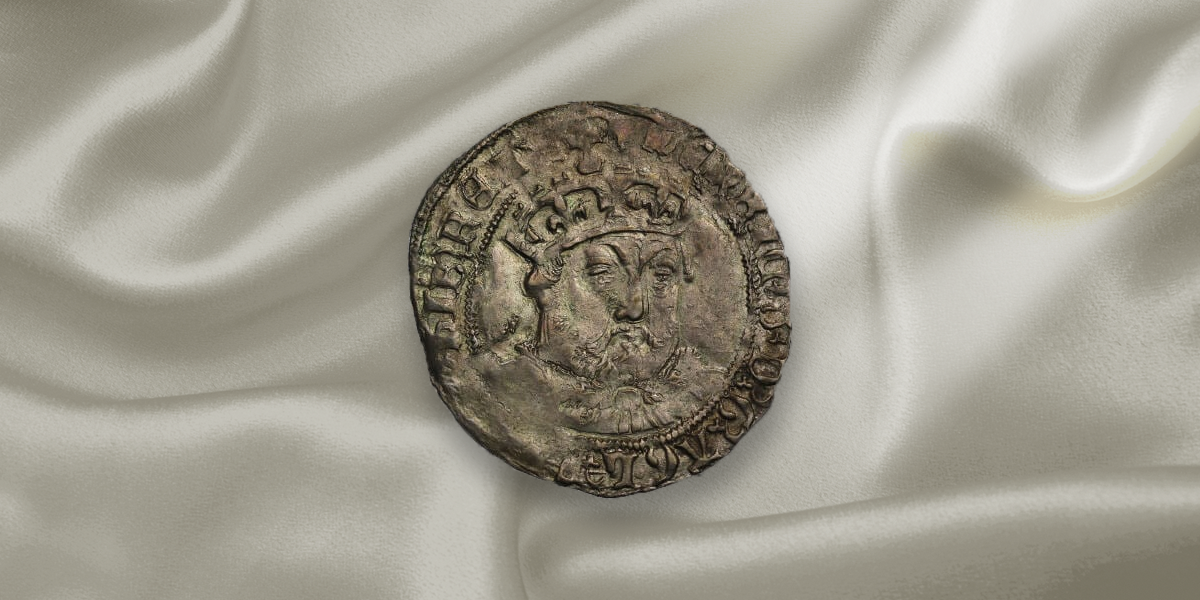
During the Renaissance, a movement was made towards heightened realism resulting in coin portraits in the Tudor era becoming far more lifelike than those of earlier reigns. In 1494, Henry VII appointed Alexander of Brugsal as engraver at The Royal Mint. A highly skilled artist, the profile portrait he created of the king is highly regarded as a work of numismatic art. For the first time in centuries the king was represented as he appeared to the artist, giving people a more realistic impression of the monarch. This approach continued throughout the era of the House of Tudor.
