1066: The Norman Conquest Told Through Coins
In 1066, the infamous Battle of Hastings took place in East Sussex. The conflict between William, Duke of Normandy, and Harold II resulted in the Norman Conquest, a defining moment in English history that ended Anglo Saxon rule and can be traced through the coinage of the period.
The Three Kings
Three different kings ruled England in 1066: Edward the Confessor, Harold II and William I. The coins produced during this period carried the names and portraits of each ruler, providing a fascinating record of a year in which the English throne changed hands twice.
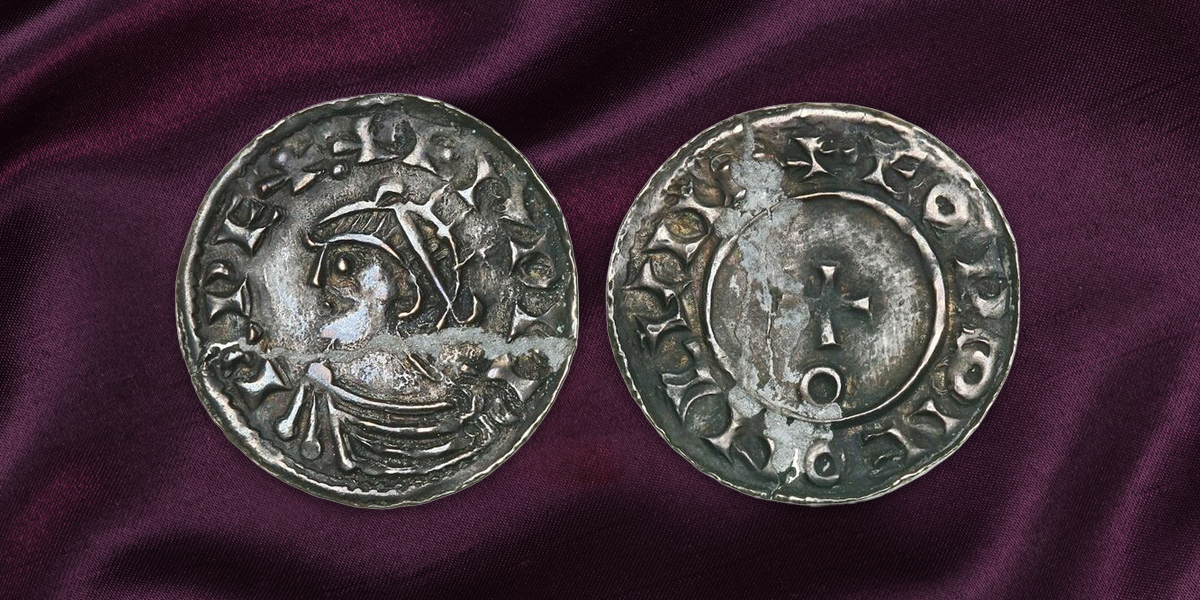
Edward the Confessor
Edward the Confessor ruled England from 1042 until his death in January 1066. During his long reign, silver pennies were produced at numerous mints across England, with their designs changing regularly. These included portraits showing Edward crowned, wearing a diadem or enthroned.
An earlier issue, known as the PACX type, featured the letters P, A, C and X around the reverse cross, representing the Latin word pax, meaning ‘peace’. The coins also identified the moneyer responsible for their production and the mint where they were struck. The Pyramids type was in circulation towards the end of Edward's reign, struck around 1065 and 1066.
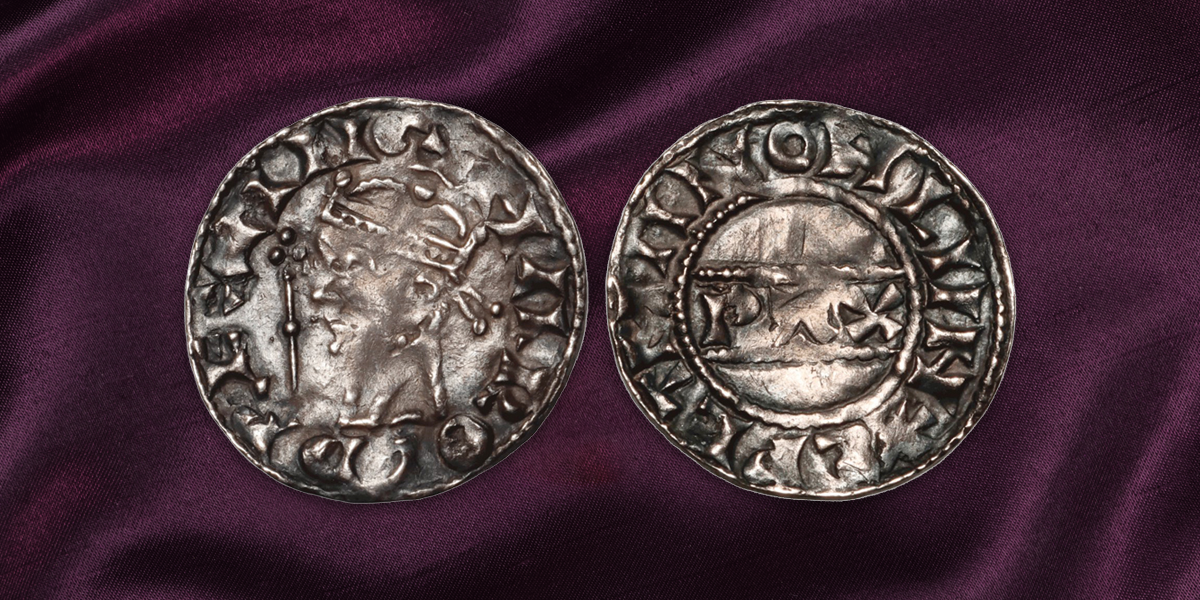
Harold II
Following Edward’s death, Harold II became king in January 1066 and ruled for just nine months. Despite his brief reign, silver pennies bearing his name and portrait were produced at mints across England.
Harold’s principal coin design is known as the PAX type (a different spelling to Edward the Confessor's coins). The reverse prominently featured the word PAX, the Latin word for ‘peace’, which in hindsight could be seen as ironic given the conflict that came to define 1066.
The obverse generally featured a crowned portrait of Harold with a Latin inscription identifying him as king. Harold was killed at the Battle of Hastings on 14 October 1066, bringing his short reign to an end.
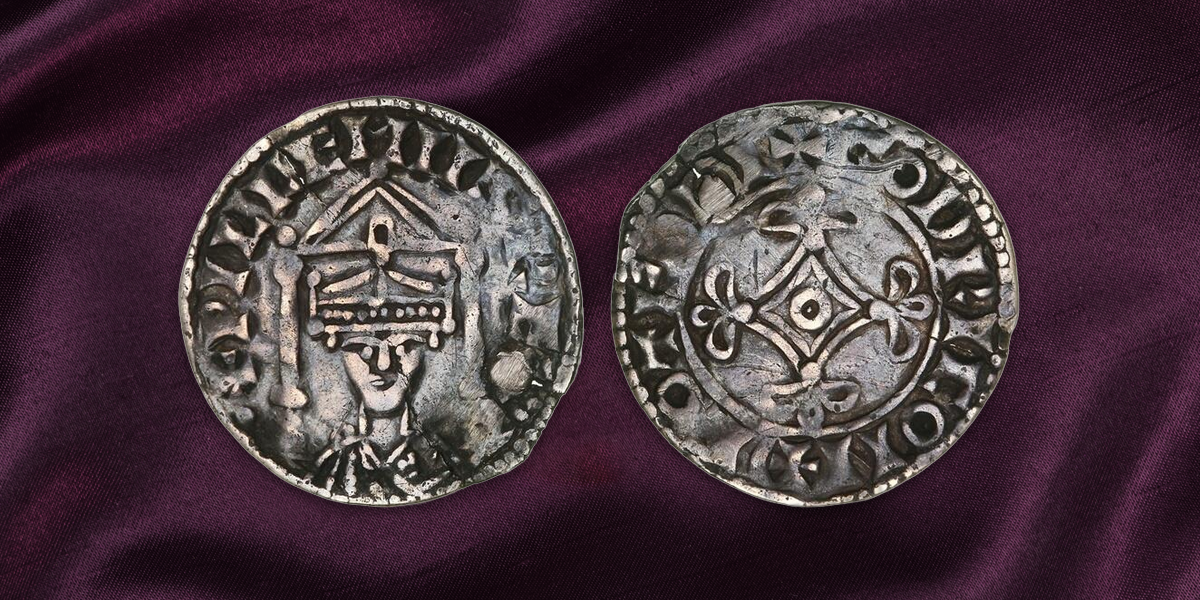
William I
Following his victory at Hastings, William the Conqueror was crowned king on Christmas Day 1066 and ruled England until 1087. His accession brought Norman rule to England, but the existing Anglo-Saxon system of coin production continued.
Silver pennies were still produced through the established network of English mints and moneyers. However, the coins now carried the name and portrait of William. His earliest English pennies are known as the Profile Cross Fleury type and were produced in the period immediately following the Norman Conquest. Several other distinctive designs followed during his reign, including the Bonnet, Two Sceptres and Two Stars types.
Coins of the Conquest Today
960 years later, coins from the period are still being unearthed. Discoveries range from individual finds to larger hoards that may have been buried for safekeeping during periods of uncertainty. One of the most significant discoveries is the Chew Valley Hoard, found in Somerset in 2019. Containing more than 2,500 silver pennies, predominantly of Harold II and William I.
From the final coinage of Edward the Confessor to the pennies of Harold II and William I, the coins of this period provide a fascinating record of the events of 1066 and the transition from Anglo Saxon to Norman rule.
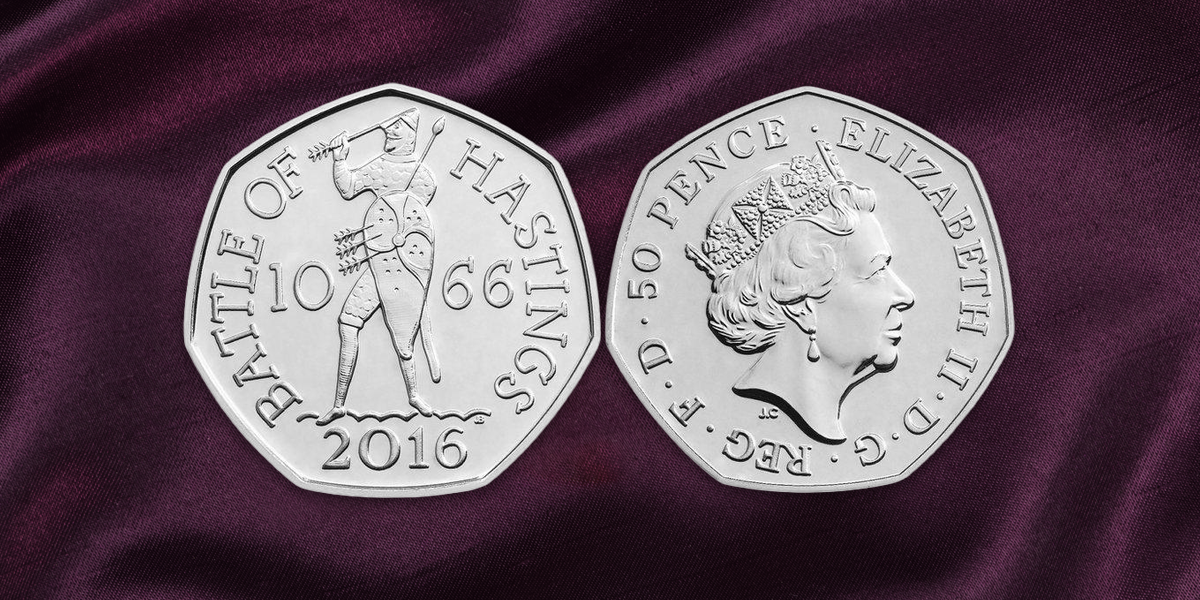
A Collectable Coin
In 2016 The Royal Mint struck a 50p coin to commemorate the 950th anniversary of The Battle of Hastings. With a mintage of 6,700,000, the coin was released into circulation, giving collectors the opportunity to find one in their change.
The design by John Bergdahl was inspired by the Bayeux Tapestry which is the only visual record of the battle. The reverse shows a soldier with an arrow inspired by King Harold, while the obverse bears Queen Elizabeth II's fifth portrait, designed by Jody Clark.
