Are We Set For A Golden 2026?

By
 Checked by ,
Updated
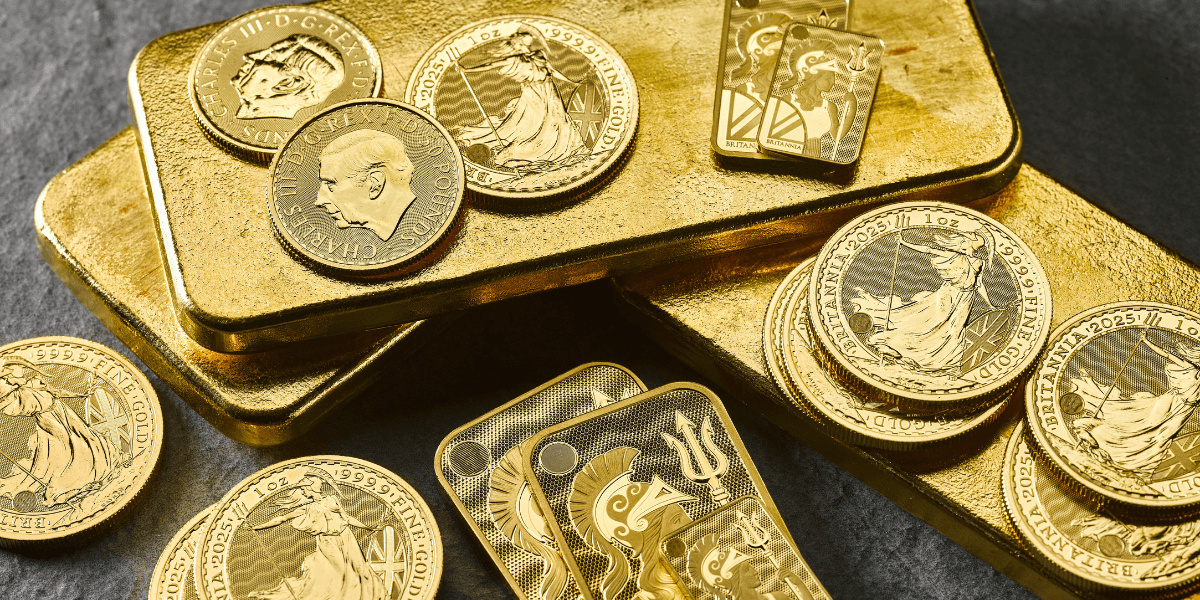
Gold investors have had plenty to celebrate in recent years with prices rising 14% in 2023, 27% in 2024 and an astonishing 56% in 2025 so far.1 But after a recent tumble from all-time highs, has the party come to an end?
As 2026 approaches, several powerful forces are on the horizon. US elections, falling interest rates, rising government debts, and concentrated stock market risks are all shaping investor sentiment. This outlook explores five major themes that could influence the gold market over the next year and highlights why precious metals look set to continue to play an important role in diversified portfolios.
US Midterms: Politics Meets Portfolio Strategies
On 3rd November 2026, the United States will hold midterm elections. Every seat in the House of Representatives, more than a third of the Senate, and dozens of gubernatorial positions will be contested. As always, the result will be widely treated as a judgement on the performance of the White House and the Republican legislative majority.
Investors are likely to closely monitor polling trends and policy signals to gauge whether the results will embolden or restrain President Trump as he heads into the second half of his final term as president. The stakes are high: midterm outcomes can reshape spending priorities, change agendas, and intensify the use of Executive Orders by the sitting president.
Even before the final 2026 results are counted, attention is likely to rapidly pivot to the 2028 Presidential race, with markets considering who might lead the world’s largest economy next and what that could mean for trade, taxation, and geopolitics. Political uncertainty can serve to raise volatility, and some investors may see this as a prompt to rebalance and de-risk portfolios.
For precious metals, the key questions may revolve around broad policy direction. Will the election reward fiscal conservatives or fiscal liberals? Will the US Dollar strengthen or weaken in the years to come? Will tariffs and trade tensions escalate or deescalate? All of these could impact investor appetites for ‘safe-haven’ assets, and proclivity to choose gold over alternatives like government bonds.
More specific policy points may shape precious metals markets and prices. A renewed political push for green energy expansion could support increased demand for silver (used heavily in solar panels) and platinum, which plays a key role in the production of green hydrogen. Likewise, efforts to accelerate AI infrastructure could boost silver demand due to its use as a conductor in AI data centres. Meanwhile, the US Department of the Interior’s 2025 decision to add silver to the Critical Minerals List introduces a new strategic dimension. Any further shift toward resource security and protectionism, in the US or internationally, could also significantly impact supply and demand dynamics in the silver and platinum markets.
It may also be interesting to note that demand for gold bars and coins in the US is currently very low. Data from the World Gold Council shows US gold coin and bar demand for the first 3 quarters of 2025 was down 46% compared to the same period in 2024, and down 64% compared to 2023.2 How much this has to do with politics is debatable, but we have shown that there does appear to be at least a correlation between the party occupying the White House and sales of US Mint gold bullion coins. Might a Democratic victory in November prompt an increase in American gold-buying?
Monetary and Fiscal Policy: A Friendlier Backdrop for Gold?
2024 and 2025 have been characterised by falling interest rates in most major Western economies, and most rate setters expect interest rates to continue to fall in 2026. In November, the Bank of England said ‘interest rates will probably continue to fall gradually’3, while the US Federal Open Markets Committee is also forecasting lower interest rates.4 Gold and government bonds are often both seen as ‘safe-haven’ assets by investors, and can sometimes compete for the same share of a diversified investment portfolio. When interest rates are high investors are often attracted to the higher yields paid by government bonds, but when rates are falling, the opportunity cost of holding gold instead of bonds is reduced, and so lower interest rate environments are traditionally seen as positive for gold.
While monetary policy might be favourable, fiscal policy could also aid gold. Levels of government debt became a talking point in 2025 and this focus could intensify in 2026 – particularly amidst the US elections, calls for increased defence spending, and concerns about the rates of economic growth following the pandemic. The concern seems to be widespread:
- In 2025 Moody’s downgraded the US government’s credit rating for the first time ahead of Congress passing the One Big Beautiful Bill Act which could add an estimated $3.4 trillion to government spending over the next decade.5
- France saw three prime ministers resign within 12 months as the country’s parliament repeatedly failed to pass budgets that would cut government spending.
- Germany relaxed its fiscal rules and amended its constitutional debt brake to enable increased defence spending – pushing for the EU to similarly amend its own fiscal rules.
- Japanese Prime Minister Shigeru Ishiba resigned after a series of economic challenges characterised his premiership, he told the Japanese parliament that the situation was ‘worse than Greece’s’ during the sovereign debt crisis. The new Japanese Prime Minister looks set to increase government borrowing.6
- Media reports ahead of the 2026 UK Budget speculated about a series of measures that suggested the UK government were attempting to grapple with its own debt and government spending challenges.
Growing concerns about the impact of large deficits on the value of currencies, the potential for inflation, and longer-term systemic risk could all serve to increase the appeal of gold vis-à-vis bonds in 2026.
AI Stocks: What If…?
AI-related stocks are thought to account for 75-80% of the growth of the S&P500 since 2022,7 but now there is increasing concern about the impact of a potential AI market crash. Google’s Sundar Pichai defended investor excitement about AI stocks but warned that ‘there are elements of irrationality’.8 Institutions like the Bank of England and the IMF have also speculated about whether AI stocks were forming a bubble, and warned about the potential fallout should we see a sharp correction.
Gold is often valued for its history of being negatively correlated with the stock market during extreme market selloffs.9 For this reason, gold is often considered a useful portfolio diversifier, potentially helping to reduce volatility and protect wealth. Should concerns about the AI sector grow, gold could be set to benefit from increased demand for ‘safe-haven’ and ‘non-correlated’ assets.
Central Banks: Still Buying
Central bank gold-buying has often been cited as a major factor behind gold’s impressive price rally. However, year-to-date purchases in 2025 are the lowest since 2021.10
Poland’s central bank (NBP) looks likely to emerge as the largest purchaser of gold for the second year in a row, but (as of end of 31st October 2025) it hasn’t bought since May. However, earlier this year the bank announced its intention to increase Poland’s gold reserves until they make up 30% of the central bank's total. Gold currently accounts for around 26% of Poland’s official reserve assets, getting to 30% would require an additional $11bn of purchasing.11 The bank’s governor is reported to have said that ‘the scale and pace of purchases would depend on market conditions’12, so several factors including current gold prices could be behind Poland’s lack of purchasing in recent months. The longer-term intention however is clearly to continue accumulating gold. NBP Governor Adam Glapinski said ‘in these difficult times of global turmoil and the search for a new financial order, gold is the only safe investment for state reserves’.13
For context, gold currently makes up around 18% of UK central bank reserves and the UK hasn’t purchased or sold gold since 2006. The global average is around 25%. Poland’s official gold reserves overtook the UK’s in 2023 and Poland now owns 66% more gold than the UK.
Other net purchasers include Türkiye, China, India, Serbia, Iraq and Czechia, all of whom have been steadily accumulating gold for some years. Meanwhile Slovenia, Brazil, Bulgaria and Guatemala added to their gold reserves in 2025 after years of inactivity.
Central bank gold buying is still heavy and widespread, and there is no obvious signal suggesting that this trend will not continue into 2026. Indeed, central banks themselves anticipate gold forming a larger proportion of global central bank reserves over the next few years.14 We explored why central banks might be accumulating gold over the longer term in an article on gold and de-dollarisation earlier this year.
Jewellery: Is a Rebound Coming?
On average between 2010 and 2024, gold jewellery has accounted for 50% of gold demand. In the first nine months of 2025, jewellery’s share of gold demand fell to just 33%, with overall demand from the sector falling 18% year-over-year.15 This unusual situation is due to a sharp fall in demand in the two largest gold jewellery markets, China and India, which together account for roughly half of all gold jewellery demand each year. Compared to the first 3 quarters of 2024, demand in these countries has contracted 25% and 26% respectively.
Record high gold prices have deterred jewellery buying in many of the most price-sensitive countries, with some consumers switching to lower purity or lighter weight pieces.
Sustained high gold prices have led to something of a contraction in the Chinese jewellery market, with many big jewellers closing stores across the country. Recent VAT changes may lead to additional costs being passed on to jewellery buyers in China, which could further dampen demand in the short term. Investment gold is unaffected. One indicator of how short-term demand could be impacted will be Chinese New Year/Spring Festival, a traditional time for gold purchasing and gifting, which begins in mid-February 2026.
Indian consumers faced similar challenges around the price of gold. Gold surpassed ₹10,000 per gram for the first time in 2025, which may have acted as something of a psychological barrier to purchasing. This seems to have accelerated a trend towards lower purity gold jewellery, rather than the 22-carat standard that has characterised the Indian jewellery market for years.
Both markets have historically seen an increase in gold jewellery demand when gold prices dip, and this may help provide something of a price floor. Another scenario could be that consumers in these countries will simply adapt to higher gold prices and accept them as the new normal with unusually low demand rebounding closer to the average, helping to support gold prices globally.
Summary
Commodity prices rarely travel in a straight line, and gold is no different in that respect. A realistic view of 2026 shows both opportunity and risk:
- Politics in the United States could affect global market volatility in either direction
- Perception is everything when it comes to monetary and fiscal policy; investor confidence in the political decisions taken could weigh on gold, uncertainty could cause it to surge
- AI is likely to profoundly impact many aspects of life in ways not yet known, so discerning between a bubble and a rapidly growing industry may be difficult
- Central banks remain committed gold buyers, but buying has somewhat slowed
- Jewellery buyers may adapt their tastes to meet their price points, or accept a ‘new normal’ and continue to buy at higher prices
However, many analysts and market commentators remain bullish when it comes to gold. A survey of the attendees of the London Bullion Market Association conference in October 2025 found that on average industry insiders believed that gold would be trading at around $4,980.30/oz by October 2026.16
Investors do not need to expect crises to benefit from gold, but the future rarely unfolds exactly as planned. Many investors see a modest allocation to gold as a type of insurance policy for their broader portfolio. And with so many powerful forces at play next year, that ‘insurance’ could come in handy!
Notes
The content of this article is accurate at the time of publishing, is for general information purposes only, and does not constitute investment, legal, tax or any other advice. Before making any investment or financial decision, you may wish to seek advice from your financial, legal, tax and/or accounting advisers.
>This article may include references to third-party sources. We do not endorse or guarantee the accuracy of information from external sources, and readers should verify all information independently and use external sources at their own discretion. We are not responsible for any content or consequences arising from such third-party sources.
Sources
[1] LBMA Prices, 2025 is to 21st November 2025
[2] World Gold Council, Gold Demand Trends: Q3 2025
[3] https://www.bankofengland.co.uk/monetary-policy/the-interest-rate-bank-rate as of 6th November 2025
[4] https://fred.stlouisfed.org/series/FEDTARMD as of 17th September 2025
[5] https://www.cbo.gov/publication/61461
[6] https://www.ft.com/content/d6f27be1-abad-4118-abb9-046fb932526b
[8] https://www.bbc.co.uk/news/articles/cwy7vrd8k4eo
[9] https://www.gold.org/goldhub/research/relevance-of-gold-as-a-strategic-asset/diversification
[10] World Gold Council, Gold Demand Trends: Q3 2025
[11] NBP Official Reserve Assets, Preliminary Data for October 2025 https://nbp.pl/en/statistic-and-financial-reporting/balance-of-payments-statistics/official-reserve-assets/
[12] https://www.mining.com/web/polish-central-bank-increases-gold-holdings-target-to-30-of-reserves/
[13] ibid
[15] World Gold Council, Gold Demand Trends: Q3 2025
[16] https://www.lbma.org.uk/articles/global-precious-metals-conference-2025-kyoto-reflections