How to Tell if Gold is Real
There are plenty of reasons why you might wish to check whether a gold item is real or genuine. Perhaps it’s an inherited piece of jewellery and you are unsure of its history. It could be an old coin, a gift, or something picked up on the secondary market. Whatever the situation, there are a number of ways to test the authenticity of gold at home that can give you some useful early clues, often acting as a starting point or guide for further professional investigation.
Gold has a number of distinctive and unique properties, from its weight and colour to the way it reacts with certain materials and chemicals. It is important to note, however, that no single home test can tell you with complete certainty the authenticity of the items, and some methods might damage items that could turn out to be valuable or collectable. This guide focuses on the safer end of the spectrum of testing gold at home and also provides some guidance on when it’s best to hand things over to a professional for further analysis.
Simple checks you can do at home
There are a few straightforward checks worth trying if you want to get a sense of whether an item might be real gold but please bear in mind that these are indicators, not guarantees, and if you are unsure it is always advisable to seek advice from a qualified professional.
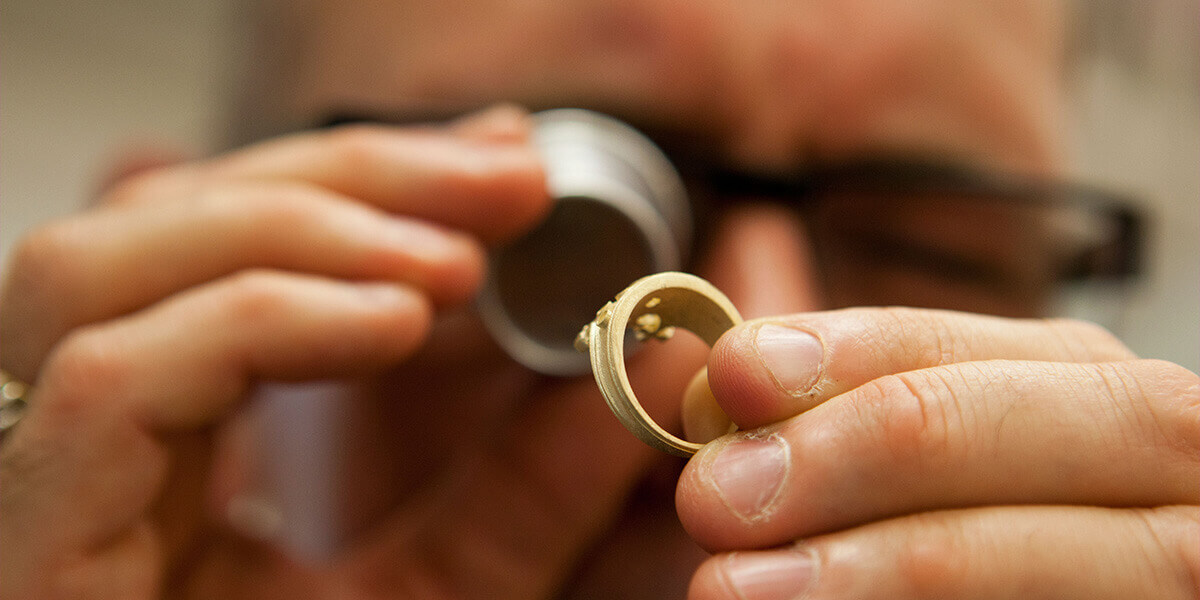
A good place to start is to make a basic visual inspection. A genuine gold item would almost certainly carry a stamped hallmark which can quickly indicate the origin, age and purity of the metal. However, the absence of a hallmark does not automatically mean an item isn’t genuine. Old items, some foreign-produced pieces or those that are heavily worn could have hallmarks which are faint or hard to read. Hallmarks aside, genuine gold tends to have a consistent colour and finish throughout, so look closely for any spots where the surface appears to be wearing or tarnishing in an unusual way. If you can see a different coloured metal wearing through a top coating, there’s a good chance the item is gold-plated rather than solid gold.
Extra attention should be paid to the edges, clasps and areas that get a lot of contact, like the outer surface of a coin or necklace as discolouration in those spots is often a telltale sign that something may not be what it seems.
Next up is a simple magnet test that anyone should be able to conduct. Gold by its very nature isn’t magnetic, so a genuine gold item shouldn’t be drawn to a strong magnet. It’s a quick and easy check, but it does have its limits as plenty of non-gold metals are also non-magnetic, so passing the test doesn’t automatically mean you’ve got the real thing.
Weight is another useful clue. Gold is a dense metal and tends to feel heavier than you’d expect for its size. If you’ve got a similar item made from a different metal to hand, comparing the two can sometimes be quite revealing, as changing the density of an item is something that is difficult to fake.
You might also come across mentions of the ceramic test, where the item is rubbed against an unglazed ceramic surface to see what mark it leaves. However, if your item has any potential collectable or sentimental value, this technique can scratch and damage the surface, which may be a risk that’s not worth taking.
Common myths about testing gold
When researching gold testing methods, there are a number of helpful articles online, as many collectors or people with a historic interest in gold often share their personal methods with readers. However, it is important to note that some of these methods can produce misleading results or actually damage your item.
The lighter test is a good example of something which should probably be avoided. The idea of holding a flame to jewellery or a coin to see how it reacts might sound straightforward, but in practice it can cause discolouration, may damage delicate settings, or affect other metals in the alloy.
Vinegar and other household chemicals get suggested regularly too, but these can produce misleading results and aren’t a reliable way to confirm whether something is genuinely gold. Looking at it practically, if the item might be valuable, collectable, or has sentimental significance, no home test may be worth the risk and a professional assessment will give you a far more reliable answer without damaging something that you wish to preserve..

Professional gold testing methods
Home checks are a reasonable starting point, but if you really want to know the composition of your potentially precious item, professional testing is an important next step to consider. Jewellers, bullion dealers and precious metal specialists have access to dedicated equipment that will not only confirm whether something is genuine gold, but in many cases tell you exactly how pure it is.
One of the most widely used methods is XRF testing, which uses X-ray fluorescence to analyse the metal’s composition. Crucially, it does this without touching or damaging the item. That makes it particularly well-suited to coins, bars, jewellery and anything collectable, where keeping the piece in its original condition matters.
Beyond XRF, professionals might also use electronic gold testers, acid testing or formal assay testing, depending on the item and what level of detail is needed. Each method has its own strengths and trade-offs, but even the most basic professional test will generally give you a more reliable picture than anything you can do at home.
The most important point to note is if there’s any chance an item could be valuable, rare or simply irreplaceable, it’s worth getting a professional opinion before you try selling it, cleaning it, or doing anything more invasive. A good assessment doesn’t take long, it may even be free, and it could save you from a costly or disappointing mistake.
Conclusion
Home testing can be a perfectly sensible first step, especially when you’ve come across a piece of jewellery, a coin or some other item, where the origin of the piece isn’t entirely clear. No home testing method, whether checking for hallmarks, looking at the colour and finish, weighing an item in your hand or applying a magnet, will give you a cast-iron answer. However, together they can paint a useful picture or provide a starting point for further testing.
The key thing to remember is that no home test is the final word. Some can mislead, and others carry a real risk of damaging something that turns out to be worth far more than you realised, both as a collectable and potentially a sentimental item. If you’re dealing with something that could fall into any of those categories, from a rare coin, a bullion piece, antique jewellery or something you’ve inherited, professional testing is the only way to discover for certain whether your possession is gold.
