For centuries, the lion has stood as a potent emblem of British heritage, evoking themes of power and resilience across Royal Coats of Arms, coins and national iconography.
Woven into the United Kingdom’s broader narrative, symbolic lions can be seen across the country in sculpture and art and the animal features in some of the nation’s most beloved literature. Retaining the emblem’s significance as a symbol of national pride, the three lions are also synonymous with English sporting teams.
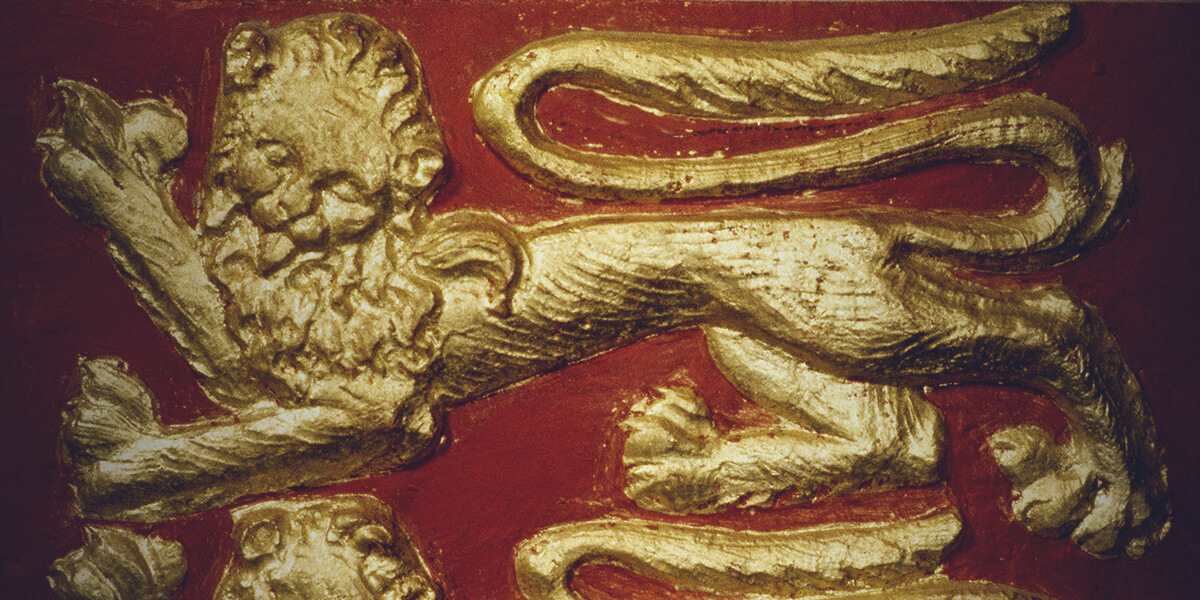
Henry I (r. 1100–35) was sometimes referred to by chroniclers as the Lion of Justice, although the nickname is not as famous as Richard the Lionheart’s epithet. During Henry I’s reign, an early royal menagerie featuring various exotic creatures existed at Woodstock in Oxfordshire that according to some accounts included lions.
Henry II (r. 1154–89) further cemented the presence of lions in royal symbolism, partly through his marriage to Eleanor of Aquitaine. Although the precise date in which a third lion was introduced into the Arms of the English throne remains unclear, Richard I (r.1189–99), known to history as Richard the Lionheart, had adopted three lions passant guardant on a red field by 1198. These three lions became England’s Royal Arms and have remained central to English heraldry ever since. Such prominent use of the lion reinforced the notion of a fierce yet noble monarch and reflected contemporary ideals of chivalry and bravery.
During the early thirteenth century, much like at Woodstock, a royal menagerie became a focal point for the display of exotic animals. Famously located at the Tower of London, the lions amplified the aura of majesty and power surrounding the Crown.
Over the centuries, the lion leapt from heraldic designs into the wider public consciousness. By the Victorian era, when Britain’s global influence was at its peak, the lion had become firmly embedded in the national imagination, often appearing alongside personifications like Britannia. Artists and sculptors harnessed this icon in their works, most famously Sir Edwin Landseer, whose towering bronze lions installed in 1867 at the base of Nelson’s Column in Trafalgar Square remain a symbol of British fortitude and pride.
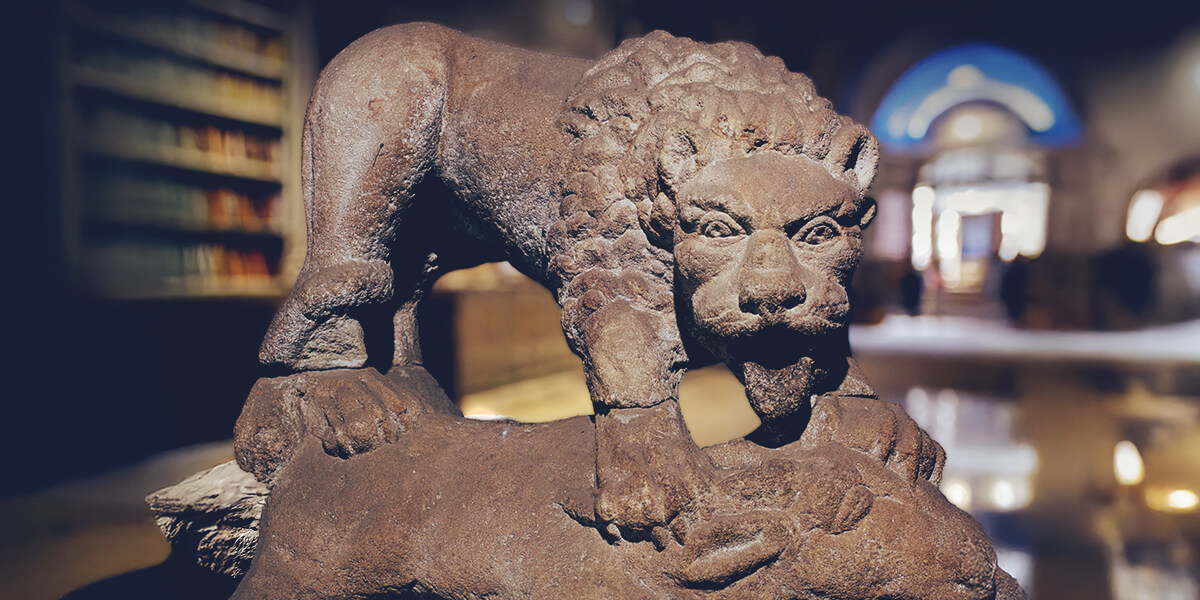
Throughout history, the lion has served as both a real-life curiosity in royal collections and a symbolic figurehead of both chivalric virtue and monarchy. From the Roman Corbridge Lion and the Arms of Richard the Lionheart, which feature the iconic three lions, to Sir Edwin Landseer’s monumental statues, the lion has been interpreted and reinterpreted by successive generations.
The lion’s enduring legacy as the king of the beasts, a fascination that took shape in medieval heraldry, continues to be expressed in art and popular culture. Here, we explore some of the statues, landmarks, paintings and buildings depicting the lion that are found across the UK today.
The Landseer Lions
One of the most famous lion statues in the UK is the quartet of lions that sit at the base of Nelson’s Column in Trafalgar Square, London. Sculpted by Sir Edwin Landseer and unveiled in 1867, each of the lions is cast in bronze and weighs around 7 tonnes. Known primarily for his animal paintings, Landseer was initially reluctant to take on the project but instead produced these iconic works that have come to symbolise Trafalgar Square.
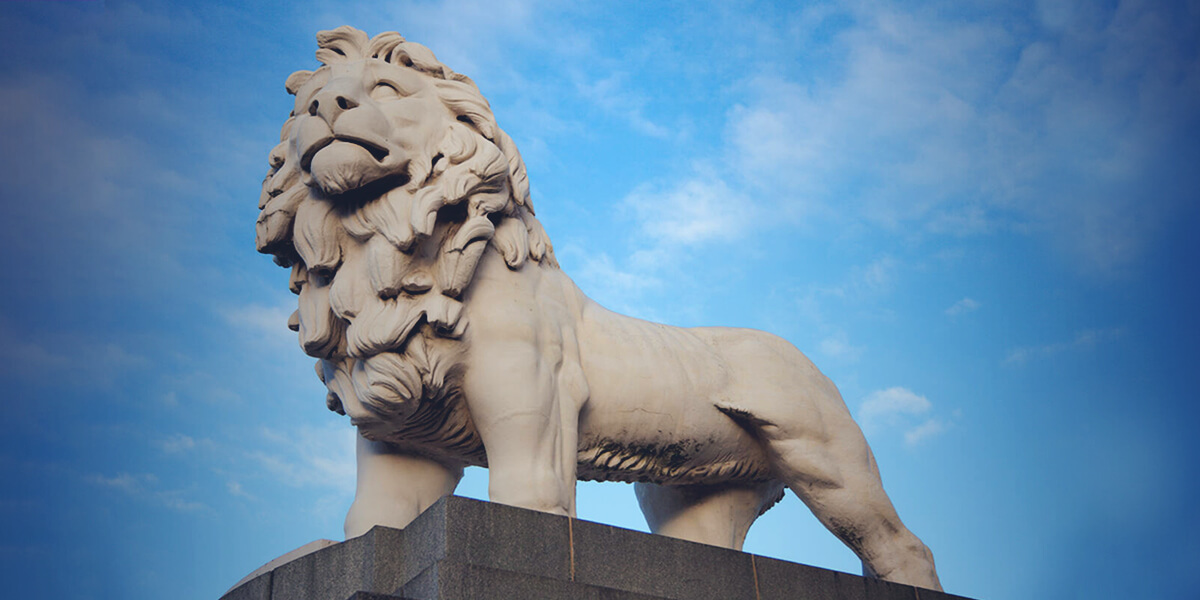
The South Bank Lion
Made of Coade stone, a durable, ceramic-like material perfected in the late eighteenth century that is resistant to weathering, the ‘South Bank Lion’ was sculpted in 1837 for the Lion Brewery. The brewery was located on the site of the Royal Festival Hall but when the brewery was demolished, the South Bank Lion survived and was moved to its current position near Westminster Bridge.
The Tower of London Lion Sculptures
Installed in the area of the Tower of London’s moat, a series of life-sized wire sculptures of lions (and other animals) by British sculptor Kendra Haste commemorate the Tower’s historic Royal Menagerie. From the thirteenth to the nineteenth century, the Tower housed exotic animals, including lions, and Kendra Haste’s life-like yet strikingly modern sculptures are fashioned from layers of galvanised wire.
Leeds City Square Lions
Often seen by visitors heading into the city’s main shopping and business areas, four iconic lion statues created by sculptor William Day Keyworth Jr and erected in 1867 stand proud in Leeds City Square. Set on plinths around the square, each lion is posed in a different way and together, they have become enduring emblems of the city and often appear in local photography and tourism imagery.
Hampton Court Palace
The extensive gardens and grounds at Hampton Court Palace feature various heraldic beasts, including fierce lions that represent and support Henry VIII’s birthright and the legitimacy of the Tudor line.
Local Town Halls and War Memorials
Throughout the UK, lions often appear on civic buildings and memorials, such as the statues guarding civic buildings in the cities of Nottingham, Glasgow and Manchester. These statues vary in style and period but highlight the lion’s role as a national symbol.
George Stubbs’ Lion and Horse Series
On display at Tate Britain in London and the Walker Art Gallery in Liverpool, the paintings in George Stubbs’ eighteenth-century Lion and Horse series were considered groundbreaking due to their intense realism and raw emotional power.
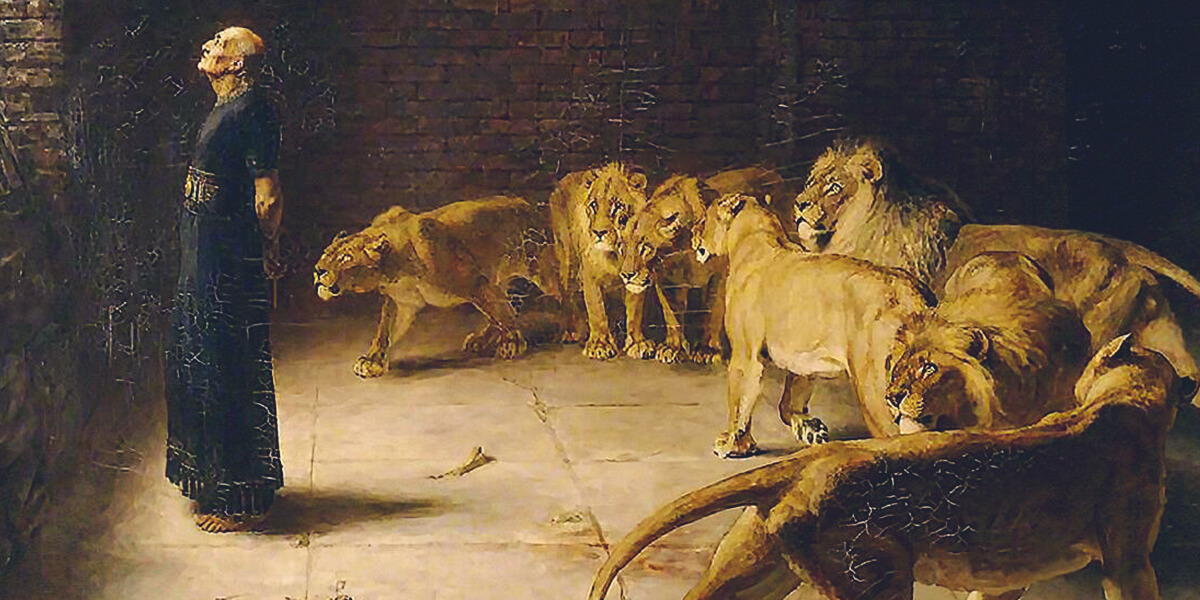
Briton Rivière’s Daniel’s Answer to the King
Briton Rivière (1840–1920) was an English artist celebrated for his animal subjects. Held in the Manchester Art Gallery, Rivière’s painting Daniel’s Answer to the King depicts the biblical story of Daniel calmly surrounded by lions in the den.
William Bell Scott’s Una and the Lion (c. 1860s)
A Scottish poet and painter associated with the Pre-Raphaelite circle, William Bell Scott (1811–90) is believed to have painted a Una and the Lion scene in the mid nineteenth century. The piece reflects Scott’s interest in narrative painting drawn from British poetry. The Laing Art Gallery in Newcastle upon Tyne holds some of Scott's works, but not all are on permanent display.
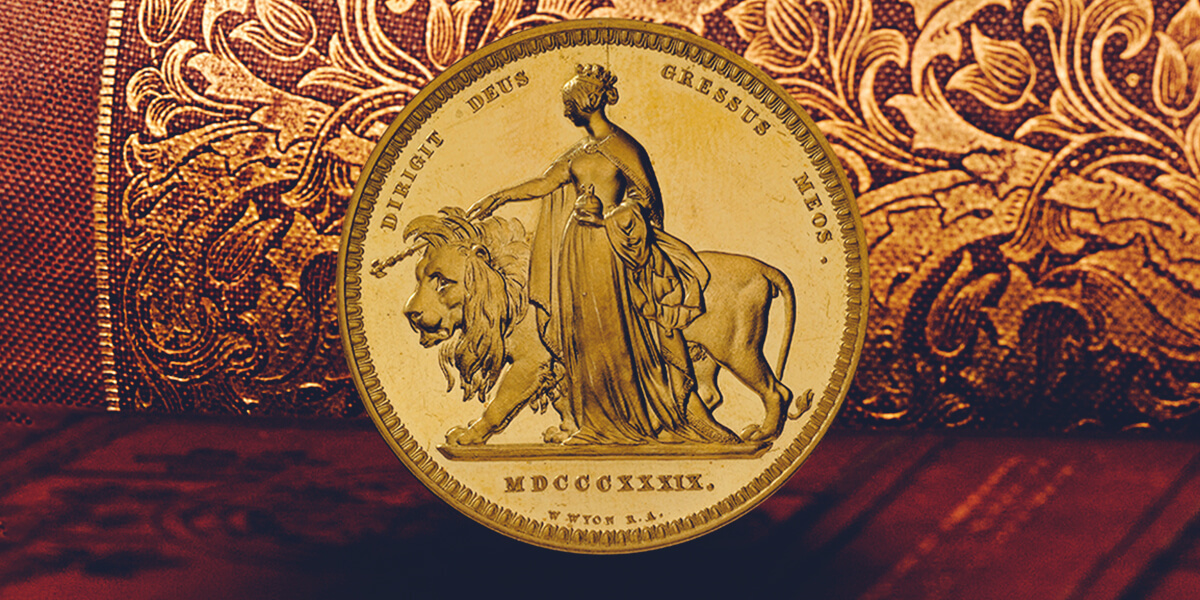
Una and the Lion on Coins
In the realm of English literature, the lion’s role extends well beyond heraldry and into the allegorical. One of the most celebrated appearances is in Edmund Spenser’s The Faerie Queene, the sixteenth-century epic poem featuring the character Una and her loyal lion protector. Over the years, this narrative of innocence guarded by regal might has inspired various artistic interpretations, including the coin designs featured in our own Una and the Lion bullion coin range, which blends literary heritage with numismatic art.
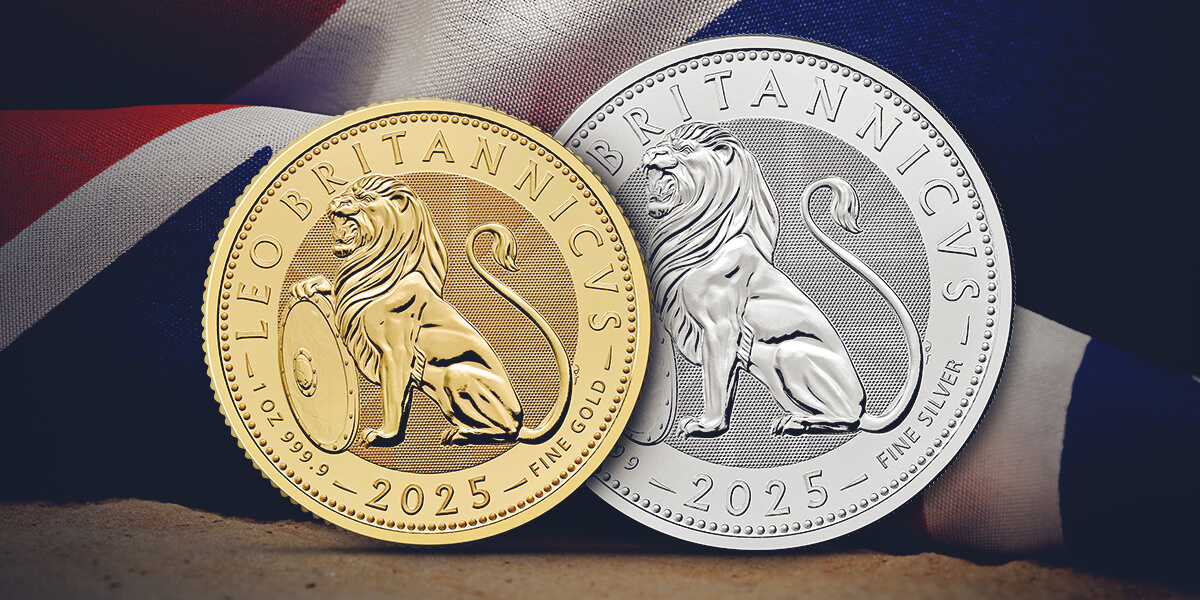
The British Lion Bullion Coin Range
In celebration of this heraldic tradition, we have released The British Lion 2025 Bullion Coin Range. Drawing upon the lion’s storied past, the coin features a bold reverse design unique to 2025 that depicts this timeless guardian of British heritage.
Acting as an innovative security feature that enhances the coin’s authenticity, surface animation featuring the Union Flag appears on the reverse of the coin. Available in gold and silver, the coin appeals to collectors and investors alike, and for UK residents only, every gold coin in the range is exempt from Capital Gains Tax (CGT) and Value Added Tax (VAT).
