The 1816 Coinage Act and Introduction of The Gold Standard
The Coinage Act of 1816 was a landmark reform that reshaped Britain’s monetary system during a difficult period for the economy in the aftermath of the Napoleonic Wars. To restore economic stability, improve confidence, and support the rapidly expanding industrial era, the Gold Standard was established. Gold was (and still is) widely recognised for maintaining its value throughout history, and it was designated as the sole legal standard of currency value. It also signalled the return of the gold Sovereign, which became a circulating coin.

The Enduring Value of Gold
Gold is widely valued for its historic ability to preserve wealth when other assets weaken, offering a sense of stability, protection against inflation, and resilience in times of economic uncertainty. Its enduring appeal is further reinforced by consistent global demand and its broad use across multiple industries.
The Gold Standard
The introduction of the Gold Standard meant that the value of British currency became firmly based on a fixed amount of gold, making the currency more stable and predictable. One troy pound of standard 22-carat gold was equal to £46, 14 shillings, and 6 pence, or 44 and a half guineas. By 1821, the standard was fully operational in Britain.
Silver Coins and Paper Money
Prior to 1816, silver coins started to become more valuable than their face value due to rising silver bullion prices and much of it being exported from Europe to Asia. This resulted in many coins being melted down and sold as bullion. The Coinage Act redefined silver as token currency and the silver content in each coin was reduced. They remained legal tender, but only for purchases up to 40 shillings (£2).
The Gold standard also meant that paper money could be exchanged for a specific amount of gold, raising confidence in their value.
Notable Coins
The 1817 Gold Sovereign
Issued during the reign of George III, the coin marked the reintroduction of the Sovereign and the beginning of its modern era, once again placing it at the centre of British coinage. Struck in 22-carat gold to the standards of weight and diameter established by the 1816 Coinage Act, it reflected the new monetary system of the period. Its obverse bears Benedetto Pistrucci’s finely engraved laureate portrait of the King facing right, while the reverse features his iconic depiction of Saint George on horseback slaying the dragon.
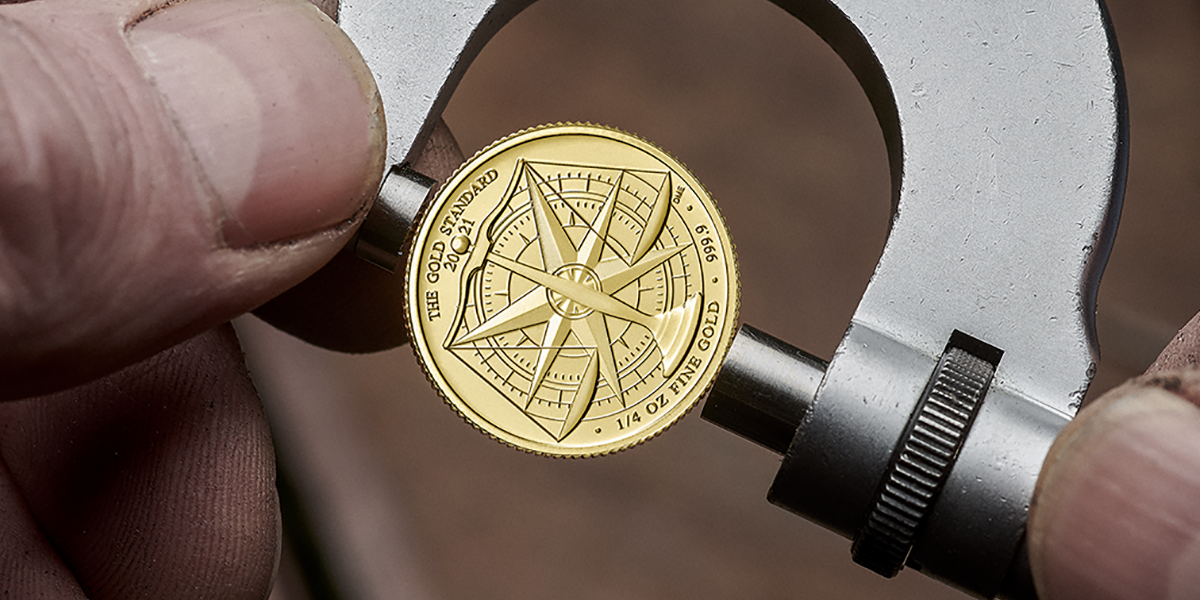
The Gold Standard 2021 Gold Bullion Coin
This coin was released to mark 200 years since the de facto introduction of the gold standard. Inspired by the quest to maintain economic equilibrium, the design featuring scales and compass points conveys a sense of balance and connectivity. The Gold Standard 2021 Gold Bullion coin was available to purchase in one ounce and quarter-ounce 999.9 fine gold.
