James I Coinage and The Gunpowder Plot
“Remember, remember the fifth of November…” In 1605, the infamous Gunpowder Plot led by Robert Catesby, Guy Fawkes and other catholic conspirators sought to blow up the Houses of Parliament and assassinate King James I. The failed attempt resulted in the capture and torture of Guy Fawkes at the Tower of London, also home to The Royal Mint, who eventually revealed the names of his co-conspirators. While it remains one of the most notorious episodes in British history, the coins struck during his reign tell stories of their own.
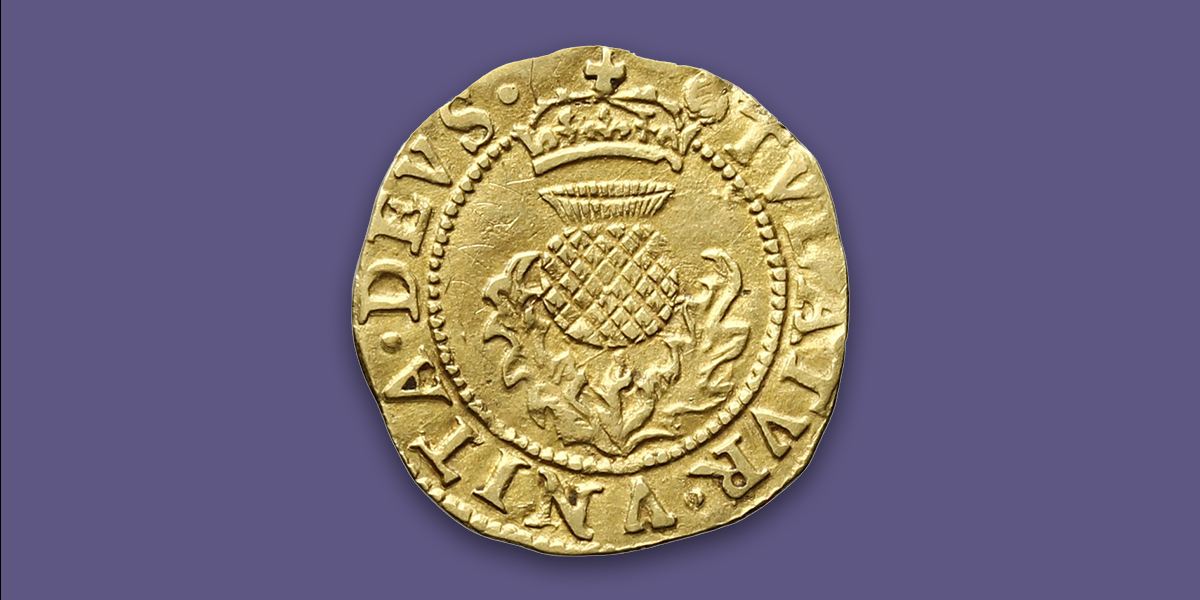
The Thistle Crown
Worth four shillings, the Thistle Crown is one of the most interesting coins of James I's reign because it tells the story of his ambition to unite England and Scotland. Introduced in 1604, the coin's obverse design features a crowned English rose, flanked by the letters I R meaning Iacobus Rex / King James. The reverse features a crowned Scottish thistle, also flanked by I R. Although the two nations would not formally unite until 1707, James was using his coins to promote his vision.
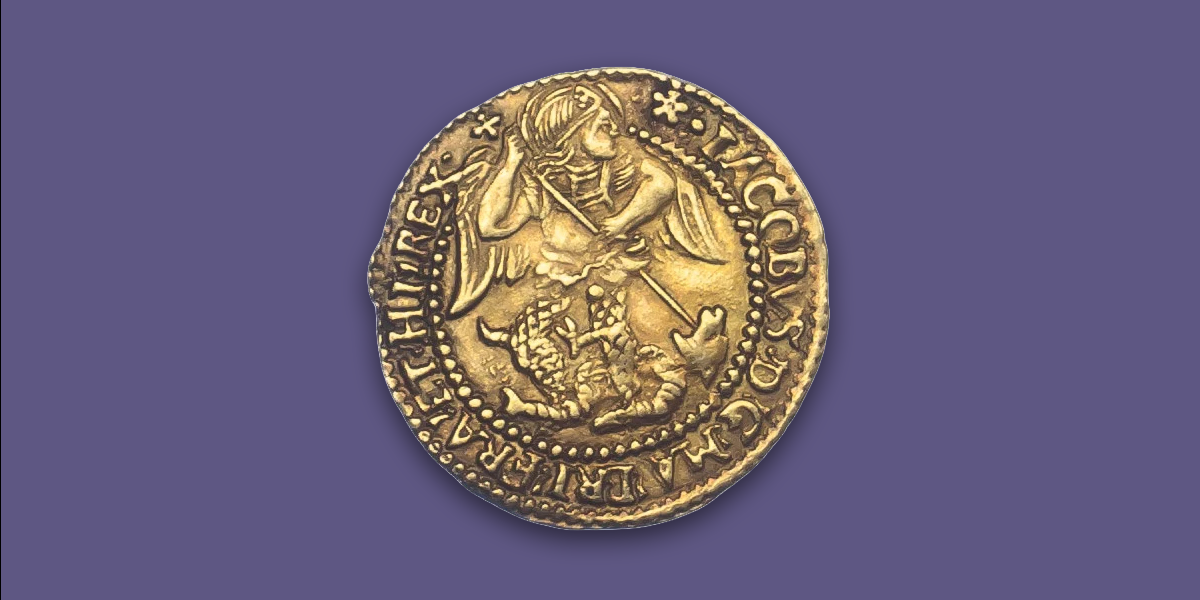
The Angel
Throughout its time in circulation, the gold Angel played an important role in a ceremony known as the Royal Touch. For centuries, monarchs were believed to possess a divine power to heal, stemming from their God-given right to rule. During these ceremonies, the monarch would touch sufferers of scrofula, a disease commonly known as the ‘King’s Evil’, before presenting them with a gold coin such as the Angel. Often pierced and threaded with a ribbon, the coin could be worn around the neck as a symbol of healing and royal protection. Initially reluctant due to take part in the ceremonies, James I continued the tradition following advice from his ministers.
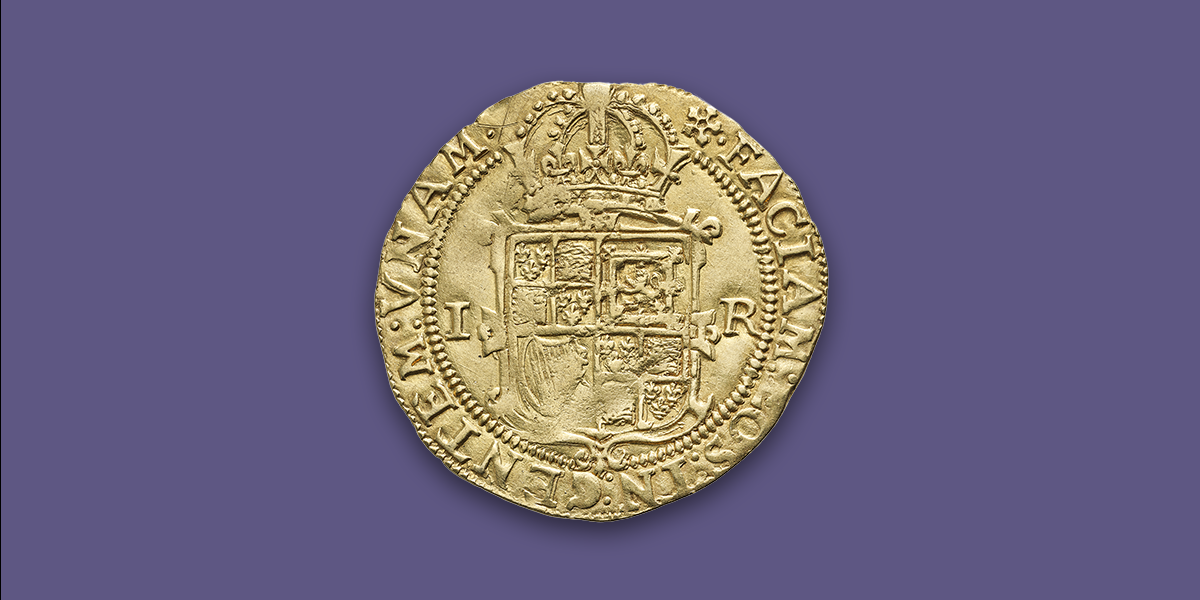
The Gold Unite
First struck in 1604, the gold Unite was worth 20 shillings. Its name reflected the king’s ambition to unite England and Scotland, and one of the first reverse designs featured the biblical inscription FACIAM EOS IN GENTEM UNAM, meaning ‘I will make them one nation’. However, despite his vision of a united Britain, the two kingdoms remained separate for more than a century until 1707.
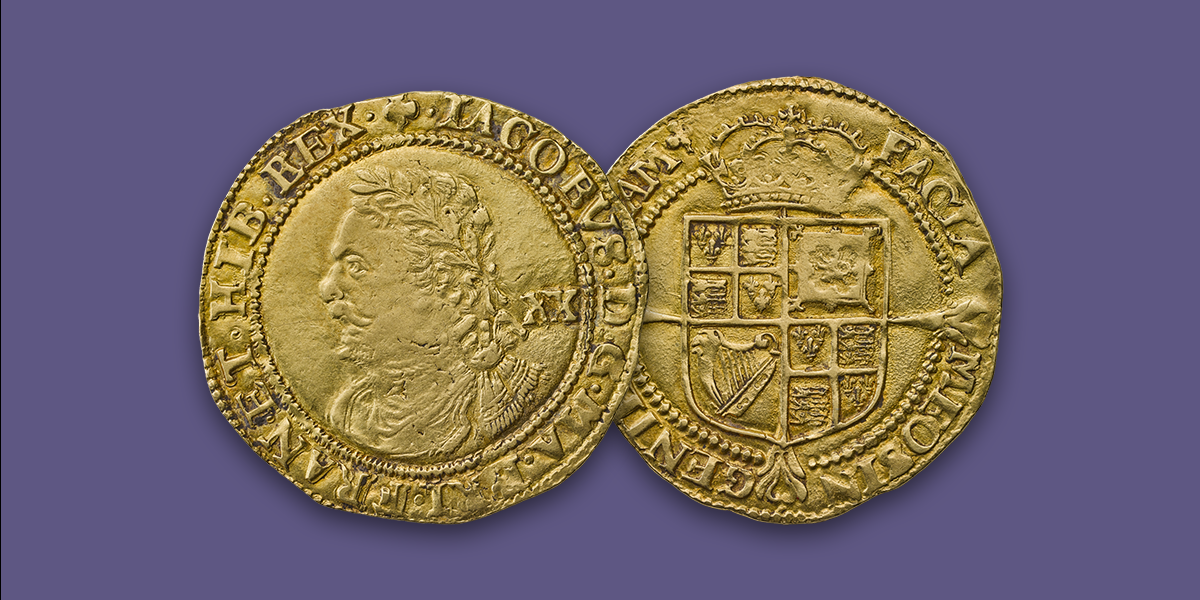
The Gold Laurel
Introduced in 1619 during James I’s third coinage, the gold Laurel was worth 20 shillings, or one pound, as indicated by the Roman numeral XX on its obverse. It replaced the earlier Unite but was struck to a lighter weight following changes in the value of gold. To distinguish the new coin from its predecessor, James I was depicted wearing a laurel wreath inspired by portraits of Roman emperors, giving the coin its name. The obverse also featured a Latin inscription identifying James as King of Great Britain, France and Ireland, reflecting his ambition to unite England and Scotland. Smaller denominations, including the Half-Laurel and Quarter-Laurel, were also introduced, worth ten and five shillings respectively.
The 400th Anniversary
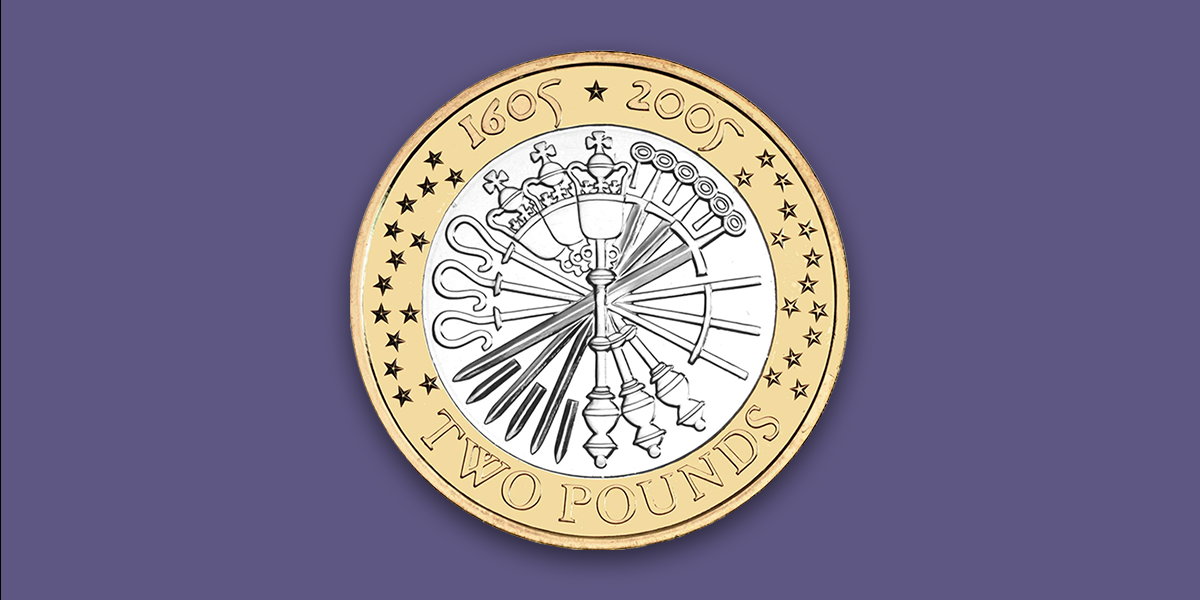
In 2005, we struck a £2 coin marking 400 years since the gunpowder plot. The reverse design features a design by Peter Forster, bringing together the traditional symbols of state – a mace, crosier and sword. The symbols are arranged in a circle to resemble a Catherine Wheel, with surrounding stars adding to the fireworks theme. The dates appear in an early seventeenth-century-style font, while the edge inscription reads ‘REMEMBER REMEMBER THE FIFTH OF NOVEMBER’. The obverse features a portrait of Her Late Majesty The Queen by Ian Rank-Broadley.
